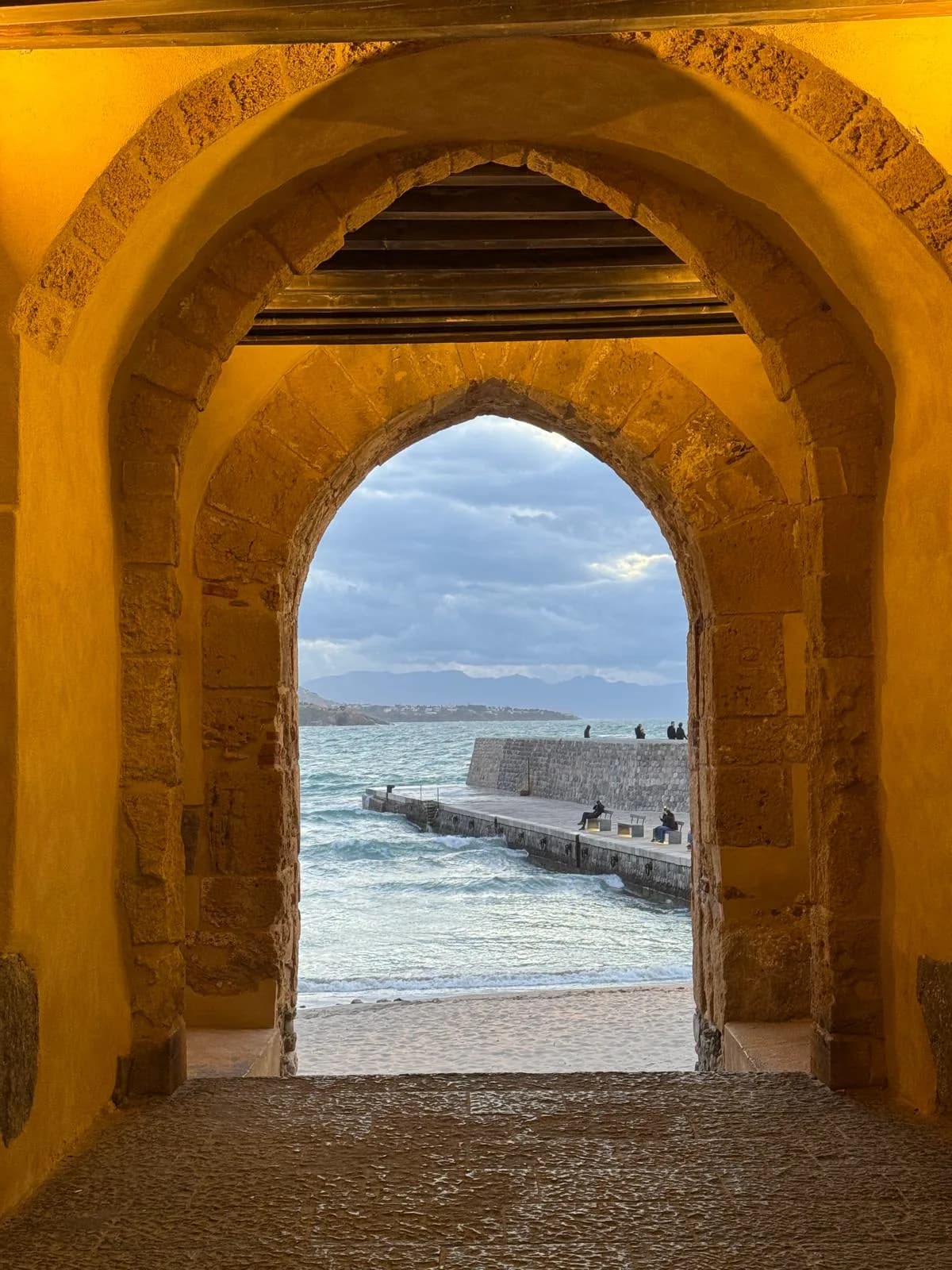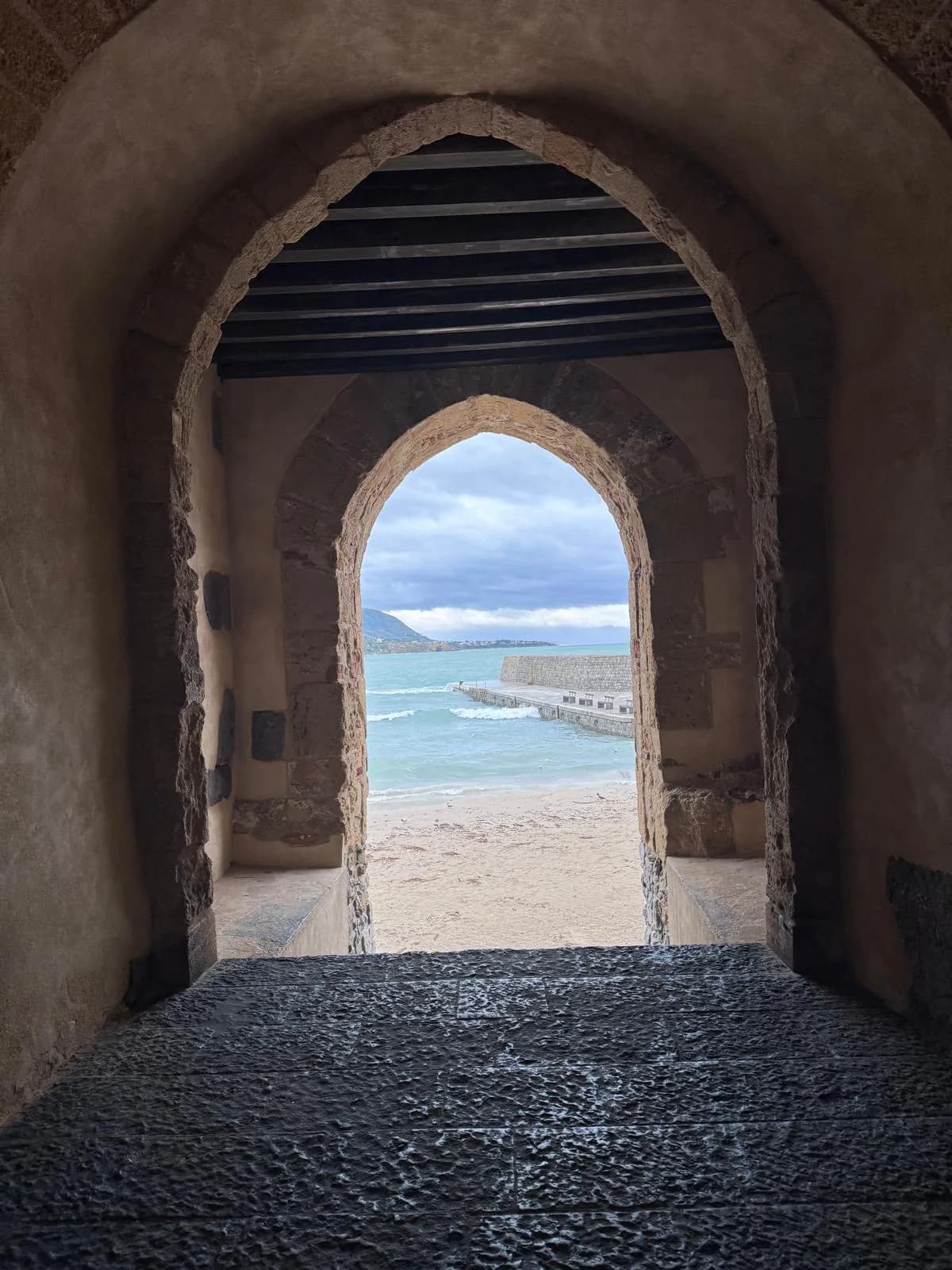
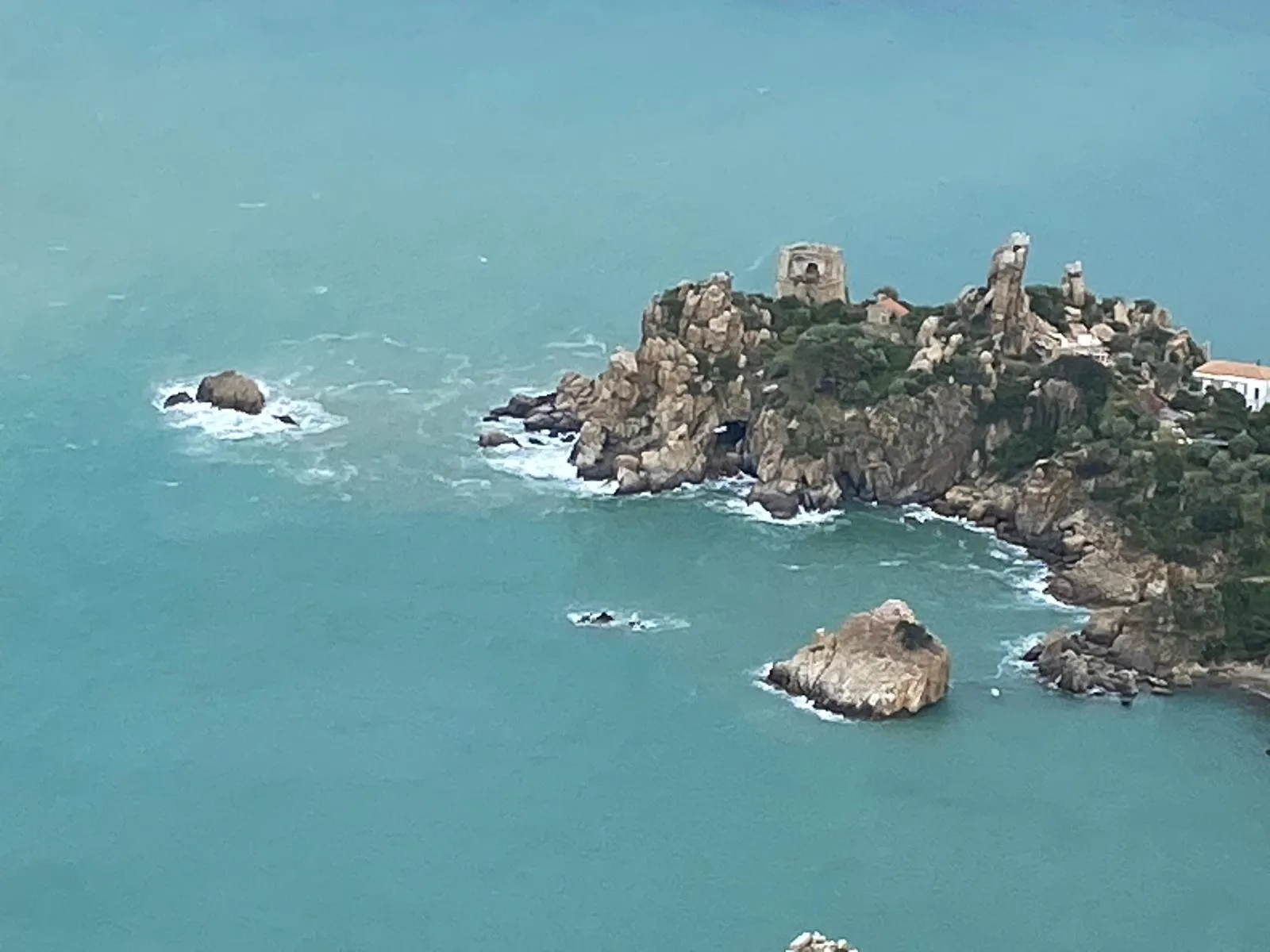
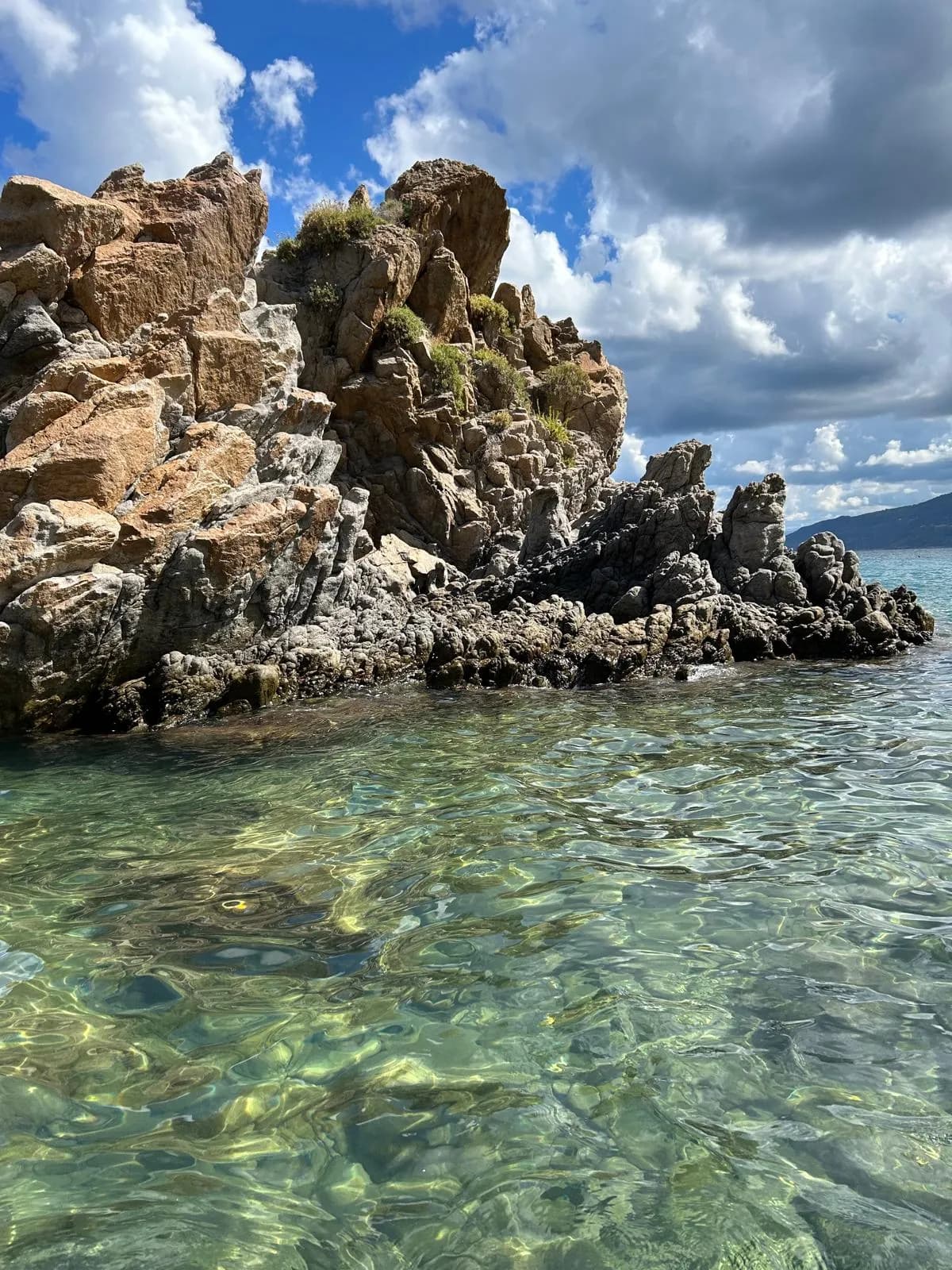
Twenty minutes east of the old town, past the marina, a stone staircase drops to a turquoise cove beneath a 16th-century watchtower. The bottom is rock and pebble, the water deep and crystalline. On a calm morning the visibility runs to eight or ten metres from the surface without a mask. This is the beach we send guests to when they ask where the clear water is — and it is the beach we go to ourselves when we want to swim without thinking about sunbeds and crowd management.
The cove goes by two names: Kalura, after the hotel on the cliff above, and Caldura, which is what older locals tend to call it. Both names, same steps, same water. For snorkelling, diving, or just a cleaner swim than the Lungomare offers, this is where to go. See also our overview of all the beaches near Cefalù.
Getting there — the stone steps
From the old town, follow the coast road east past the marina for about twenty minutes on foot — the road runs along the shore and is flat. By e-bike the same route takes five minutes. By car, follow the SS113 east past the marina and look for the Hotel Kalura sign; the steps down to the beach are accessed from the hotel car park area. Parking above the cove is limited but usually available outside July and August — in peak season, walking or cycling is a more reliable approach.
The staircase itself is approximately 100 steps, cut into the rock face. The upper section has a handrail; the lower section does not. The stone is smooth and can be slippery when wet. Wear shoes you can remove at the bottom — sandals with a back strap work well, or go barefoot from the third or fourth step when the rock becomes dry. Coming back up with wet feet and a heavy bag is the one genuinely effortful part of the Kalura experience.
The descent takes about three minutes. Nothing about this beach is convenient in the way the Lungomare is convenient, and that is a significant part of why it stays quieter. The barrier of the staircase sorts out who is coming for the water from people who just want to lie on sand.
Snorkelling and diving
The rocky seabed below the watchtower is the reason to bring a mask. Sea bream move in slow loops between the rocks. Octopus are common — look for them in the crevices along the base of the cliff, often with a neat pile of empty shells nearby. In July and August the occasional barracuda passes through. The visibility on a calm day is eight to ten metres from the surface, sometimes more after the summer thermocline sets in.
Kalura Diving Center, based at the Hotel Kalura directly above the beach, offers PADI-certified dives and courses. The most interesting dive site is directly offshore: a Roman port seabed lying at twelve metres, within a protected archaeological zone, where amphora fragments and a 16th-century cannon sit where they have been for centuries. Discover Scuba Diving costs around €120; Open Water certification around €480. The dive centre reopens each year on 1 May and closes in late October. Equipment rental is available if you want to snorkel rather than dive.
If you have your own snorkel gear, bring it. The rental equipment is fine but your own mask will fit better, and Kalura is the kind of place where a well-fitting mask is the difference between an hour of pleasure and an hour of adjustment. Even a basic set from a sports shop before you travel is worth it.
When to visit
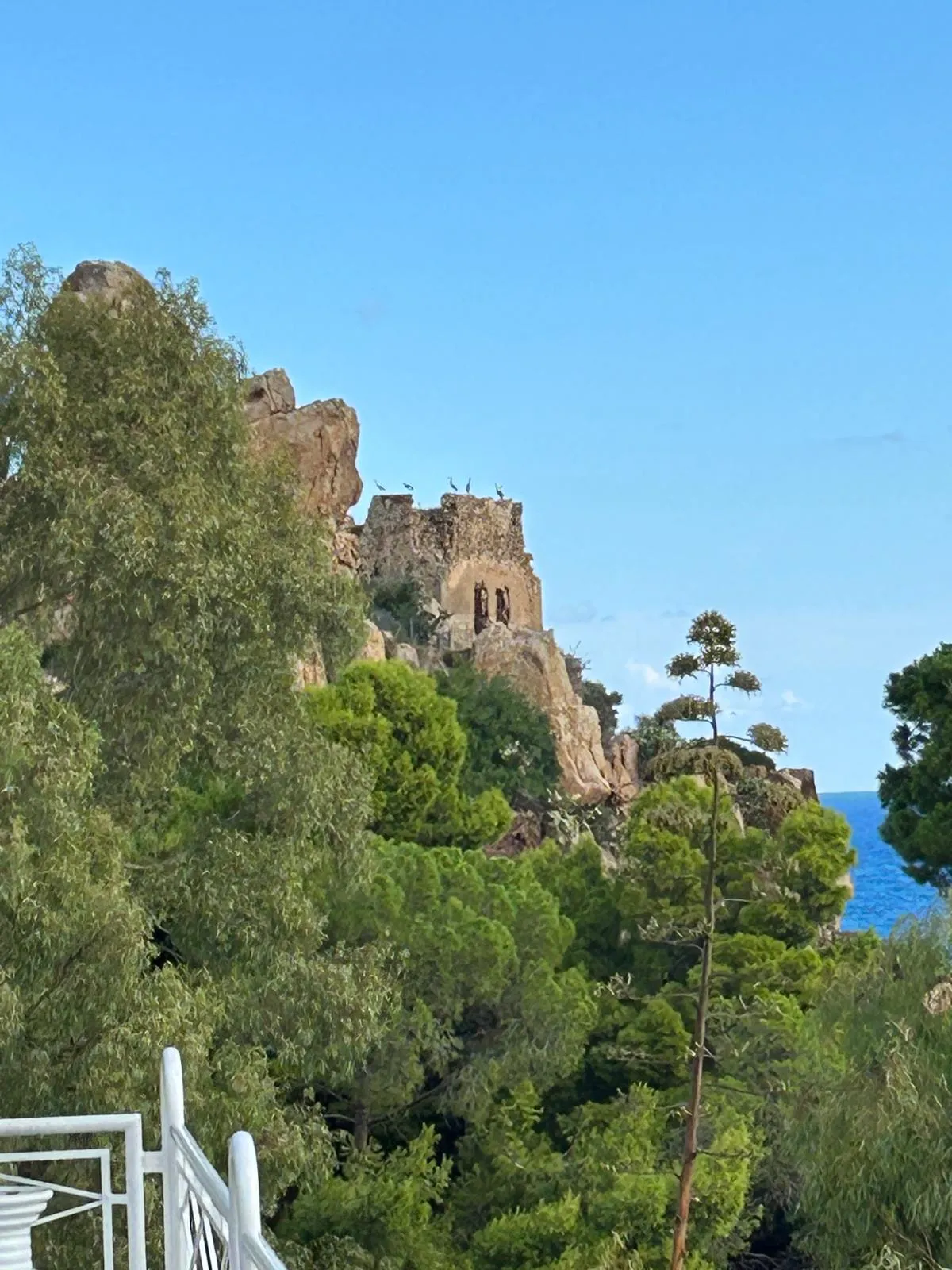
Kalura is quieter than the Lungomare in every month, but the gap widens dramatically in September and October. After the first week of September the steps are usually empty outside of midday, the water is at its warmest (around 24–25°C), and the light on the watchtower in the late afternoon is worth sitting with.
The beach faces north, which means it catches the Tyrrhenian breeze and stays cooler than south-facing coves. On hot August days that breeze is a significant advantage. The same north-facing aspect means the morning sun takes a while to reach the water — the beach stays in the shadow of the cliff until around 10:00. Come in the afternoon for the best light on the water.
Water temperature at Kalura stays above 22°C from June through October. We have swum here without a wetsuit in early November — the water was cold enough to be bracing but not painful. October is a reliable swim month for anyone who is not especially cold-sensitive.
What to know before you go
The beach bottom is rock and pebble throughout — there is no sand. Water shoes are worth bringing if your feet are sensitive; the entry point into the water is over smooth, rounded stones that are comfortable enough but can be surprising if you are used to sand. Children who are confident in the water and do not mind rocky seabeds will be fine. Toddlers or children who want shallow, sandy entry points will be better served at Mazzaforno.
There are no kiosks, no beach bar, no concessions of any kind below the steps. Bring water, food, and everything else you need for the time you plan to stay. The Hotel Kalura above has a bar and restaurant visible from the cove, but accessing it means going back up the steps.
One practical note: the beach sits below an active watchtower heritage site and a private hotel. The beach itself is public access — in Italy, all beaches are public below the high-tide line — but the steps and approach road pass through hotel land. This has never been an issue in practice; Hotel Kalura has operated the dive centre here for years and public access has always been treated as open.
Common questions
Is Kalura beach sandy or pebbly?
Rocky and pebbly throughout — there is no sand. The water is deep and clear from close to the shore, which makes it excellent for snorkelling but less suitable for toddlers wanting shallow sandy entry. Bring water shoes if your feet are sensitive. For a sandy, shallow family beach, Mazzaforno is 3 km west of Cefalù.
How do you get to Kalura beach from Cefalù town?
Walk the coast road east past the marina for about 20 minutes, or take an e-bike in five. By car, follow the SS113 east to the Hotel Kalura sign. The beach is accessed via approximately 100 stone steps down the cliff face — the lower section has no handrail, so wear appropriate footwear.
Is Kalura beach good for snorkelling?
Yes — it is the best snorkelling beach in the immediate Cefalù area. Rocky seabed, 8–10 metres visibility on calm days, sea bream, octopus, and in summer the occasional barracuda. Kalura Diving Center at the hotel above offers PADI dives to a nearby Roman port site at 12 metres. Bring your own gear or hire from the dive centre.
Is there parking at Kalura beach?
Limited parking near the Hotel Kalura above the cove. In July and August it fills quickly and the narrow access road becomes difficult. Walking or cycling from Cefalù old town (20 minutes on foot, 5 by e-bike) is the more reliable approach in peak season. Outside July–August, parking is rarely an issue.