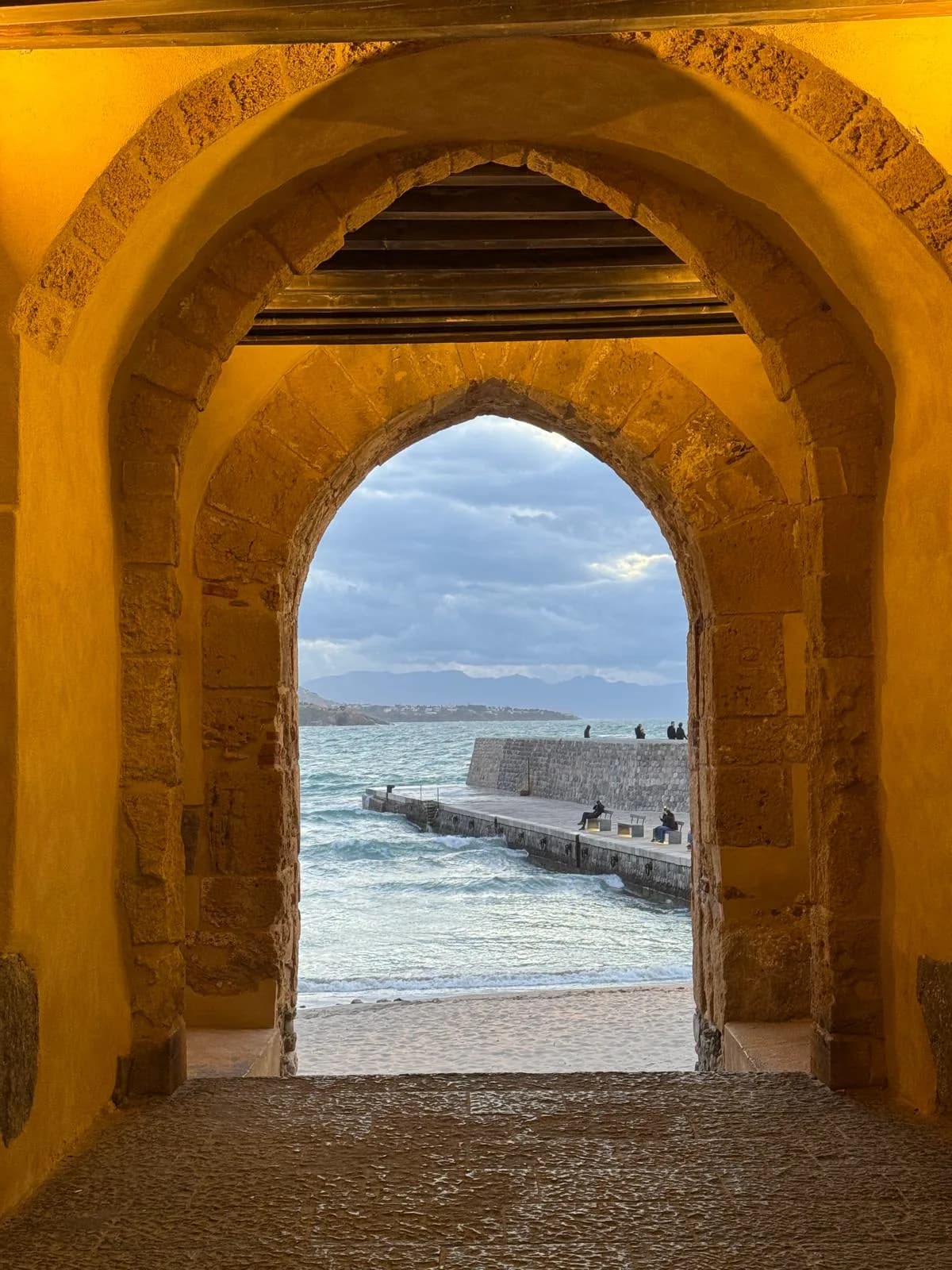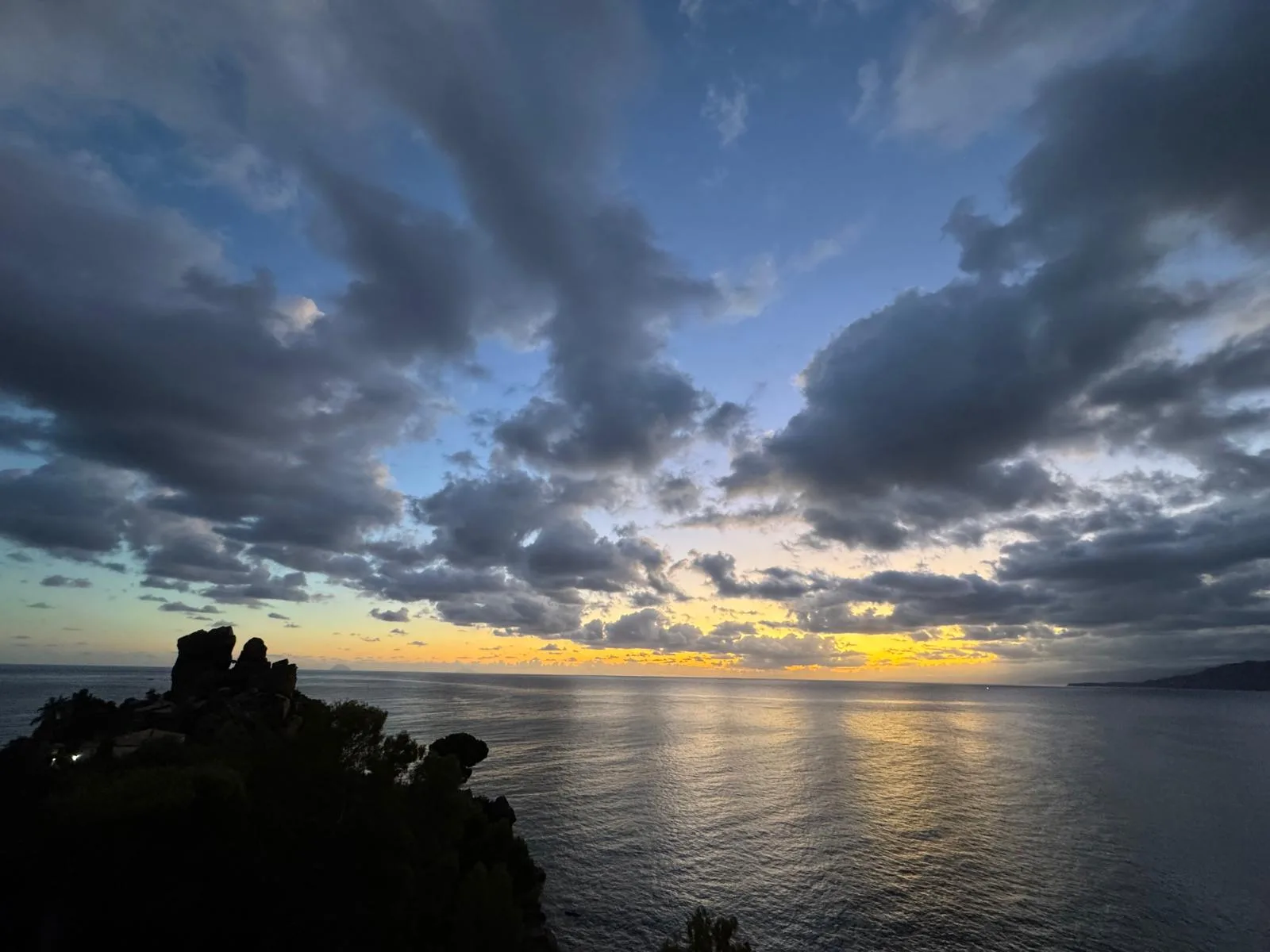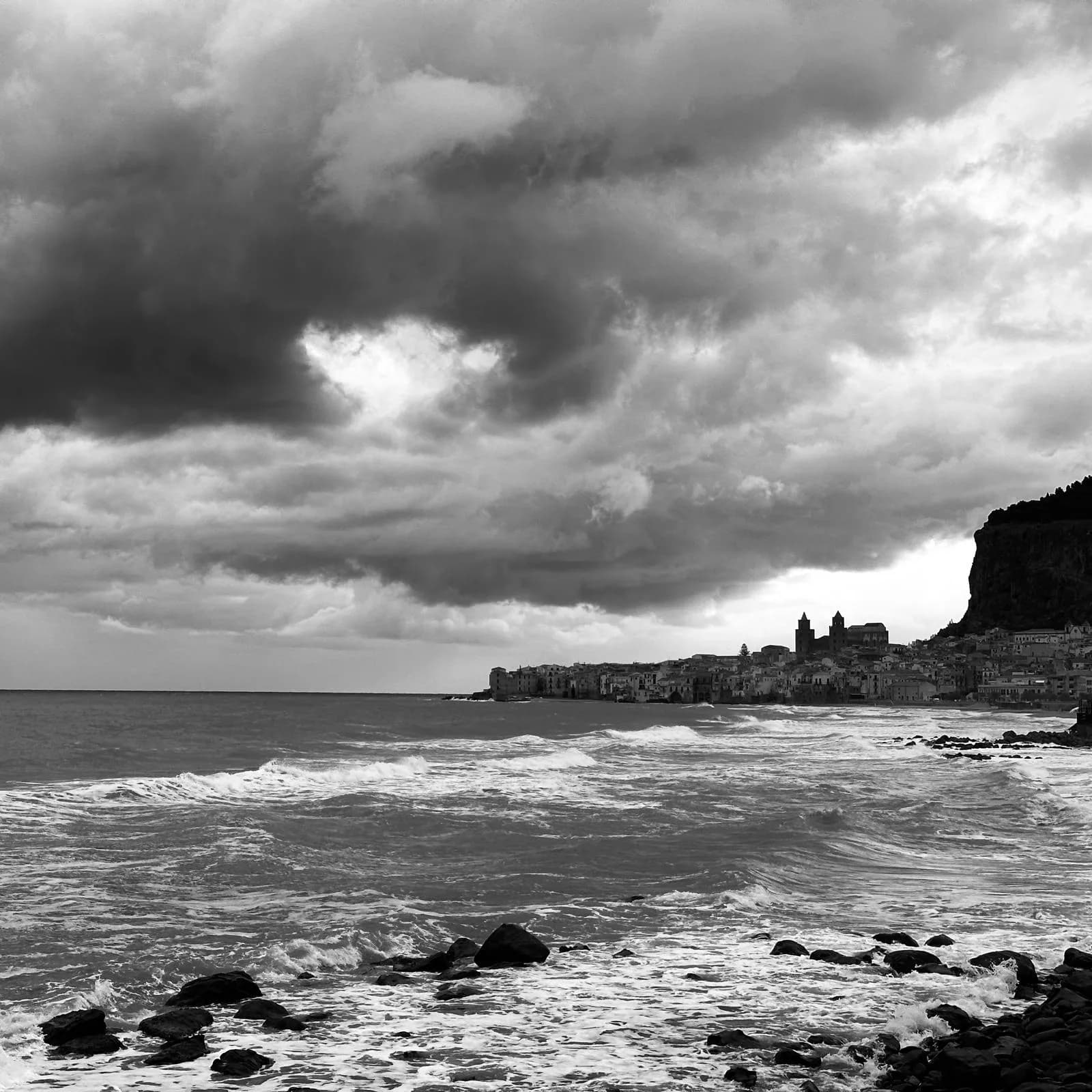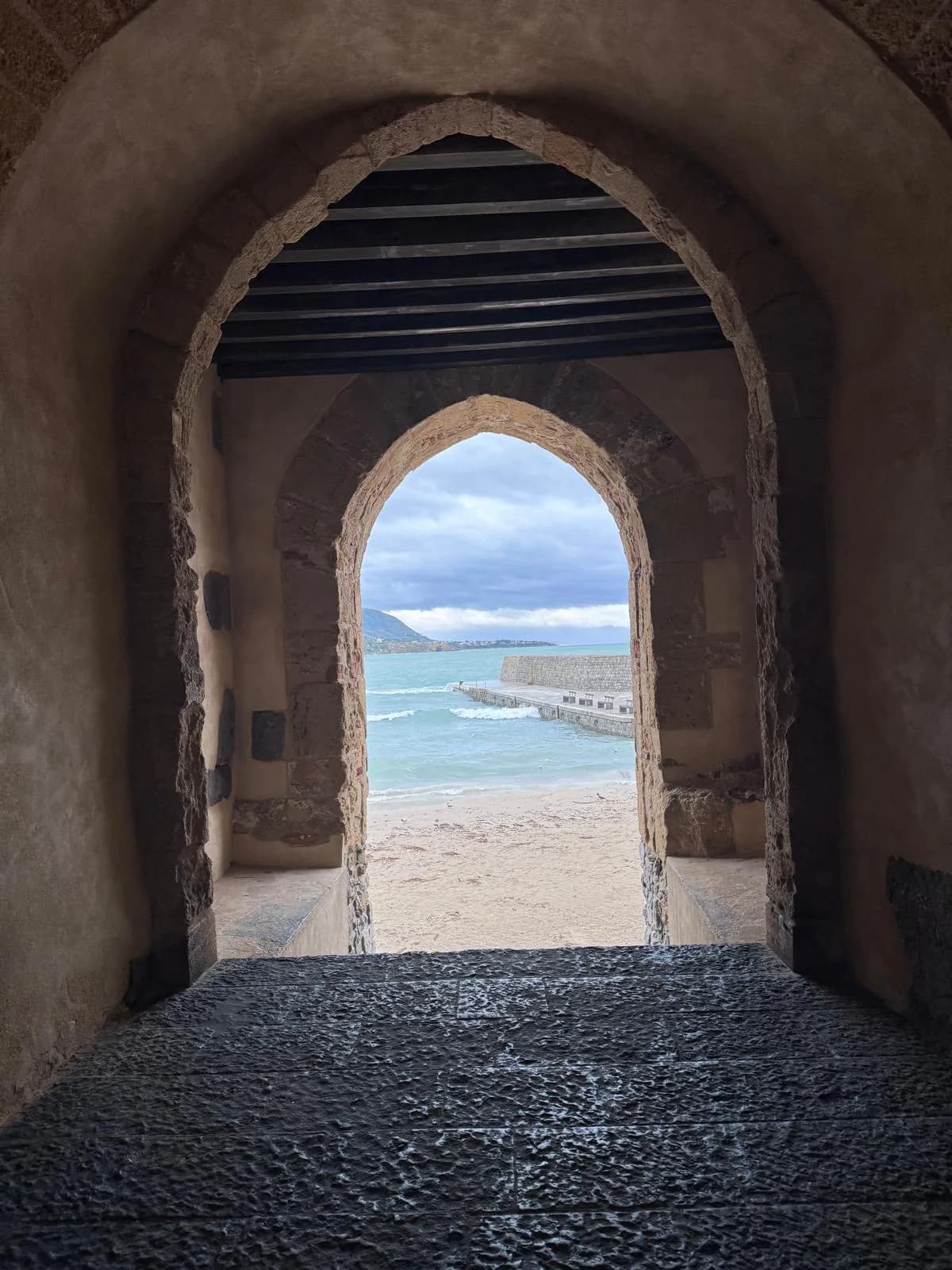
West of the La Rocca headland, accessible by a short path through scrub, Settefrati is the beach that does not appear on most lists and stays quiet as a result. The mix of sand and rock, the absence of any beach infrastructure, and the ten-minute walk from the nearest road keep the day-tripper numbers low even in August. What you get in exchange is excellent snorkelling, dramatic rock formations, and the kind of afternoon that feels earned rather than convenient.
We go here when we want an hour in the water without navigating the Lungomare crowds. No sunbeds, no umbrellas, no kiosks. Bring everything you need. For a quick comparison of all the nearby options, see our beaches overview.
Getting there
Settefrati sits below the western flank of the La Rocca headland, between Cefalù town and the cape. From the old town, head west along the seafront road toward the base of the headland. A path branches off through low scrub — dry maquis, mostly, with rosemary and rock rose — and descends to the cove over about ten minutes. The path is clear and not difficult, but it is uneven in places; proper footwear is worthwhile.
There is no car access to the beach itself. The nearest road parking is near the base of the La Rocca trail, a short walk from the path junction. In summer, arrive before 10:00 if you are driving — the La Rocca parking area fills quickly once the climbers start arriving, and Settefrati visitors and La Rocca visitors are competing for the same small number of spaces. Our La Rocca guide covers parking in more detail.
By foot from the old town the walk takes about fifteen to twenty minutes including the descent. This is the most sensible approach in summer. There is no reason to drive unless you are combining Settefrati with something else.
Snorkelling and swimming
The bottom at Settefrati is a mix of sand and rock, which produces more varied marine life than a purely sandy or purely rocky beach. The rock formations at and below the waterline are the main reason to come — they are dramatic above the surface and more so below it, with crevices and sheltered channels that hold fish in numbers the Lungomare sandy bottom cannot sustain. The visibility is good, typically better than the main beach, and the water is clear enough on a calm day to see the bottom at three or four metres.
Wrasse, sea bream, and grouper are all present. Octopus are found on the rocky sections, as they are at Kalura. The snorkelling does not rival Kalura's twelve-metre Roman port dive site, but for surface snorkelling with basic gear — mask, fins, an hour — you will see real marine life without any certification or equipment complexity.
Swimming is comfortable over the sandy sections and requires care over the rock. The water entry point varies depending on where you come down to the shore — the southern end of the cove has the sandiest approach. The rock formations that emerge offshore can be walked on at low tide on the lower outcrops, and they provide good platforms for jumping in if you are with older children or adults who want that kind of thing.
When to visit and what to bring
The effort barrier keeps numbers down even in August — Settefrati never reaches the density of the main beach. That said, it does get visitors in peak summer, particularly on weekends. Arrive before 10:00 or after 16:00 in August and you will have reasonable space. Any other month and the beach is yours for the choosing.
There is nothing at Settefrati: no bar, no kiosk, no toilet, no sunbed rental. Bring water (more than you think), food if you are staying more than an hour, sunscreen, a towel, snorkel gear if you have it, and footwear you are happy walking the path in and then removing at the water. A beach umbrella is worth it in July and August — the cove has no meaningful natural shade during midday hours. The effort of carrying all this on the path is modest. The reward is a genuinely quiet beach with good water.
Common questions
Is Settefrati beach hard to reach?
Not particularly — about 15–20 minutes on foot from Cefalù old town, with the last section a 10-minute path through scrub. There is no car access to the beach itself. The path is clear but uneven; proper footwear makes it comfortable. The effort is what keeps the beach quiet.
Is there shade at Settefrati beach?
No natural shade during midday hours. The cove is exposed from roughly 10:00 to 16:00. Bring your own umbrella or beach canopy if you are staying through the middle of the day. In the morning and late afternoon the cliff to the west provides some shade on the eastern part of the cove.
How good is the snorkelling at Settefrati?
Very good for basic surface snorkelling — mixed sand and rock seabed, good visibility, wrasse, sea bream, grouper, and octopus on the rocky sections. More fish than the main Lungomare beach. For dive-quality depth and the Roman port site, Kalura is the better choice, but Settefrati requires no certification — just a mask and fins.