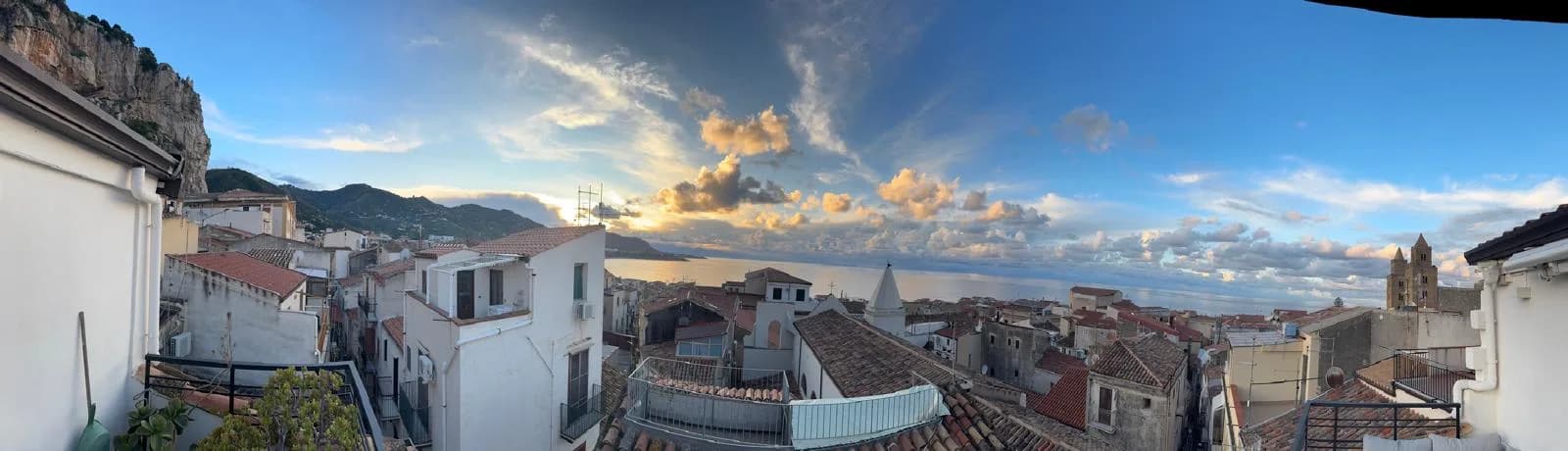
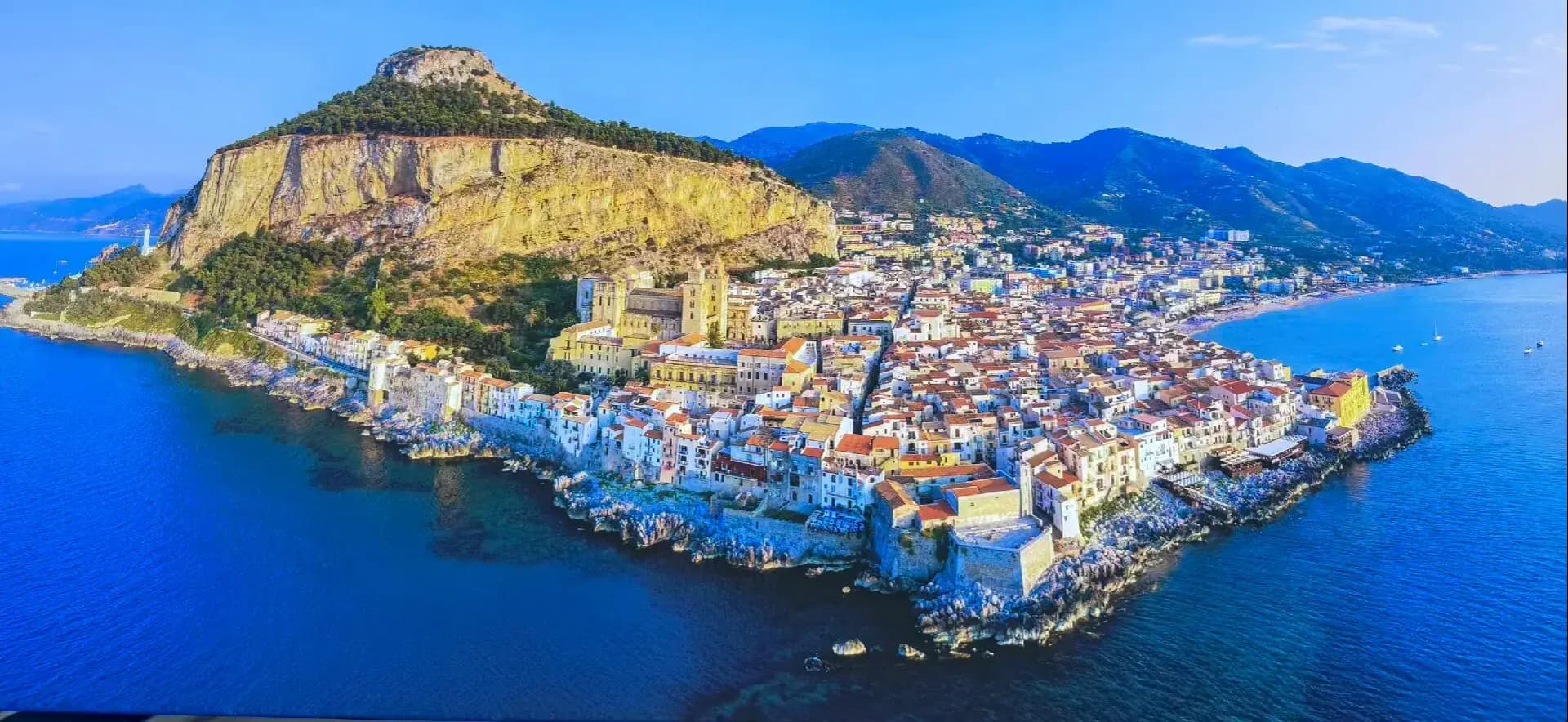
Two cathedrals, both Arab-Norman, both UNESCO World Heritage, both covered in gold-leaf mosaics. The question our guests ask most often is: should we go to Monreale? The short answer is that Cefalù already has one of the finest medieval mosaics in existence — you do not have to travel anywhere. The longer answer is that Monreale is a genuinely different experience, not just a bigger version of the same thing, and if your stay is long enough, both are worth your time.
Below we compare the two buildings honestly — the mosaics, the atmosphere, how to get there, and whether a single-day double visit is realistic. If you have not yet read our detailed Cefalù Cathedral guide, start there. This page assumes you know the basics of what the Cefalù building contains.
The mosaics compared
Cefalù's Pantocrator was completed in 1148 — a single figure of Christ as ruler of the universe, occupying the upper half of the apse wall in gold-backed glass tesserae. It is the earliest surviving Pantocrator in Sicily, and many art historians consider it the finest: the gold is richer than at Monreale, the expression more restrained. The scale is human enough to let you stand close and study the individual pieces. The mosaic has sat in that apse for nearly nine centuries and has not been significantly restored.
Monreale is something else entirely. Built between 1172 and 1189 by William II — Roger II's grandson — it covers 6,340 square metres of wall and ceiling in a continuous narrative mosaic programme: the Old Testament along the nave, the New Testament in the transepts and chancel, Christ in the central apse above everything. The figure count runs into the hundreds. Individual panels — the creation of the world, the Last Judgement — are the size of house walls. Nothing in Sicily prepares you for the density of it.
The question is not which is better but what you are after. Cefalù is a single, considered masterwork in a building you can absorb in an hour. Monreale is an immersive programme that takes two to three hours to read properly and still leaves panels you have not looked at carefully enough.
Scale, atmosphere, and the cloister
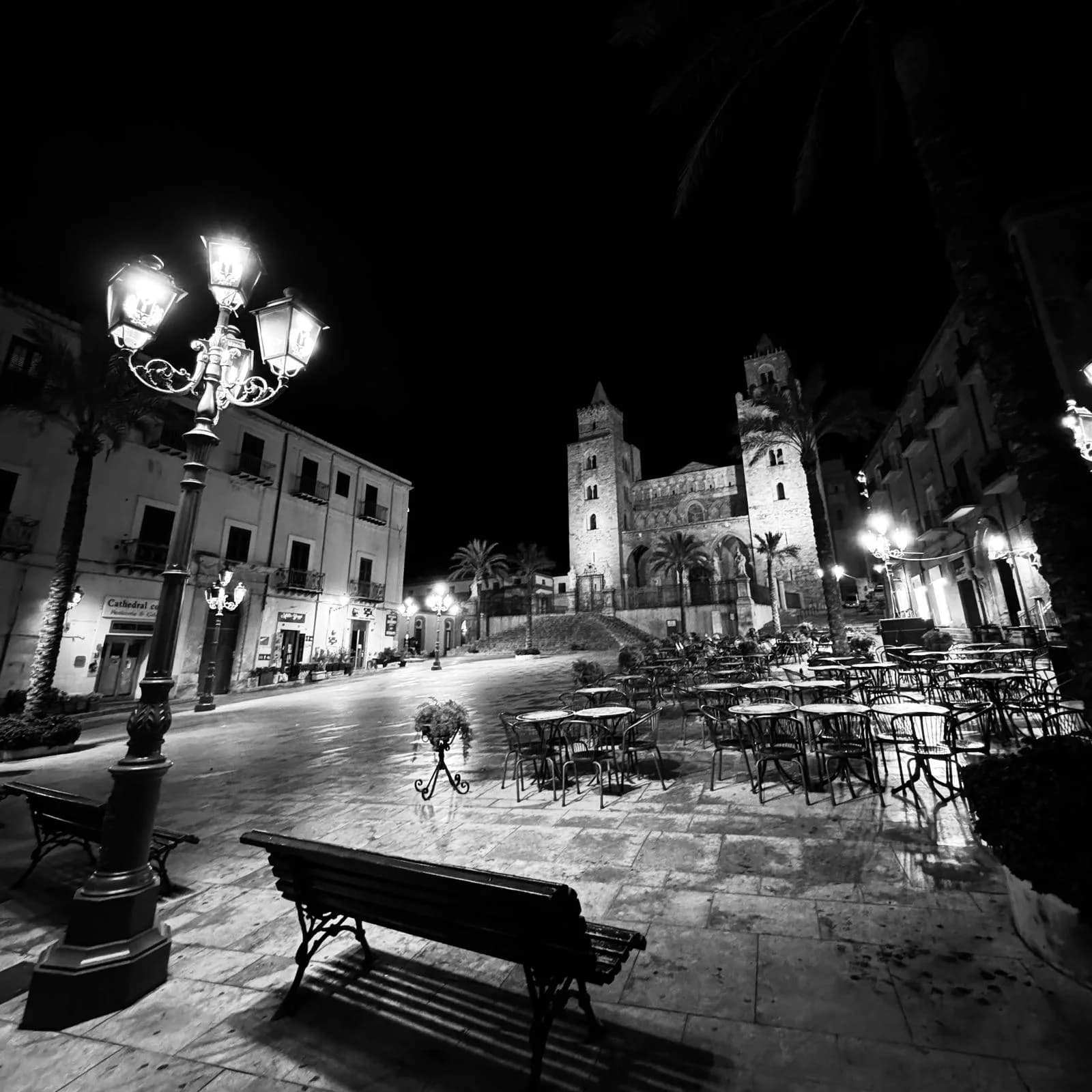
Cefalù Cathedral sits on Piazza del Duomo at the centre of a working town. The square has café tables, locals cutting through on their way somewhere, and — most mornings — a specific quality of quiet before the tour coaches arrive at 10:30. The building does not announce itself in the way Monreale does. You arrive through a narrow lane, look up, and there it is. The Norman towers catch the morning light in a way that is better in person than in any photograph.
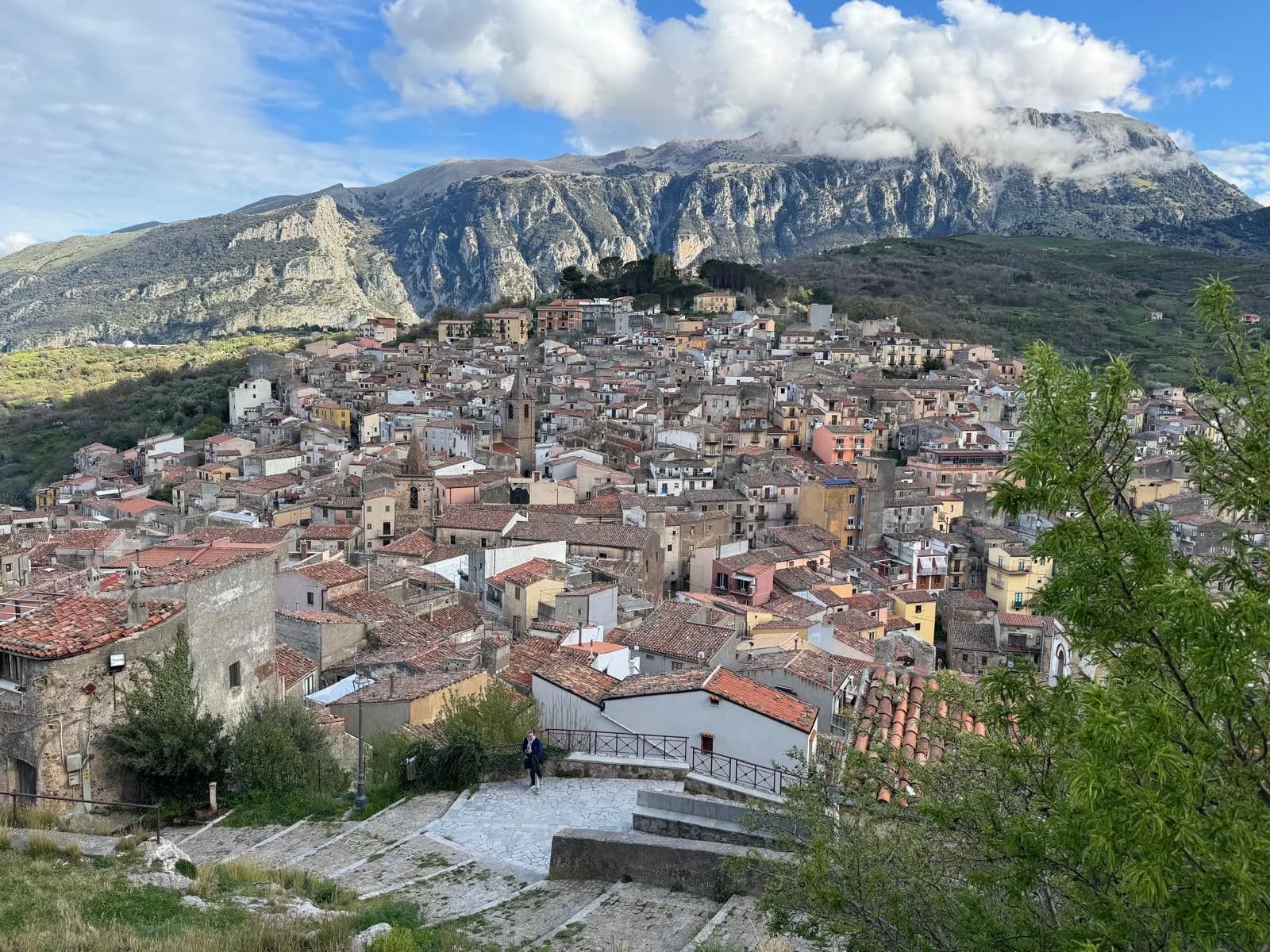
Monreale is on a hill 8 kilometres above Palermo, looking down over the Conca d'Oro valley. The town exists almost entirely to serve the cathedral and the tourists who come for it. In summer it is busy in a way that Cefalù, even in August, is not. The cathedral interior is louder, the pace faster, the light inside harder to read because the mosaic programme covers every surface and the eye does not know where to rest.
The cloister is where Monreale earns its place. Two hundred and twenty-eight paired columns arranged in a square, each capital unique — carved by Arab and Norman craftsmen with a freedom that the more formal mosaic programme does not allow. Lions, hunters, biblical scenes, geometric interlace, and figures that appear to owe more to Arabic manuscript illustration than to anything Byzantine. The cloister is a separate ticket, around €7 full price, €3.50 reduced, and is the real argument for making the journey. If you visit Monreale and skip the cloister, you have missed the point.
Getting to Monreale from Cefalù
By car, Monreale is about 74 kilometres from Cefalù — roughly 55 minutes via the A19 and A29 motorway through Palermo. Drive into Palermo on the A19, pick up the A29 ring road west, then exit and climb the hill to Monreale. There is paid parking near the cathedral. The drive itself is not complicated but Palermo's ring road is busy and the exit for Monreale is on the edge of the city's traffic pattern — allow extra time in July and August.
Without a car, the most practical route is: train from Cefalù to Palermo Centrale (about 55 minutes, trains every 30–60 minutes), then the AST 389 bus from outside Palermo Centrale to Monreale (around 30–40 minutes, check current timetables). Total journey time is roughly two hours each way. It is perfectly doable but it turns Monreale into a full day rather than a half day. See our getting to Cefalù guide for current train timetables and Palermo connections.
A private transfer from Cefalù to Monreale and back — with a few hours at the site in between — is the most comfortable option if you want to do it without the motorway. Book one directly with a local transfer or driver service, then use the trip planner to slot the day in.
Can you visit both in one day?
Yes, but it is tight. The sequence that works best: climb La Rocca or visit the Cefalù Cathedral nave early — be there at 08:30 when the morning light hits the Pantocrator. By 09:30 you have done the best of it. Drive to Monreale aiming to arrive by 10:30, before the coach parties settle in. Two to three hours at Monreale — cathedral and cloister — takes you to around 13:00. Lunch in Monreale town (the piazza has several reasonable options within a short walk of the cathedral), then the drive back to Cefalù gets you in by 16:00 with the afternoon still intact.
What it asks of you is an early start and driving in Palermo traffic. If that sounds manageable, the day works. If it sounds like too much, do not squeeze it. Monreale on a day when you are not rushed is a better experience than Monreale between ferry connections. Our honest advice: if you are staying four or more nights, give Monreale its own morning — drive up, spend two to three hours, come back for a late Cefalù lunch. The cathedral will be quieter and you will not feel the clock.
If you want to map out the whole day — transport, timing, and a lunch spot worth eating at — the trip planner below is the fastest way to build it.
Our recommendation: which one to visit
If you are choosing just one: see Cefalù. You are already here. The Pantocrator is one of the great works of medieval art in Europe, the cathedral is an active place of worship rather than a managed tourist site, and the morning light in that apse between 08:30 and 10:00 is something you will not forget. Most people do not need to go to Monreale to have seen what Arab-Norman architecture is capable of.
If you have a full spare day: go to Monreale for the cloister. Not primarily for the mosaics — which are extraordinary but overwhelming — but for those 228 carved columns, each capital different, the whole thing open to the sky. It is one of the strangest and most accomplished things the Norman kingdom left behind, and it does not feel like anything else in Sicily.
The honest note: the two buildings are not competing. They are expressions of the same tradition at different scales and a generation apart. Roger II's Cefalù is intimate and concentrated. William II's Monreale is imperial and comprehensive. Both were built by kings who understood that architecture was a form of power — and both remain, nine hundred years later, exactly as intended.
Common questions
Is Monreale worth a day trip from Cefalù?
Yes, particularly for the cloister — 228 paired columns with unique carved capitals that represent Arab-Norman craftsmanship at its most inventive. By car the drive takes about 55 minutes via the A29. By train to Palermo Centrale then the AST 389 bus, allow around two hours each way. Give yourself at least half a day at the site.
Which has better mosaics — Cefalù or Monreale?
They are different experiences. Cefalù has a single Pantocrator from 1148, considered by many art historians to be the finest in Sicily — concentrated, refined, earlier. Monreale has 6,340 square metres covering the entire interior in a narrative biblical programme from the 1180s. Cefalù rewards close attention; Monreale requires time to absorb. Both are outstanding.
How long does Monreale take to visit?
Allow two to three hours for both the cathedral and the cloister — more if you are reading the mosaic programme carefully. The cathedral and cloister are run separately and require separate tickets. Entry to the cathedral nave costs around €4–6; the cloister is a separate ticket at around €7. The cloister is the part most people underestimate; allow at least 45 minutes there.
Can you do Cefalù Cathedral and Monreale in one day?
Yes. Visit Cefalù Cathedral at 08:30 for the morning light on the Pantocrator, then drive to Monreale arriving by 10:30. Two to three hours at Monreale, lunch in town, back in Cefalù by 16:00. It requires an early start and driving through Palermo. If the schedule feels tight, give Monreale its own morning — the experience is better without the clock.