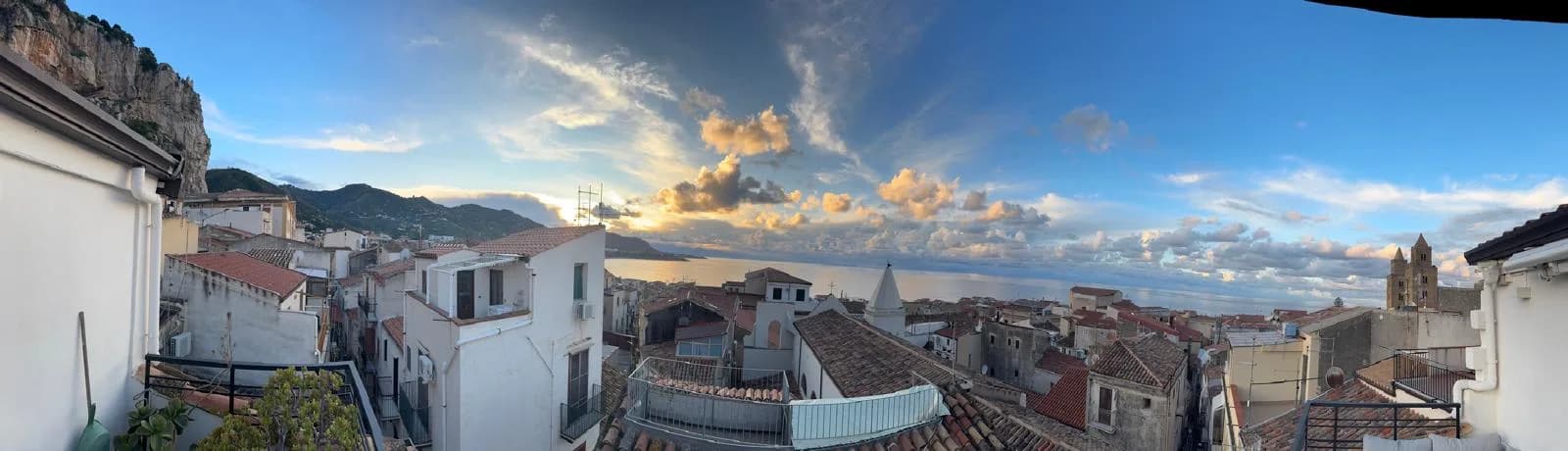
Roger II ordered this cathedral built in 1131 after surviving a shipwreck off the Cefalù headland — a vow to God, discharged in limestone and gold. What he commissioned became one of the finest buildings in Sicily. The Christ Pantocrator mosaic in the apse, completed in 1148, covers a twenty-metre wall in gold tesserae and has not moved since. UNESCO included it in the Arab-Norman Palermo World Heritage serial site in 2015, alongside Monreale and the Palermo churches. The listing was deserved.
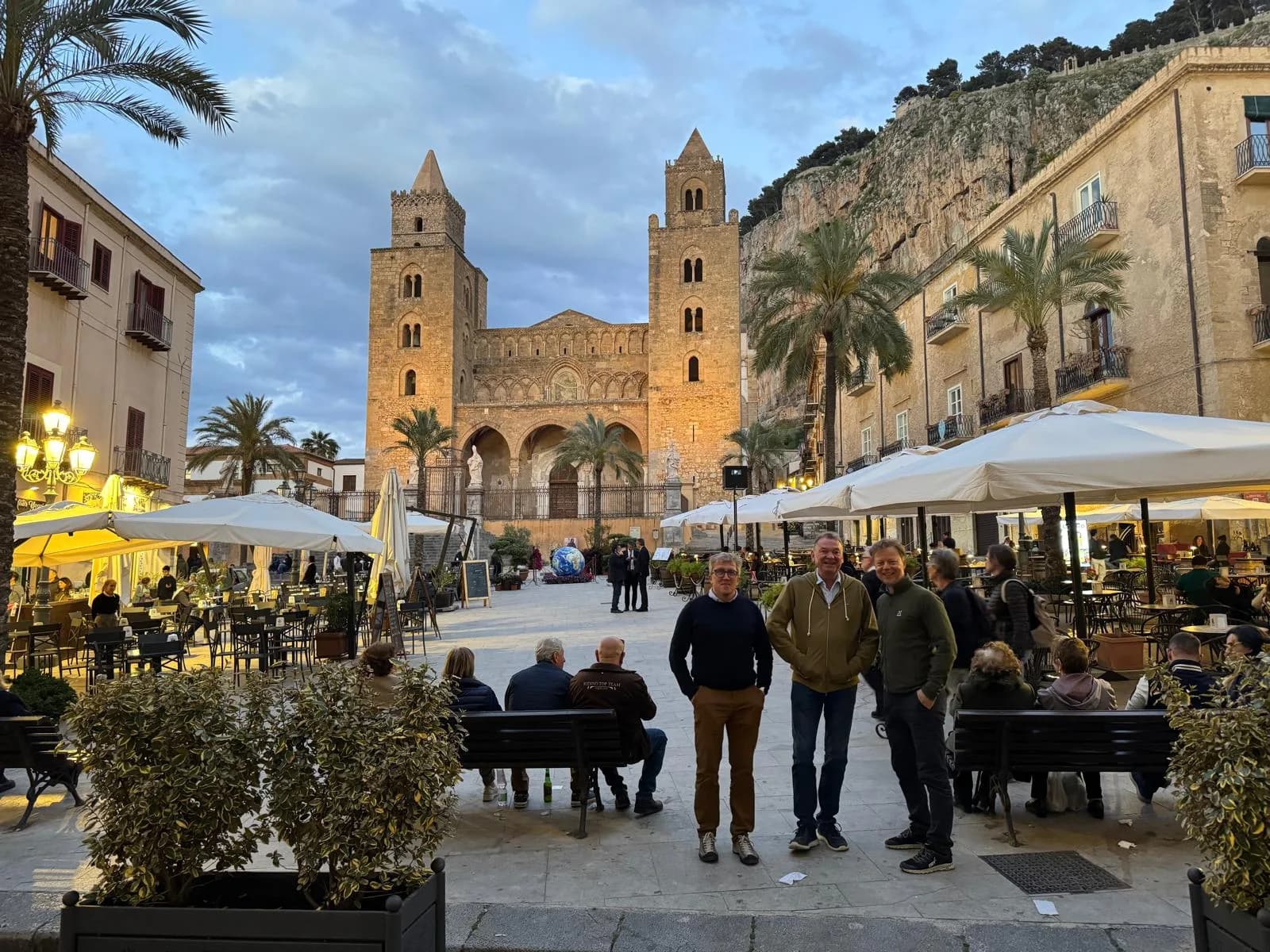
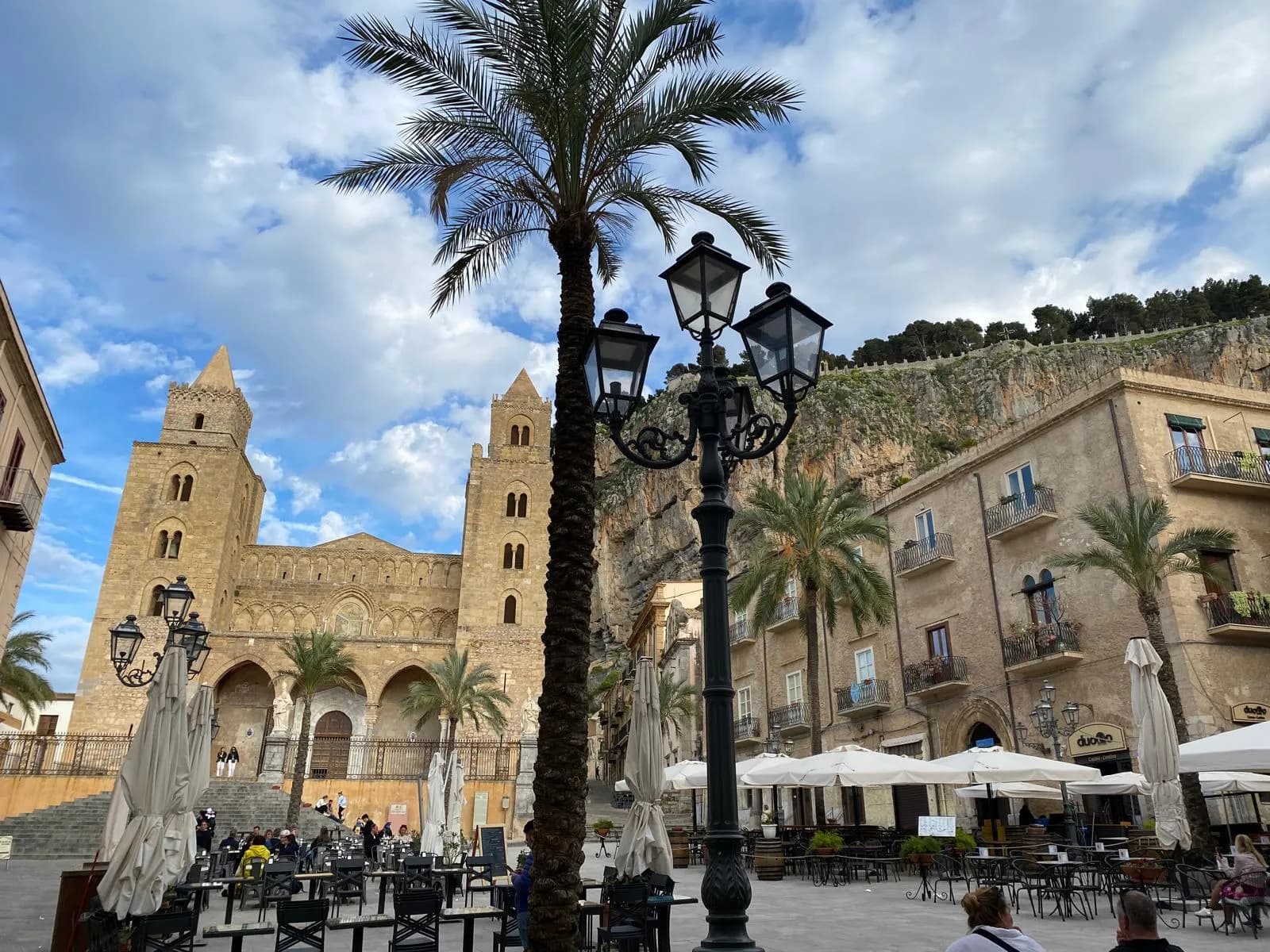
Every time we are in Cefalù we walk past this building. We still stop. The façade does something particular at golden hour — the Norman towers catch the last light while the piazza below goes into shade, and the whole thing looks like it belongs to a different era of ambition. If you visit Cefalù and see nothing else, see this.
The Christ Pantocrator mosaic
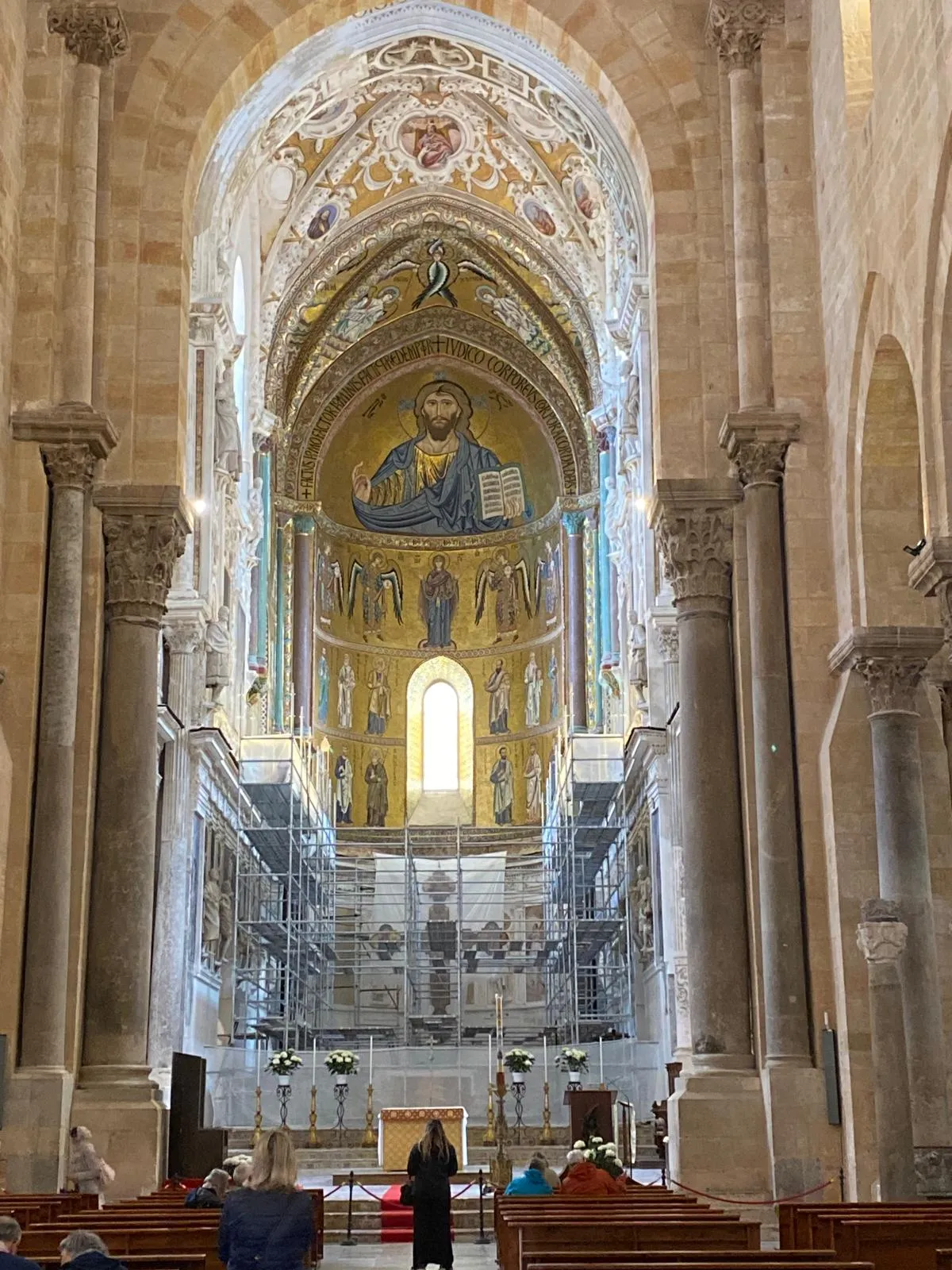
The mosaic is in the apse — the curved recess at the eastern end of the nave, directly behind the altar. Christ is depicted as ruler of the universe, one hand raised in blessing, the other holding an open gospel. The scale is overwhelming: the figure fills the upper half of a twenty-metre wall, rendered in thousands of gold-backed glass tesserae that catch and scatter light differently depending on the time of day.
This is the earliest surviving example of the Pantocrator type in Sicily, predating the more famous version at Monreale by several decades. Art historians consider it the finer of the two — the expression is more restrained, the gold richer. Entry to the nave is free. Arrive before 10:00 in summer, when the east windows send morning light directly into the apse and the mosaic appears to glow from within. After 10:30 the coach parties arrive and the nave fills. The difference between these two experiences is significant.
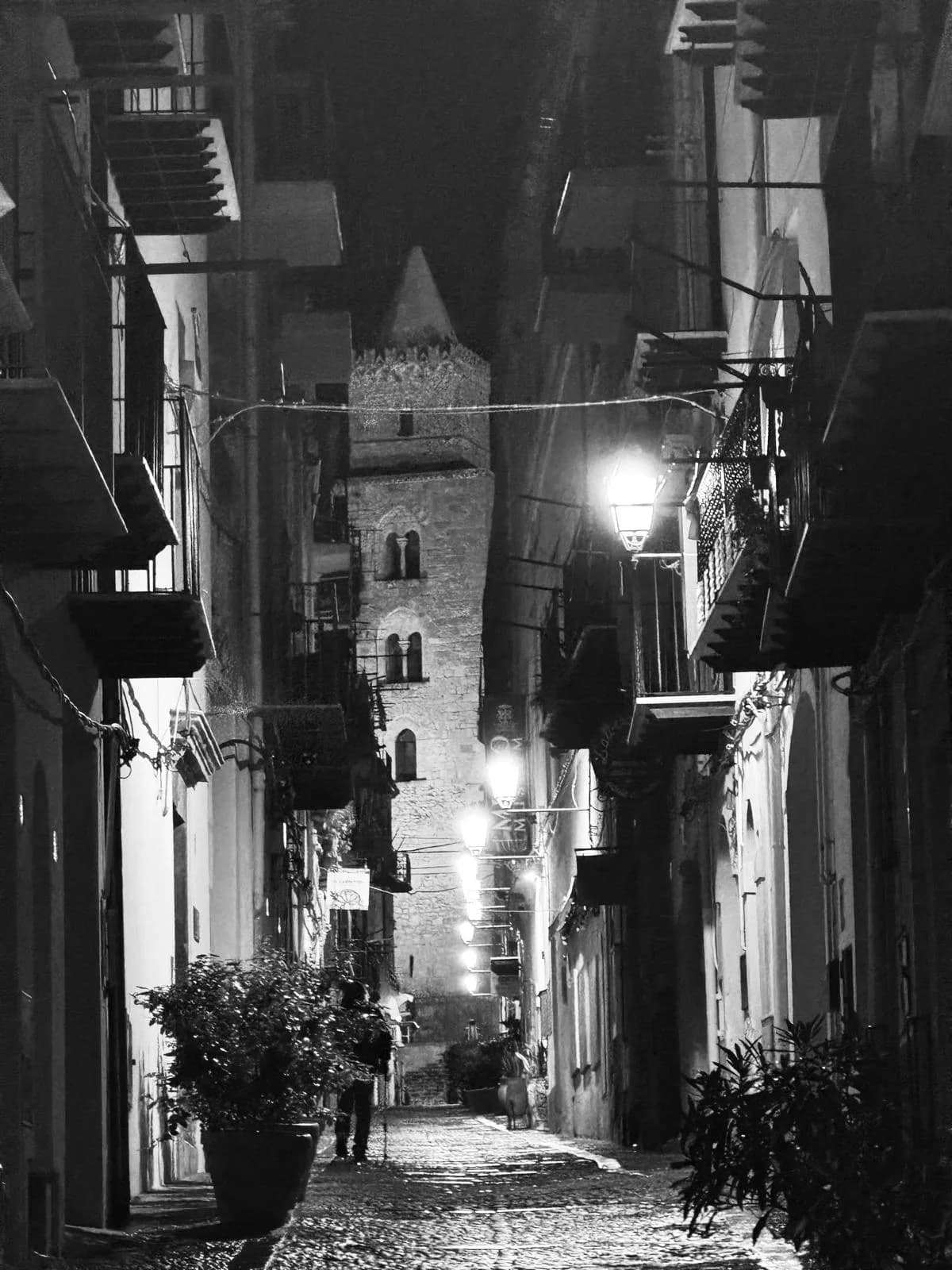
The towers, cloister, and paid routes
Beyond the nave, the cathedral operates a ticketed visit system across three routes. The most comprehensive — towers, rooftop, sacristy, treasury, Norman cloister, and the Osterio Magno — costs around €10–12. The cloister alone is worth it: a square of paired Norman columns with interlaced arches, carved in a style that shows the Arab-Norman synthesis at its clearest. The proportions are almost domestic after the drama of the nave — quiet, geometric, cool.
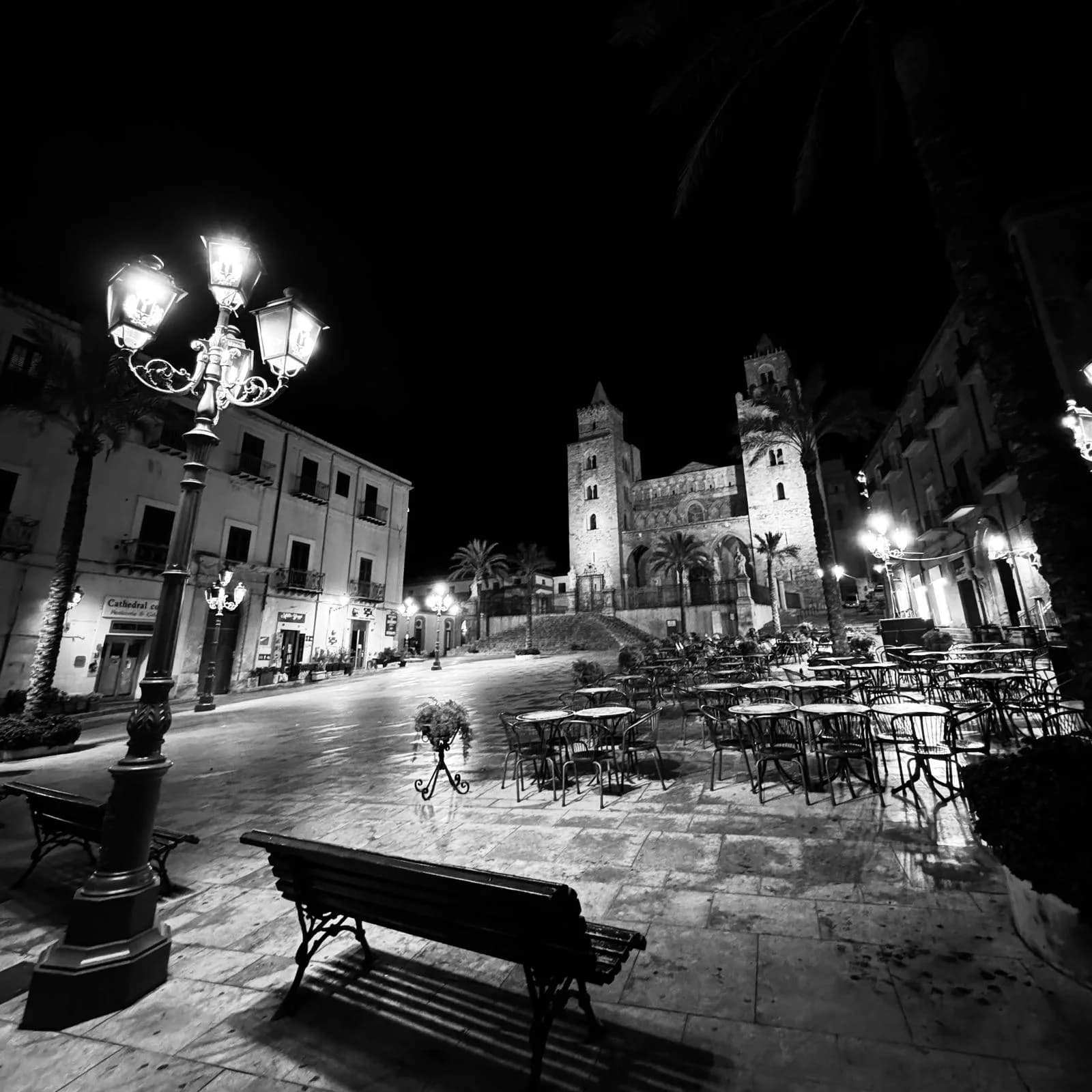
The tower climb gives you a view down into the Piazza del Duomo and across the rooftops to La Rocca. It is less dramatic than the summit of La Rocca itself, but it is a different vantage — lower, more intimate, the town at eye level rather than far below. Book tickets at duomocefalu.it or pay at the cathedral entrance. Binoculars are worth bringing for the mosaic and the tower views.
What to know before you go
Entry to the nave is free and requires no booking. Dress modestly — shoulders and knees covered. The cathedral is an active place of worship; there will be services, sometimes unexpectedly, and you may be asked to wait at the entrance.
The building faces east. Morning light enters through the apse windows and falls directly on the Pantocrator between roughly 08:30 and 10:00 — this is the light the architects intended. In the afternoon the apse is in shade and the effect is flatter. If you have a choice, always visit in the morning.
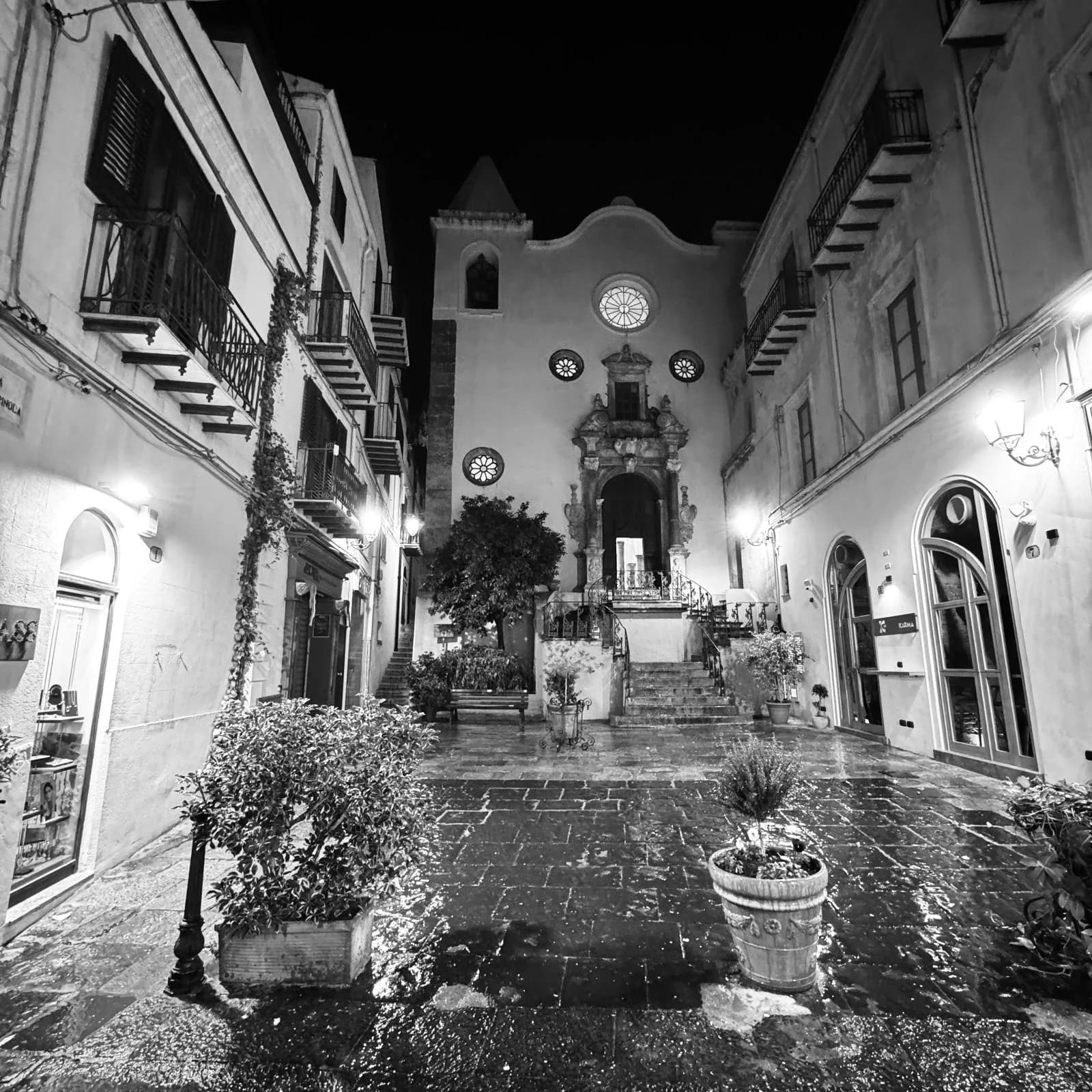
Piazza del Duomo, the square outside, is good at any hour. Café tables face the façade and the cathedral provides the backdrop for the evening passeggiata. A Spritz at Bar Duomo at golden hour, with the Norman towers turning amber behind you, is not something you forget quickly. See our drinks guide for where to sit.
The cathedral in context
Roger II built the cathedral at the height of Norman power in Sicily. The Norman kings had inherited a complex, multi-faith society — Arab, Byzantine, Latin, Jewish — and they ruled it without insisting on uniformity. The cathedral embodies this: Norman Romanesque structure, Byzantine mosaic programme, Arab-influenced geometric ornament. Three traditions in one building, commissioned by a king who spoke Arabic at court and employed Muslim scholars alongside Christian bishops.
That history matters because it explains why this building looks like nothing else in Europe. Monreale, Palermo, Cefalù — the three main Arab-Norman monuments in northern Sicily — each express a different balance of influences. Cefalù is the oldest and, we think, the most coherent. The Pantocrator dominates the apse the way it dominates Sicily: self-contained, gold-backed, complete. If you want the cathedral built into a proper day of Cefalù's history and architecture, we've mapped this into a full day plan in our culture day itinerary.
Common questions
Is entry to Cefalù Cathedral free?
Entry to the nave is free. The paid routes — which include the towers, rooftop, cloister, sacristy, and treasury — cost around €10–12 depending on the itinerary you choose. Book at duomocefalu.it or pay at the entrance. The cloister and tower climb are both worth the ticket.
When is the best time to visit Cefalù Cathedral?
Before 10:00. The morning light enters through the east windows and falls directly on the Pantocrator mosaic between roughly 08:30 and 10:00 — the effect is extraordinary and was clearly intentional. After 10:30 the coach tours arrive and the nave gets loud. The cathedral is at its best in near-silence.
How long does it take to visit the cathedral?
The nave alone takes 20–30 minutes if you spend proper time with the mosaic. Add an hour or more for the full paid itinerary (towers, cloister, sacristy, treasury). We usually allow 45 minutes for a thorough free visit, then another 45 for the paid route if we have guests who want to go further.
What is the difference between Cefalù Cathedral and Monreale?
Both are Arab-Norman UNESCO sites with gold-tesserae mosaics. Monreale (30 km from Palermo) has a larger mosaic programme covering the entire interior; Cefalù has a single, earlier Pantocrator considered by many scholars to be more refined. Cefalù also has fewer tourists. Both are worth visiting if you have time — Monreale is a straightforward day trip from Cefalù by car.
Can you visit the cathedral roof and towers?
Yes, as part of the paid itinerary routes available at duomocefalu.it. The tower climb is moderate and gives views across the Piazza del Duomo and toward La Rocca. Allow an extra 30–45 minutes for this on top of your nave visit.