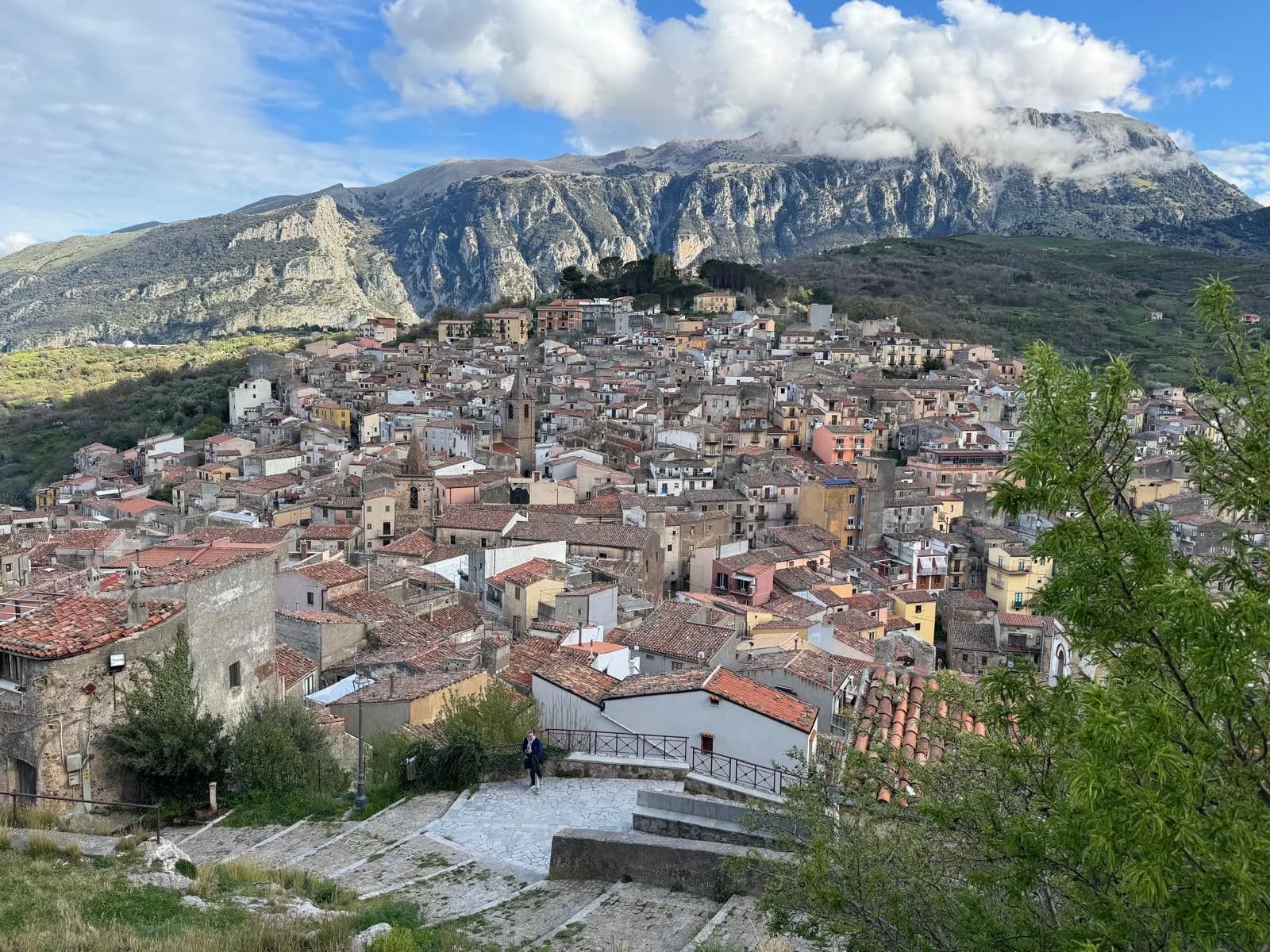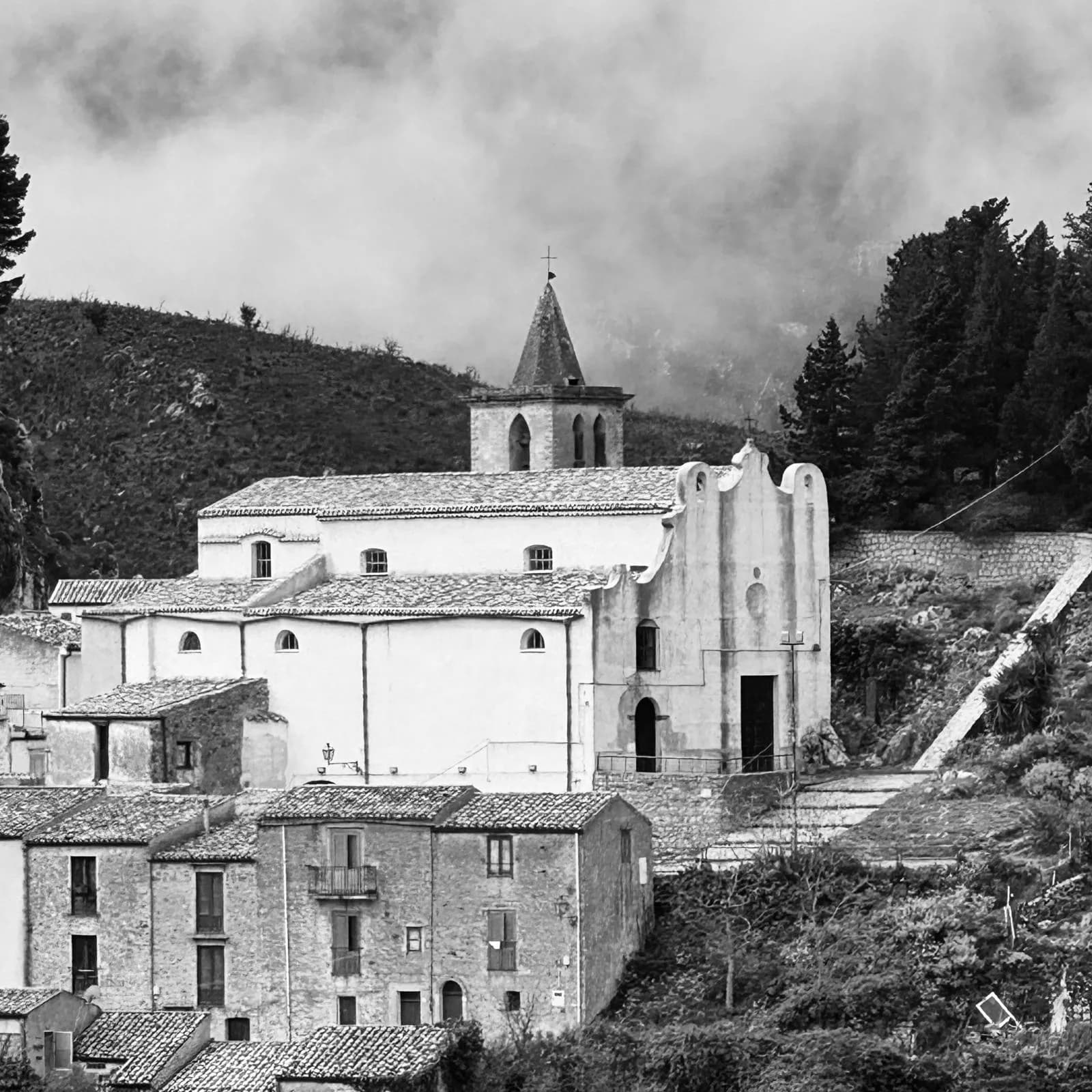
Gratteri sits at 700 metres in the Madonie foothills, about 15 km and a twenty-minute drive from Cefalù, and it is not a place with a list of attractions. It is a village — roughly a thousand people, a piazza, a couple of churches, cooler air than the coast, and views across the Bay of Palermo that stop you mid-sentence on a clear day. We spend a lot of time up here, partly because two of our own properties sit in the village, and partly because it is a genuinely useful way to understand a different rhythm of Sicily than the one on the seafront.
This page covers what is actually in Gratteri, the drive up, a couple of short walks, and an honest note on what to expect — because the appeal here is specific and worth being upfront about. For the wider set of options beyond Cefalù, see our day trips guide.
The honest version: this is not a sight to tick off. It is a place to sit still for an hour, have a coffee in the piazza, and look at the sea from somewhere the sea cannot reach you.
The drive up and what you will see
From Cefalù, the road to Gratteri climbs through olive terraces and switchbacks for about fifteen minutes before the village appears, tucked below the Pizzo di Pilo ridge. It is a twenty-minute drive door to door, steep in places but well-surfaced, and one of the more dramatic short drives near Cefalù — the coastline drops away behind you and the Bay of Palermo opens up to the west on a clear day.
There is no meaningful public transport up here; a car, e-bike (a hard climb, but doable for a confident rider), or a private transfer booked directly is the way to do it. Park near the piazza at the top of the village — Gratteri's centre is small and walkable in full within fifteen minutes.
The piazza, the churches, and the Grotta Grattara
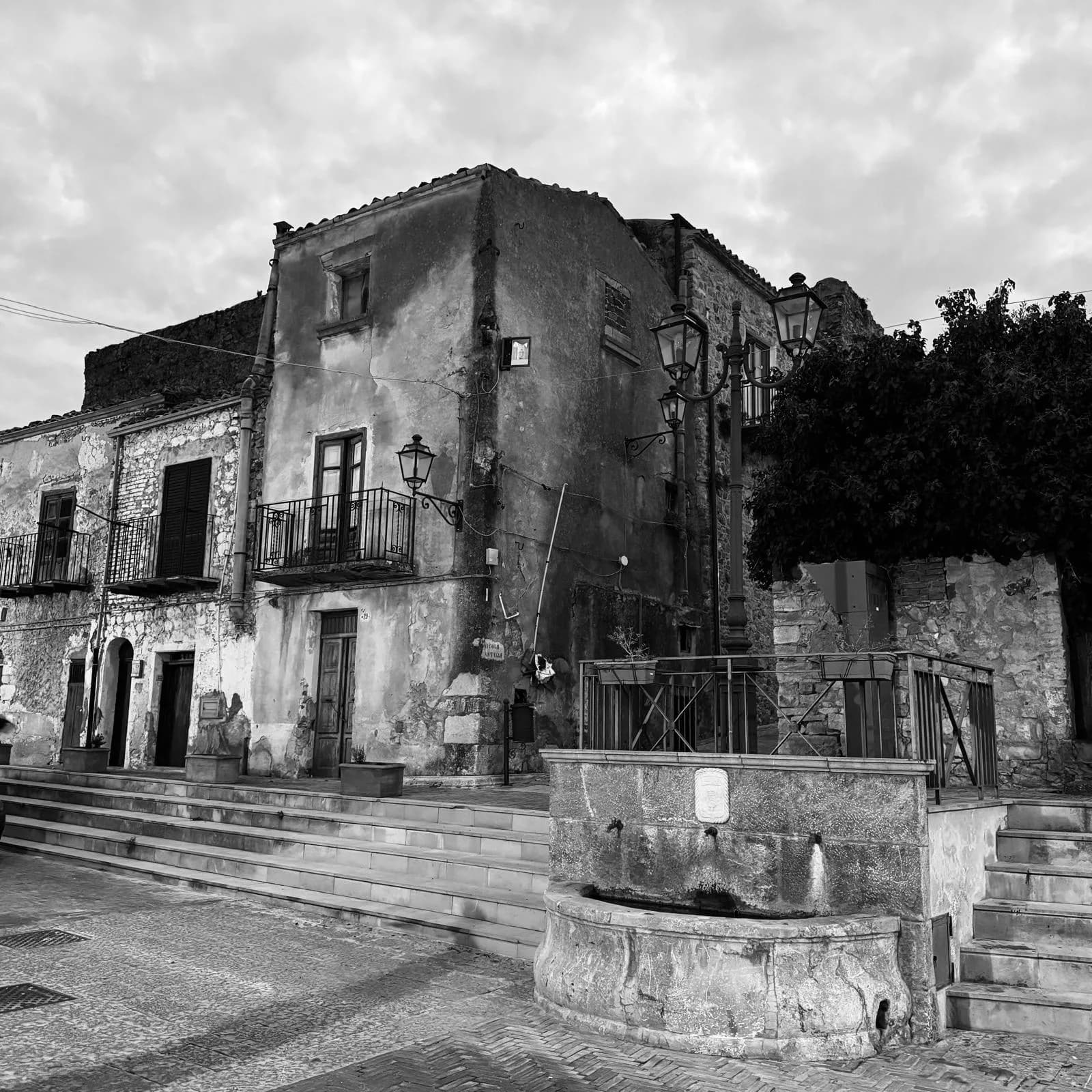
Gratteri's centre is built around a small piazza with the parish church and a scatter of older buildings, some restored, some still showing the stonework and stucco of centuries of use. It is unhurried in a way that is hard to manufacture — there is no tourist infrastructure here to perform for anyone.
The village's best-known feature is the Grotta Grattara, a cave about 300 m from the centre at the foot of the Pizzo di Pilo, reachable on a short marked walk through the surrounding pinewood. Local legend holds it as the home of the Befana — the Epiphany witch of Sicilian folklore — and a separate, older story tells of a nymph and a spring said to have once been marked by a statue of a woman with water flowing from her hands. Whichever version you prefer, the cave and its cool spring water are worth the walk on their own, and the name Gratteri is thought to derive from the cave itself.
About half an hour's walk further into the forest are the ruins of the Abbey of San Giorgio, a Norman-Romanesque abbey founded around 1140–1142 — the only house of the Premonstratensian order ever established in Sicily. Three naves, three apses, and a scale that puts it in the same architectural family as the cathedrals of Cefalù and Monreale, now standing quiet in the woods rather than at the centre of a town square.
Honest expectations
Gratteri is not an attraction. There is no single thing to photograph and move on from — that is deliberately the point. What you get instead is altitude, quiet, and a version of the Madonie that has not been arranged for visitors. If you come expecting a checklist of sights, you will be finished in under an hour and wonder what the fuss was. If you come to sit in the piazza with a coffee, walk to the cave, and let the pace slow down, you will understand why we keep coming back.
This makes it a good half-day for people who have already done Cefalù's obvious sights and want something with a completely different register — cooler air, mountain silence, a sense of Sicily that has nothing to do with beaches.
Where to eat and have coffee
La Villa, a restaurant-pizzeria-bar on Via Carrozza, is the straightforward choice for lunch or a coffee in the village — simple Sicilian cooking and pizza, unpretentious, the kind of place with regulars rather than a tasting menu. Beyond that, expect a village-scale choice of bars around the piazza rather than a restaurant scene — part of what keeps Gratteri from feeling arranged for tourists.
Staying in Gratteri: The Manna House & The Canalotto House
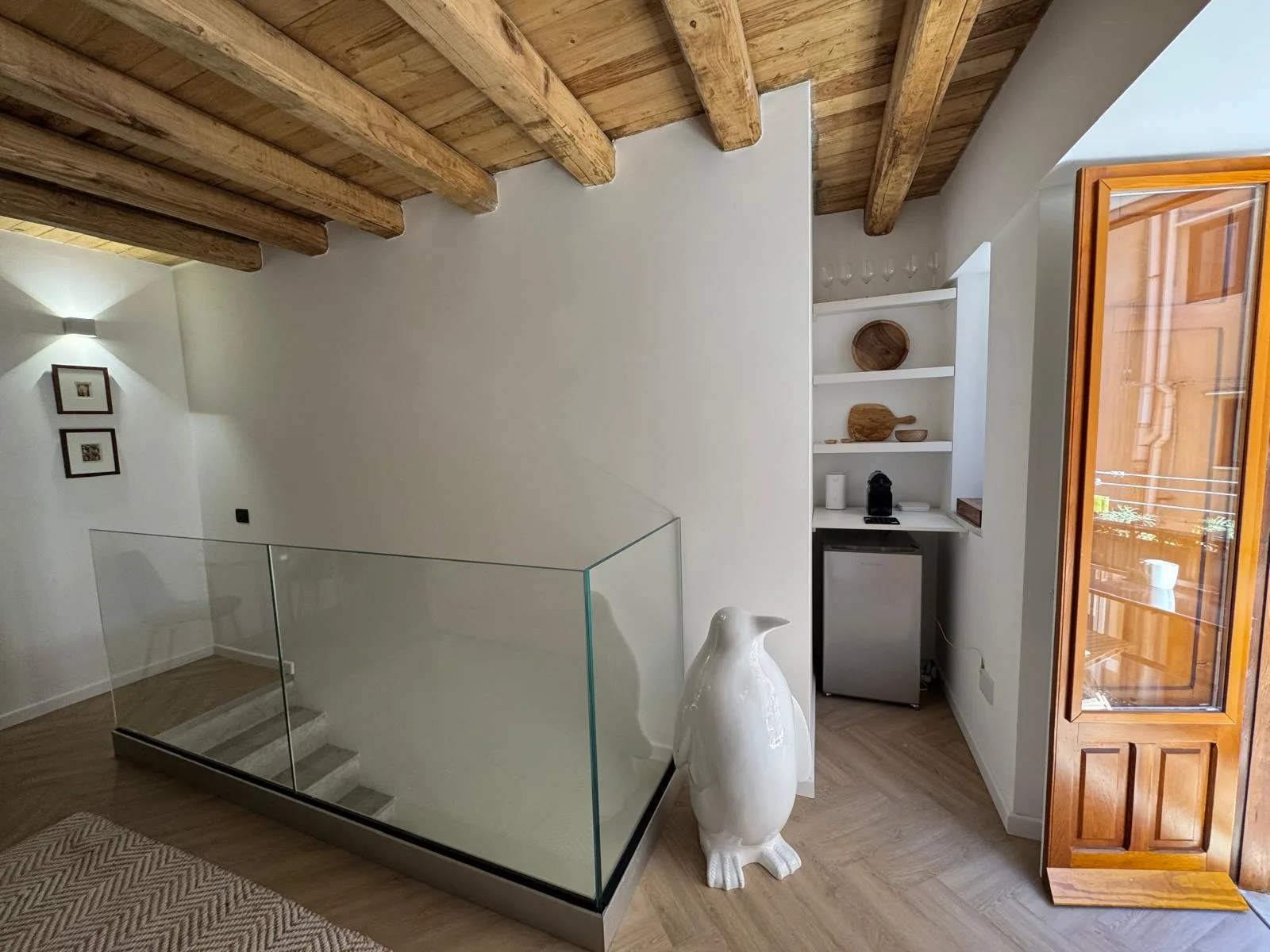
Our two linked townhouses in Gratteri, The Manna House and The Canalotto House, sit on Discesa Belvedere — each sleeping four to six across two bedrooms, at the same 700 m elevation and Bay of Palermo views described above. Thick stone walls, cooler evenings than the coast in July and August, and a fifteen-minute walk to the village piazza for espresso. The beach is a twenty-minute drive back down.
Both houses are coming soon rather than bookable today — if a mountain base with sea views and coastal access sounds right for your trip, get in touch to be notified when they open, and we will let you know as soon as dates are available. For a wider comparison of where to base yourself across old town, Marina, and Gratteri, see our area guide.
Common questions
How far is Gratteri from Cefalù?
About 15 km by road, a twenty-minute drive through olive terraces and switchbacks into the Madonie foothills. Gratteri sits at 700 m elevation. There is no meaningful public transport up; a car, e-bike, or arranged transfer is the practical way to visit.
What is there to do in Gratteri?
A small piazza and historic centre, the Grotta Grattara cave with its folklore of the Befana and a nymph spring, and the Norman ruins of the Abbey of San Giorgio about half an hour further into the forest. It is a quiet village rather than a checklist of sights — the appeal is the pace and the views, not a single attraction.
What is the Grotta Grattara?
A cave about 300 m from the centre of Gratteri, at the foot of the Pizzo di Pilo, reached by a short marked path through pinewood. Local legend ties it to the Befana of Sicilian folklore and to an older nymph-and-spring myth. It is thought to have given the village its name.
Is Gratteri worth visiting if it is just a village?
Yes, if you want altitude, quiet, and views over the Bay of Palermo rather than a list of sights. It suits a slow half-day — coffee in the piazza, a walk to the cave — after you have covered Cefalù's main attractions. It is not built for tourists, which is part of why it works.
Can you stay in Gratteri near Cefalù?
Yes — our two linked townhouses, The Manna House and The Canalotto House, sit on Discesa Belvedere in Gratteri, each sleeping four to six at 700 m elevation with Bay of Palermo views. Both are currently coming soon; register your interest to be notified when they open for booking.