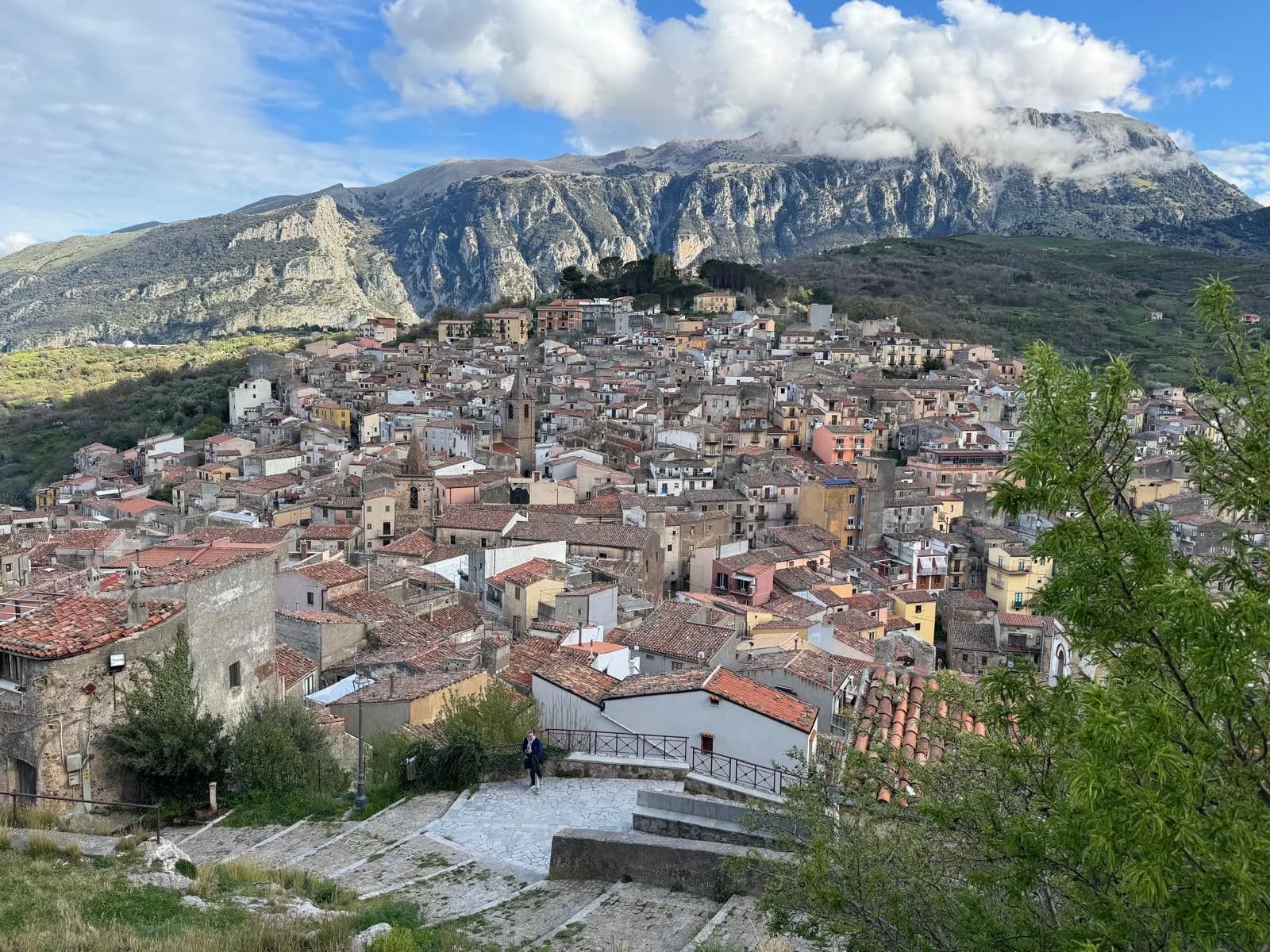
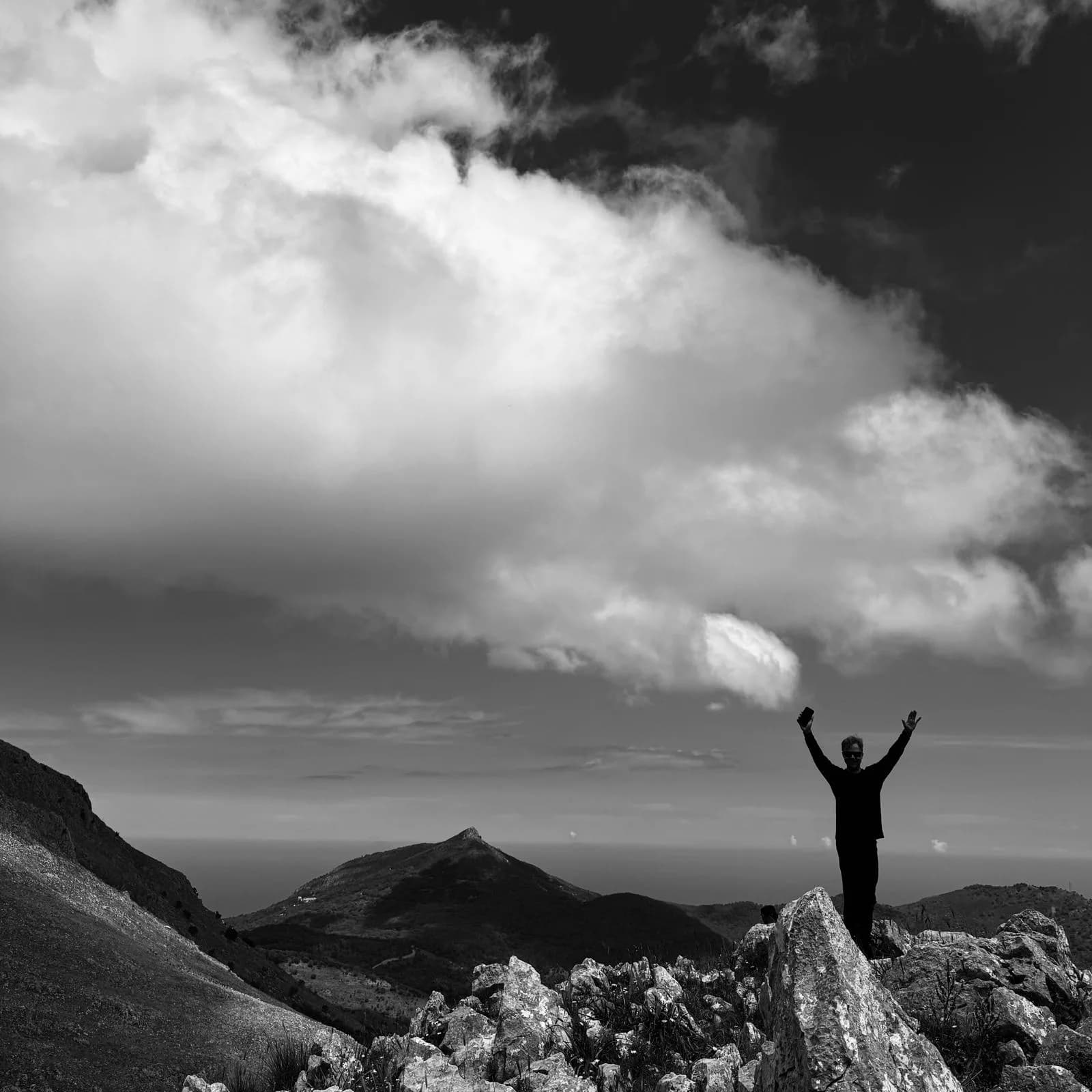
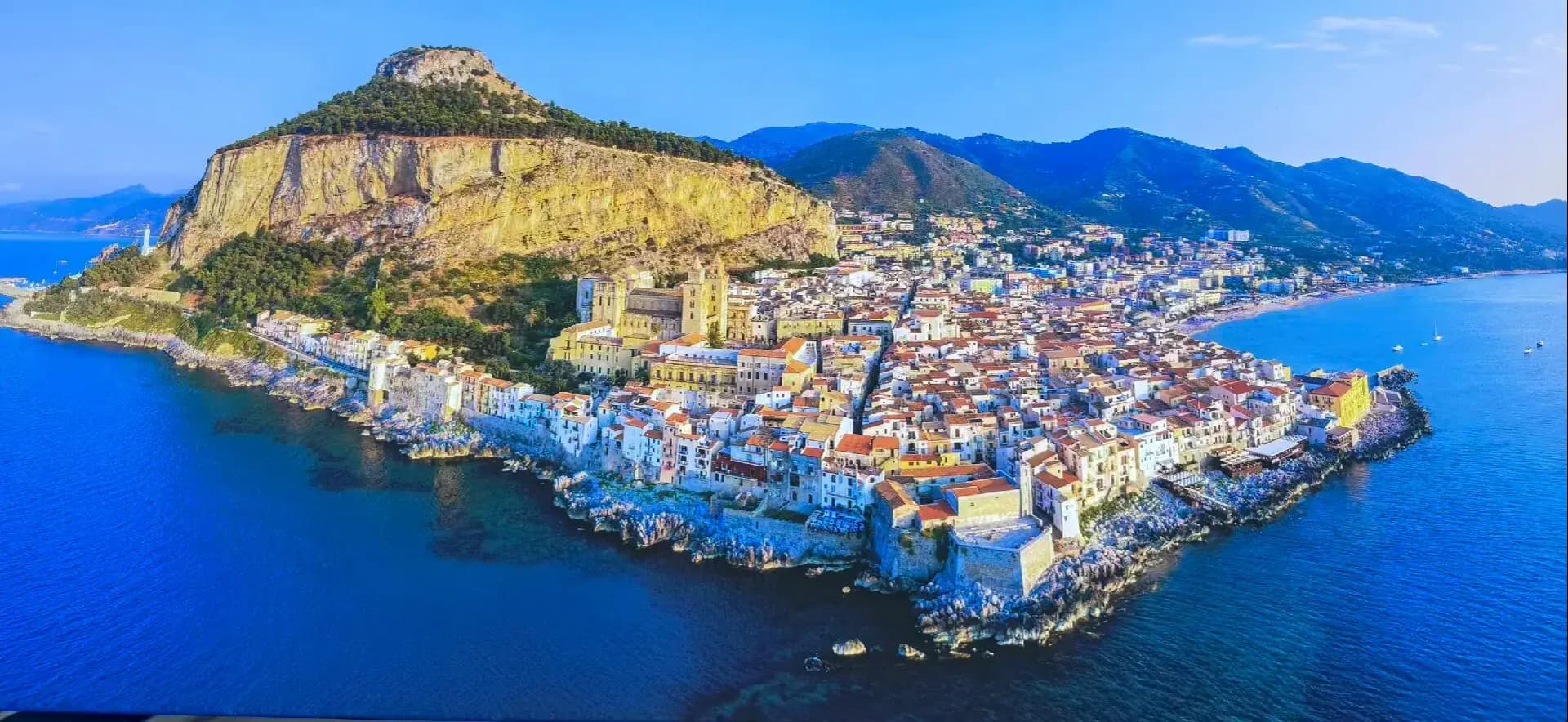
Castelbuono is the Madonie town we send guests to most often, and the one that surprises them most. Twenty-five minutes up the SS286 from Cefalù, the coast disappears completely and you are in a proper Sicilian mountain town: a 14th-century castle with a Baroque chapel most visitors have never heard of, a Thursday market that has nothing to do with tourists, and a pastry shop that ships panettone to New York in December. It does not try to be picturesque. It just is one, incidentally, while getting on with its own business.
This page covers a Castelbuono day trip properly: the drive up, the castle and its stucco chapel, the manna tradition that runs through the town's food, where to eat, and when to go. If you want the wider picture of everywhere else worth a detour from Cefalù, see our day trips guide first.
The honest caveat: Castelbuono rewards a slow half-day more than a rushed one. It is a small town. Go for the castle, the market if the timing works, lunch, and the walk between them — not for a long list of sights.
Getting there from Cefalù
Castelbuono is about 23–25 km from Cefalù via the SS286, which climbs steadily through the Pollina valley into the Madonie foothills. The drive takes 25–30 minutes depending on traffic through Pollina, and the road itself is part of the reward — switchbacks opening onto views back down to the coast, olive groves giving way to oak and chestnut as you gain elevation.
There is no direct bus from Cefalù, and the AST regional services that do run are infrequent and not built around a day-tripper's schedule — a car is the realistic way to do this properly. Park in one of the free areas at the edge of the historic centre (Piazza Margherita or along Via Umberto) and walk in; the old town itself is pedestrian in its centre and not somewhere you would want to be navigating with a car regardless.
If you would rather not drive, book a private driver directly for the day — up and back, timed around the market or a lunch booking — and use the trip planner to fit it into your stay.
The Ventimiglia Castle and the chapel most people miss
The Castello dei Ventimiglia, built from 1317 by Count Francesco I Ventimiglia, dominates the town from a rocky spur and now houses the Museo Civico — ceramics, coral work from the Trapani tradition, and the town's art collection. Entry is €5 (€4 reduced for ages 8–18 and over-65s, €2 for Castelbuono residents), and the museum is worth 45 minutes on its own.
The reason to go, though, is the Cappella Palatina di Sant'Anna inside the castle — a small chapel decorated in 1684 by the brothers Giuseppe and Giacomo Serpotta, the same stuccoists whose work defines Sicilian Baroque in Palermo's oratories. Every surface is covered: putti, floral garlands, mythological and sacred figures worked in white stucco with a lightness that photographs never quite capture. It is a fraction of the size of anything Serpotta did in Palermo and, we think, all the more affecting for being tucked away in a mountain castle most visitors to Sicily never reach. Allow ten minutes with it and you will probably stay for twenty.
Manna and the Fiasconaro story
Manna is the thing to understand before you eat anything in Castelbuono. It is a sweet, pale resin harvested from ash trees (Fraxinus ornus) grown between Castelbuono and Pollina — from July to September, harvesters called mannaruoli cut careful incisions in the bark and let the sap crystallise in the sun into brittle white stalactites. It is one of the few places on earth this is still done commercially, and the practice is centuries old.
Fiasconaro, on Piazza Margherita, is the reason manna is known outside the Madonie at all. What began in 1953 as Mario Fiasconaro's bar-pastry shop became, under his sons, one of Italy's most respected panettone houses — the Mannetto, their manna-enriched panettone, is what put Castelbuono on the culinary map, and Fiasconaro now exports panettone as far as the United States each Christmas. In summer they sell manna-based sweets, granita, and torrone rather than panettone, but the flavour — faintly floral, far less sweet than sugar — is worth trying in whatever form is in season.
The Thursday market and Castelbuono's slow food reputation
Castelbuono runs a weekly market every Thursday morning, filling the streets around the centre with local produce, cheese, and household goods rather than souvenirs. If your visit lands on a Thursday, build the morning around it — this is the best single stop in the Madonie for self-caterers, and noticeably more genuine than anything comparable on the coast.
The wider Castelbuono area has a real Slow Food identity: provola delle Madonie cheese, wild mushrooms from the beech forests in autumn, and Madonie black pig charcuterie all show up on menus seriously rather than as a marketing line. Nangalarruni, in the historic centre, has held a place in the Slow Food Osterie d'Italia guide for years and carries a Michelin Bib Gourmand — mushroom dishes are the thing to order, alongside a wine list that runs past 600 labels. Book ahead if you are coming specifically for lunch here rather than dropping in on spec.
When to go
Thursday, for the market. Beyond that, Castelbuono is a year-round day trip in a way the coast is not — the elevation keeps it noticeably cooler than Cefalù in July and August, which makes it a genuine escape from the coastal heat rather than just a change of scenery. Autumn brings mushroom season to the menus and colour to the beech forests on the drive up; spring brings wildflowers along the SS286. We would avoid a special trip in the depths of January purely for the castle, since some of the smaller food shops keep reduced hours off-season — but the castle and chapel are open year-round.
Castelbuono also combines naturally with a morning in the Madonie National Park, which starts just south of the town — see our hiking guide for trail options, or our mountains day itinerary for how we sequence a full day between the two.
Common questions
How far is Castelbuono from Cefalù?
About 23–25 km via the SS286, a 25–30 minute drive through the Madonie foothills. There is no practical direct bus service — a car, or a private transfer booked directly, is the realistic way to visit. The road itself, climbing through the Pollina valley, is part of the day.
What is manna and why is Castelbuono known for it?
Manna is a sweet resin harvested from ash trees around Castelbuono and Pollina from July to September, dried into pale stalactites by hand. Fiasconaro, the town's famous pastry house, built its reputation on manna-based panettone and now exports internationally. The flavour is faintly floral and much less sweet than sugar.
What is the entry fee for Castelbuono castle?
Entry to the Museo Civico inside the Castello dei Ventimiglia is €5 for adults, €4 reduced (ages 8–18, over-65s), and €2 for Castelbuono residents. The ticket includes the Cappella Palatina di Sant'Anna, a small chapel decorated in 1684 by the Serpotta brothers — arguably the best reason to visit.
What day is the market in Castelbuono?
Thursday mornings, in the streets around the historic centre. It is a genuine local market — produce, cheese, household goods — rather than a tourist affair, and the best single stop in the area for self-caterers staying in Cefalù or the Madonie.
Is Castelbuono worth visiting from Cefalù?
Yes, for a slow half-day rather than a checklist visit. The castle and its Serpotta stucco chapel, the manna and panettone tradition at Fiasconaro, and a Slow Food-recognised restaurant scene make it the most rewarding Madonie town within easy reach of the coast. Combine it with a morning hike for a full day.