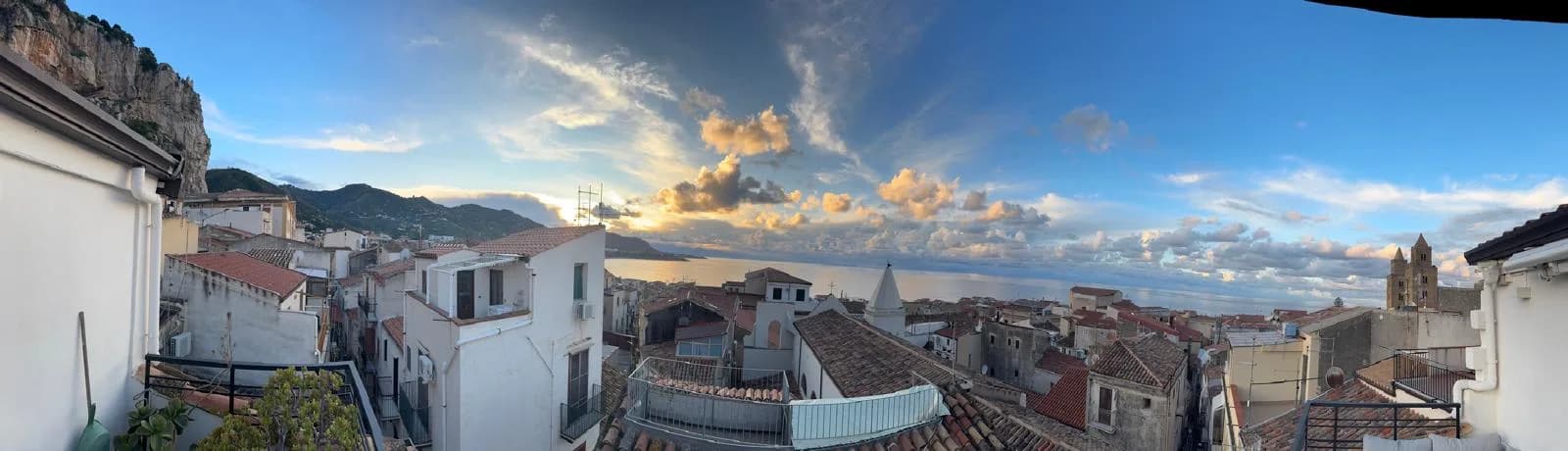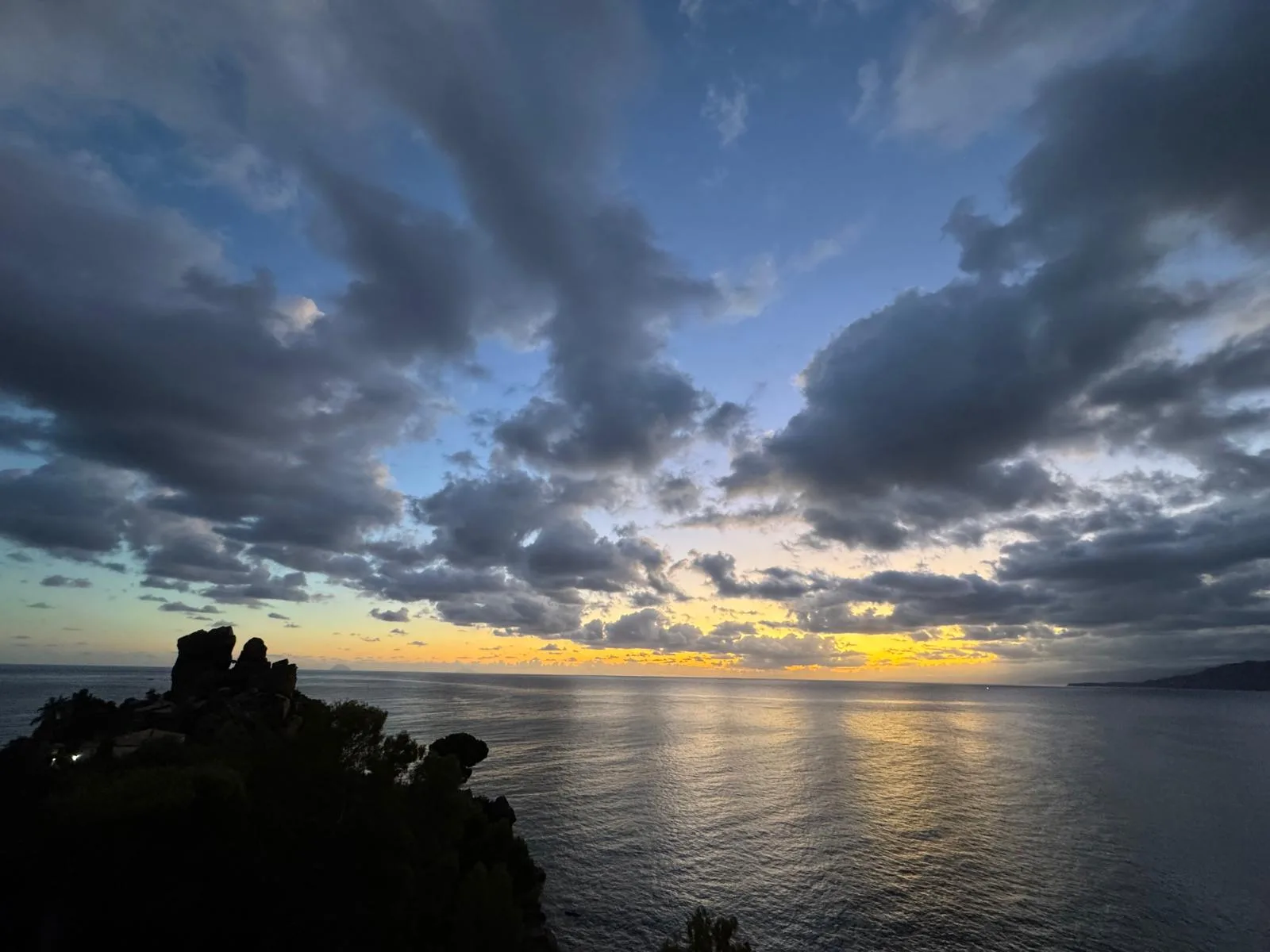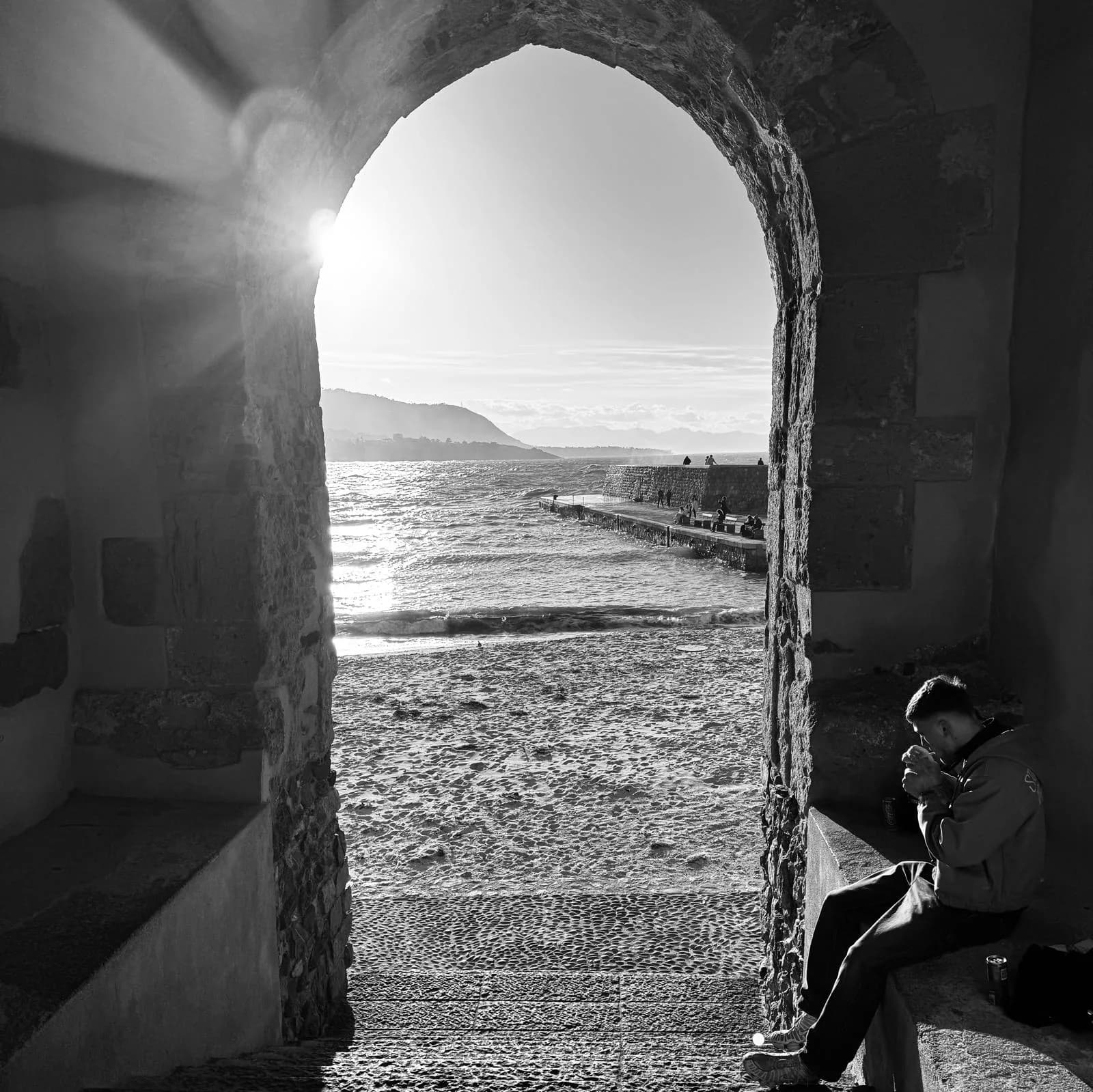
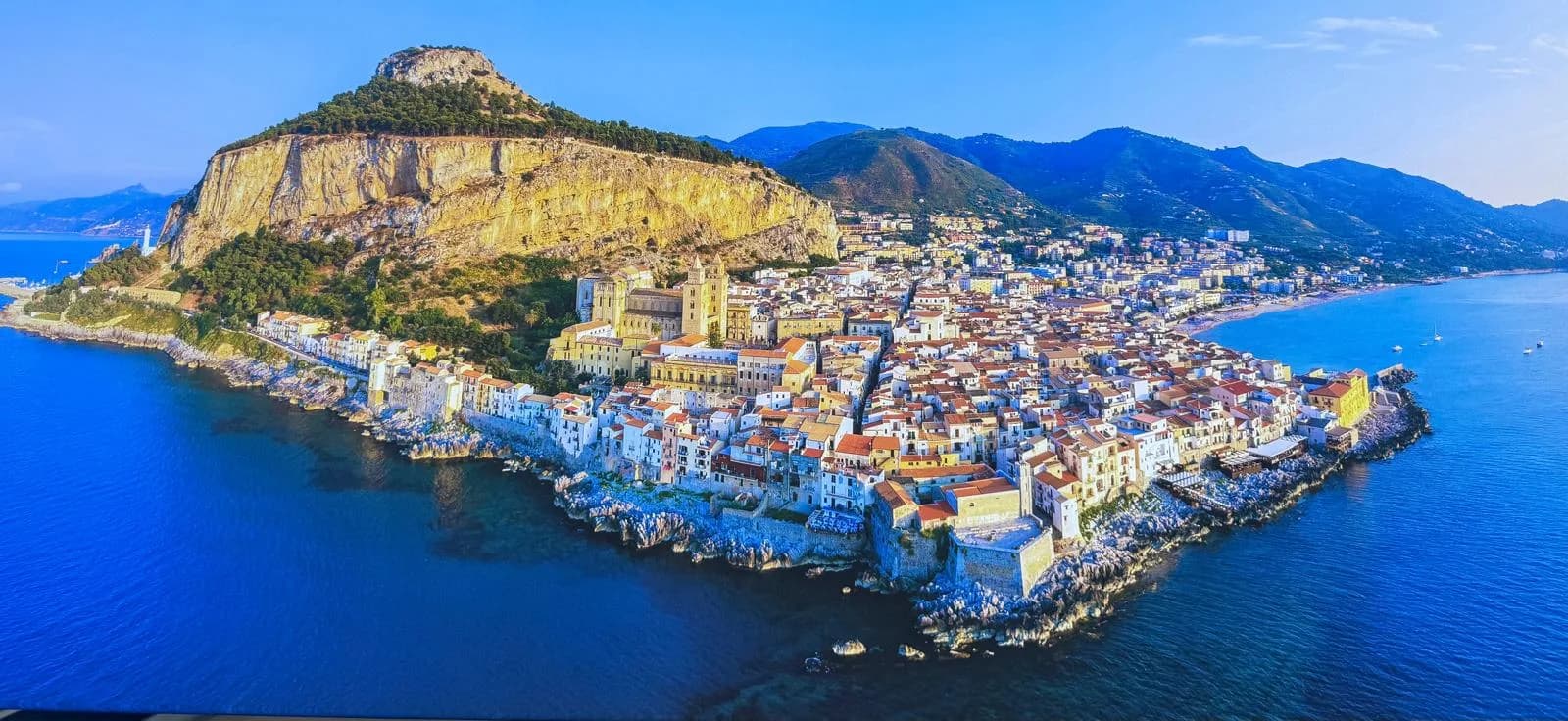
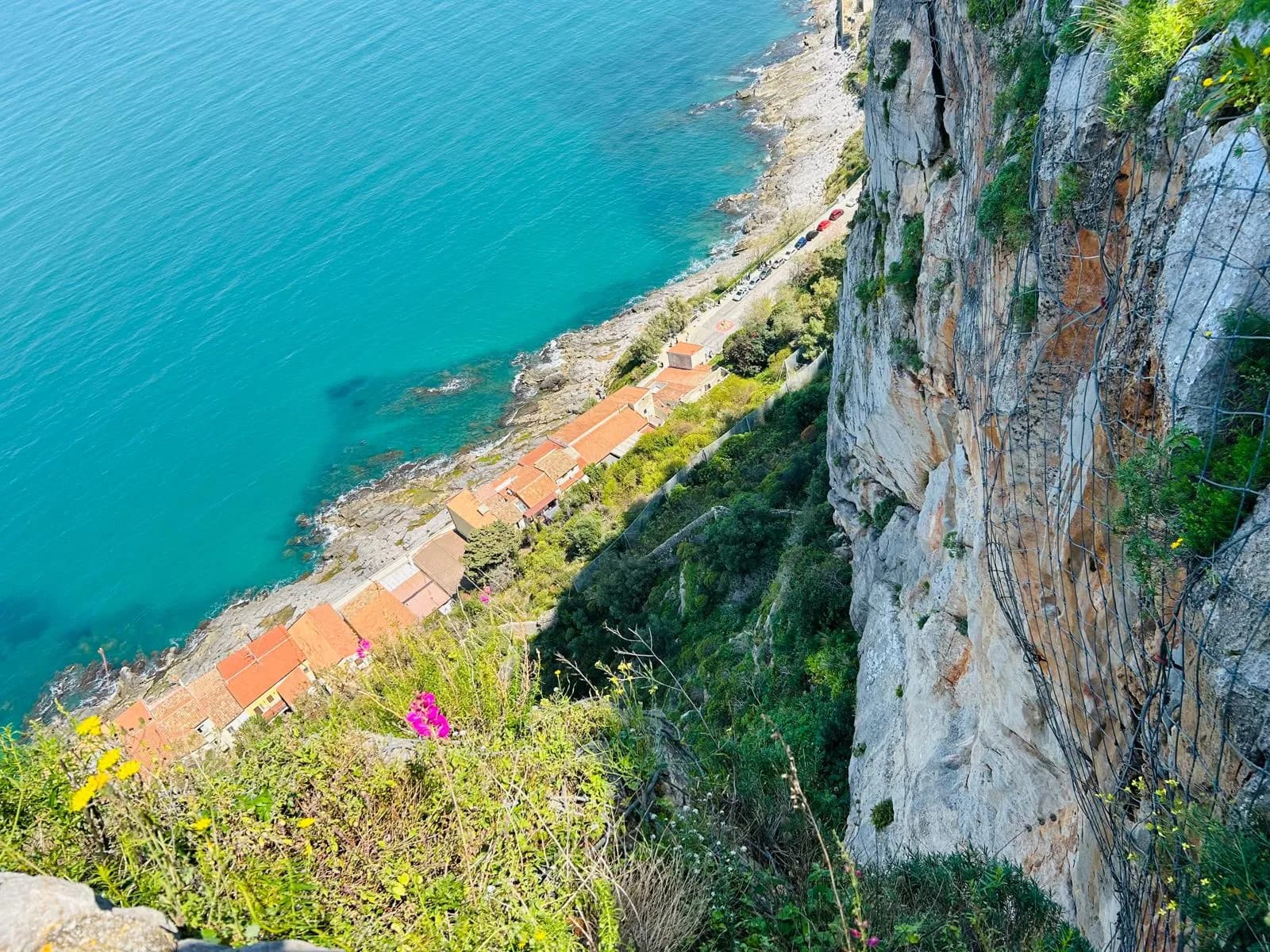
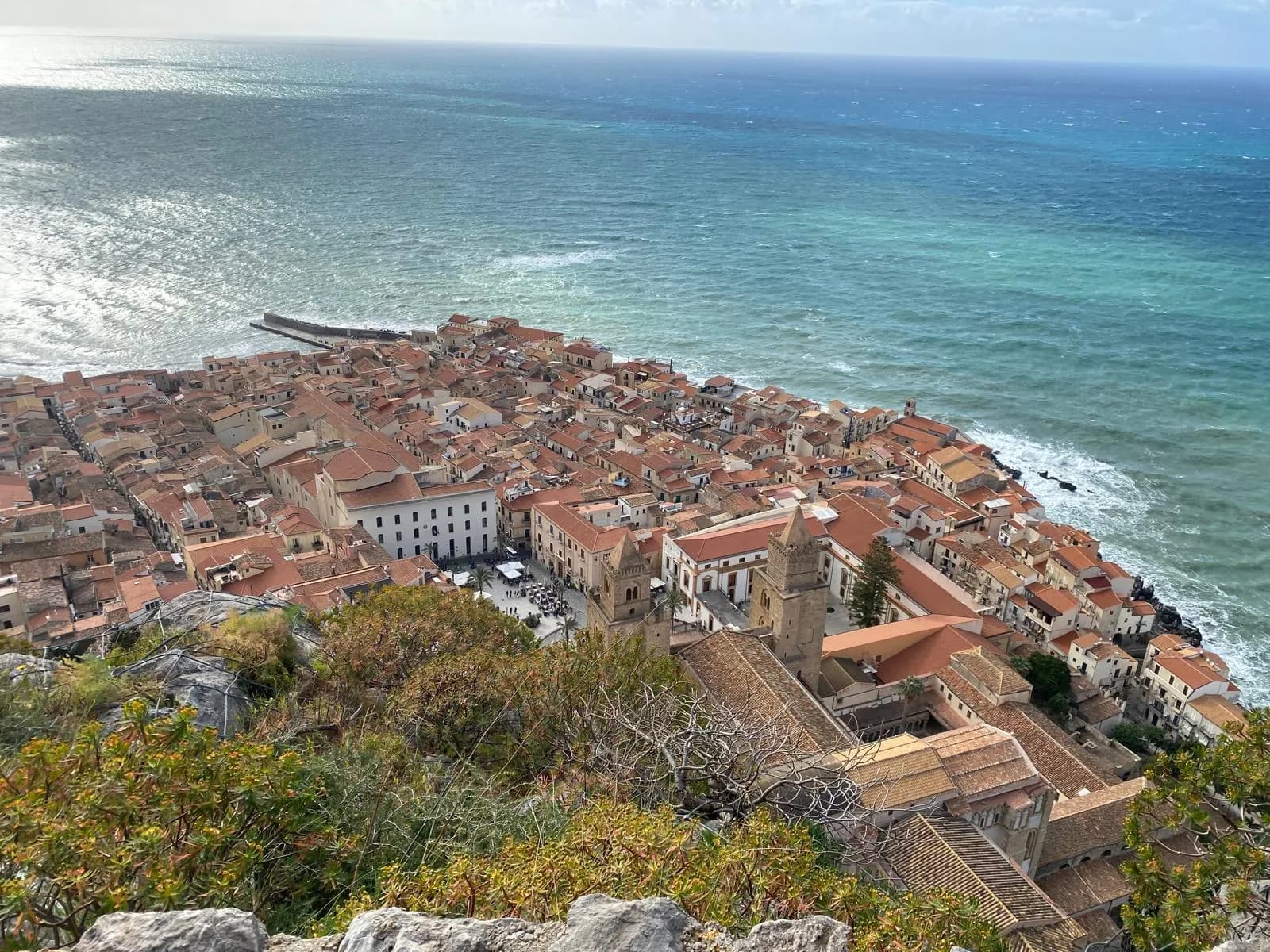
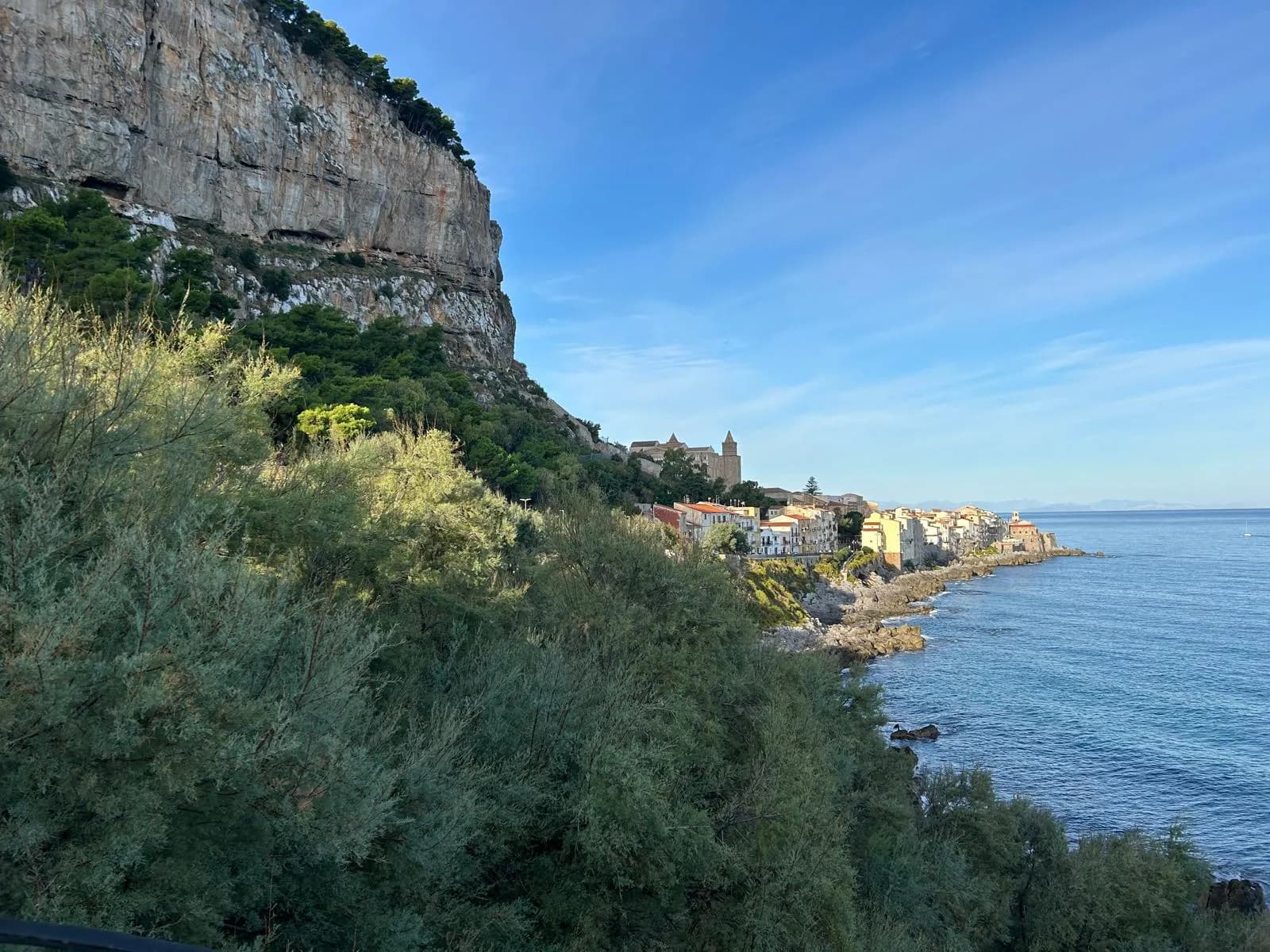
La Rocca is the 270-metre limestone cliff that defines Cefalù from every angle — from the beach, from the train, from twenty kilometres out at sea. We have climbed it more times than we can count. What keeps bringing us back is not the exercise but the moment the town appears below you, the cathedral directly underneath, the coast curving away east toward Kalura and west toward Palermo. On a clear morning the sea shifts from deep indigo to turquoise as the light strengthens. There is nothing else like it in Sicily.
This page covers everything you need before you go: the trailhead, the route, what you will see, when to go, and what to bring. If you are planning a full day around the climb, our old-town guide picks up where La Rocca leaves off.
The trail: what to expect on the way up
The ticket booth is on Via Pitrè, on the eastern edge of town near the base of the cliff. Entry costs €5 for adults and €2.50 for children aged 6–14 and those over 65. Open sandals and smooth-soled shoes are not permitted — the attendant will turn you away, and they mean it.
The trail itself is about 3.4 km return. The lower section climbs steep stone steps cut directly into the rock — slow going, no shade, and demanding if you are not used to hills. After fifteen minutes you reach the Tempio di Diana, a megalithic structure dating to the 9th century BC, long before the Greeks or Romans arrived. It is worth pausing here: the stones are extraordinary, and the view has already opened up behind you.
The upper path winds through dry scrub past the ruins of a Norman-era castle — built over an earlier Arab citadel in the 11th century — before reaching the summit at around 270 metres. The full climb takes about 45 minutes at a steady pace. Bring at least a litre of water per person. There is no shade above the first bend and no water on the trail. The descent is quicker — about 30 minutes — but the stone steps are hard on the knees.
What you can see from the top
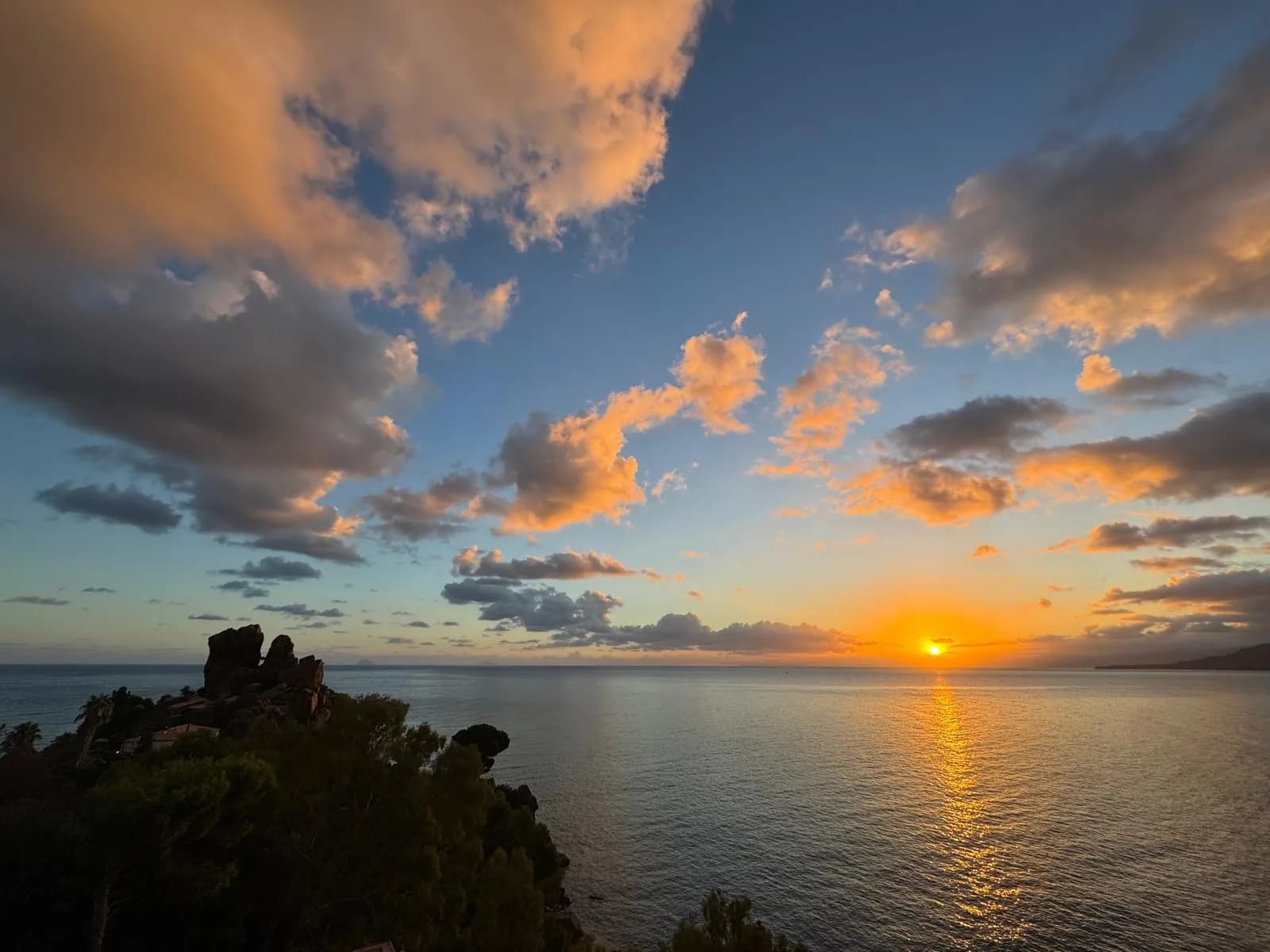
The panorama from the summit is the reason to make the effort. To the north, the Tyrrhenian Sea. On a clear day you can pick out the Aeolian Islands on the horizon — the faint silhouette of Vulcano, sometimes a thread of smoke from Stromboli. Directly below is the Duomo, its twin Norman towers framing the apse. To the south, the Madonie ridge runs east to west, the mountains layered behind each other in progressively lighter tones. To the east, the coast curves toward Kalura and, beyond it, Capo d'Orlando.
The light is the real variable. At mid-morning in summer, the cliff reflects heat and the sea goes flat and white. At sunrise, everything is different — the town is still blue-grey, the sea is dark, and the first light catches the cathedral roof and the mosque-flat rooftops below. That is the version worth getting up for.
When to go
The park opens at 08:00. That is when to arrive in July and August — by 09:30 the rock radiates heat and the stone steps become uncomfortable. In June and September, a 09:00 start is fine and the light is still good. Off-season (October to April), you have the trail to yourself at almost any hour and the cooler air makes the climb considerably more pleasant.
Rain makes the stone steps slippery enough to be genuinely dangerous. Check the forecast. If the sky looks uncertain, wait for a clearer morning — the trail is not going anywhere. Last entry is 18:30 in summer (park closes at 20:00), which means an early-evening climb is also possible, though you will be sharing the summit with the sunset crowd and the views are better at dawn anyway.
What to bring
Water — at least 1 litre per person. Closed-toe shoes with grip (mandatory at the gate). A hat. Sunscreen. Nothing else is strictly necessary, though a pair of binoculars makes the Aeolian Islands a lot more satisfying.
Leave heavy bags at the property. The summit is not a picnic spot — there is no flat ground, no shade, and no shelter. This is not a difficult hike but it is a proper one. Treat it accordingly and you will enjoy it. Underestimate it in July heat and you will not.
La Rocca as part of a full day
Most of our guests do the climb first thing, come back down by 09:30, and walk directly to the cathedral before the tour groups arrive at 10:00. From there, the old town lanes and a late breakfast at Karma on Piazza Spinola. The whole sequence — La Rocca, cathedral, breakfast — takes about three hours and you will have covered what most visitors spend all day circling around.
For a more active day, the coastal Sentiero degli Scogli runs from La Rocca east along the cliff face to Kalura Beach — 9.5 km, three to three-and-a-half hours, moderate. Check the trail notes in our hiking guide before you head out. We also have complimentary e-bikes if you want to ride out to Kalura rather than walk. See our hiking guide for more Cefalù and Madonie trails.
Common questions
How long does it take to climb La Rocca?
About 45 minutes up and 30 minutes down. The trail starts at the ticket booth on Via Pitrè and is steep but well-marked. There is no shade, so bring water and start before 09:00 in July and August. Entry costs €5 for adults, €2.50 for children 6–14 and those over 65.
Is La Rocca free to enter?
No. Entry costs €5 for adults, €2.50 for children aged 6–14 and visitors over 65. Residents enter free. The ticket machine at the Via Pitrè booth accepts both cash and card, though bringing cash as backup is wise.
Can children climb La Rocca?
Active children from around age six manage the climb well — the Temple of Diana is just fifteen minutes up and makes a good turnaround for younger kids. The full trail to the summit is steep with uneven stone steps. Open sandals and smooth-soled shoes are banned at the gate; bring sturdy closed-toe shoes.
What time does La Rocca open?
The park opens at 08:00 year-round. Last entry is 18:30 in summer (park closes at 20:00) and 15:00 in winter (closes at 17:00). We recommend arriving at opening time in July and August — the rock gets seriously hot by mid-morning.
Is there parking near La Rocca?
The old town is a ZTL (restricted traffic zone). Park at Parcheggio Dafne near the station and walk to the trailhead in around ten minutes, or use the Lungomare car park and approach along the seafront. Do not attempt to drive into the centro storico — the cameras issue automatic fines.