Most guests look at the mountains from the beach and mean to go. We want to make sure you actually go. The Parco delle Madonie starts fifteen minutes south of Cefalù by car, and a full day up there — two hikes, a medieval town, the best pastry shop in Sicily, and a sunset descent back to the coast — is one of the things that separates guests who visited Cefalù from guests who understood it.
This is a car-required day. If you are with us and need a vehicle, ask when you book — we can point you toward the best hire options out of Cefalù. The mountain roads are not complicated but they are narrow; drive slowly and give way on the bends. The day covers two very different hikes: a summit climb in the morning and a forested valley walk in the afternoon. Neither requires a guide or specialist equipment, but both reward an early start.
The best months are May, June, September, and October. July and August the summit gets hot and airless by 11:00, and the drive back down into Cefalù at 19:00 on a summer Friday is slow. In October the light on the beech trees above Castelbuono is worth the trip on its own.
Morning
Coffee and cornetto before the drive
Cefalù old town
Eat something before you leave town. The mountain drive to Piano Battaglia takes fifty minutes and the first hike starts immediately on arrival. A cornetto and a double espresso at the bar is enough — you are not fuelling for a marathon, but you will feel the difference between having eaten and not having eaten at the 300-metre mark of the Carbonara climb.
Most bars on Corso Ruggero open by 07:00. Standing at the bar is faster than sitting. If you want to bring something to eat on the trail, pick up a second pastry here — options above Castelbuono are limited until lunch.
Fill water bottles at the property before you leave. There is no reliable water source on the Pizzo Carbonara trail, and you will need at least a litre per person.
Read our full guidePizzo Carbonara — the summit
Piano Battaglia trailhead, SP54, Polizzi Generosa
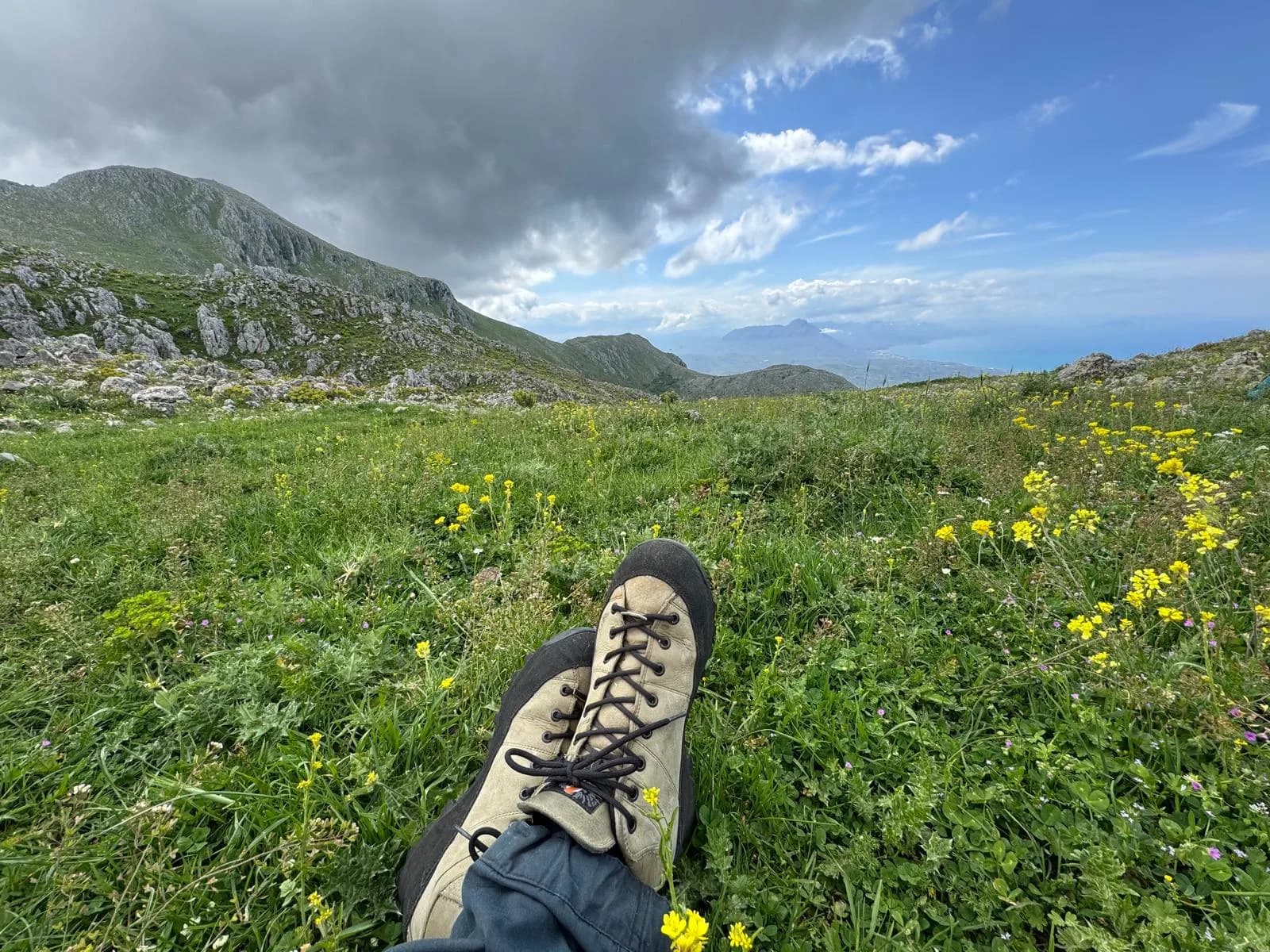
Piano Battaglia is a former ski station at around 1,600m — there is a car park on the SP54 where the trail begins. Pizzo Carbonara at 1,979m is the highest point in the Madonie, and the second highest peak in Sicily after Etna. The loop is approximately 8 km with around 400m of elevation gain. The terrain is rocky and exposed near the top; wear closed-toe shoes and bring a light layer — even in summer the summit can be 10°C colder than the coast.
The route passes Pizzo Scalonazzo at 1,904m before the final push to the Carbonara summit, then descends via Pizzo della Principessa at 1,977m back to the start. Allow the full 3.5 hours unless you are a fast hiker. On a clear morning the view from the top reaches north to the Aeolian Islands and east across the spine of northern Sicily. The high pastures hold a handful of endemic Sicilian wildflowers — the Nebrodi violet, mountain flax — and the karst sinkholes at altitude are a feature you do not see anywhere else on this coast.
Start by 09:00. The summit is exposed and has no shade. By 11:30 in summer the rock is hot and the sun is directly overhead. An early start is the difference between an enjoyable climb and a punishing one.
Afternoon
Lunch in Castelbuono
Castelbuono, Madonie — Corso Umberto and surrounds
Castelbuono is the best town in the Madonie and lunch here after the summit is the right reward. The medieval centre runs along Corso Umberto and up to the fourteenth-century Ventimiglia Castle. The trattorias along and near the Corso are honest mountain kitchens — grilled meats, funghi porcini in autumn, and a particular way with local Madonie cheeses that you will not find reproduced accurately at sea level.
Ask for the local mushroom pasta if you are there between September and November — the porcini from these hills are exceptional. A full lunch with a carafe of house red runs €15–25 per person. Walk-ins are usually fine at lunchtime; in summer it is worth calling ahead the day before.
The Ventimiglia Castle is open for visits and has a small contemporary art collection inside the medieval walls — an odd combination that works. It is five minutes from any trattoria on the Corso and worth fifteen minutes before or after you eat.
Fiasconaro — and a walk through the lanes
Fiasconaro, Piazza Margherita 10, Castelbuono
Fiasconaro at Piazza Margherita 10 is the flagship shop of the family that turned Castelbuono into a name people recognise. The manna panettone — made with manna, the sweet resin harvested by scoring the bark of Fraxinus angustifolia ash trees, a practice unique to this stretch of the Madonie — is the thing that people order online and carry home in their luggage. In the shop you can taste it alongside the torrone, the almond pastries, and whatever seasonal specials are running. Open daily 09:00–24:00.
After Fiasconaro, walk the medieval lanes behind the Corso. Castelbuono is a working town with good ceramics and local food shops. Twenty minutes on foot will take you through the best of it — up to the castle, back down through the old quarter, and out to the car park. Buy something to take home: a jar of manna, a bag of torrone, a bottle of local wine. The boot of the car will smell of almonds for the rest of the trip.
The mannetto — the individual-portion version of the manna cake — travels better than the full panettone and costs around €6. It is the thing to buy if you are not checking a bag.
Giant Holly Trail — Sentiero degli Agrifogli Giganti
Rifugio Crispi, Piano Sempria, Madonie
The drive from Castelbuono to Rifugio Crispi climbs through beech forest to Piano Sempria where the trailhead begins. The Sentiero degli Agrifogli Giganti is a loop through one of the most unusual forests in Europe — a stand of several hundred ancient holly trees, the largest specimens reaching fifteen to twenty metres in height and approaching 300 years old, that form a natural green canopy over the trail. The contrast with the open, exposed summit work of the morning is total.
The loop runs approximately 8 km with around 238m of elevation gain and takes two to two and a half hours at a comfortable pace. The path passes through centuries-old oaks and ash trees before arriving at the holly nucleus around Piano Pomo. It is shadier, cooler, and easier than the morning hike — a good choice for a second trail when your legs already have a climb in them. Deer and wild boar are common in the late afternoon; you will hear the forest before you see much of it.
The light drops quickly in the Madonie forest after 17:00. Start the holly trail by 15:30 at the latest to be back at the car before dusk. A head torch is worth carrying even if you do not expect to use it.
Read our full guideEvening
Gibilmanna — a brief stop on the way down
Santuario di Gibilmanna, Cefalù (frazione)
Gibilmanna sits at 795m on the slopes of Pizzo Sant'Angelo — technically a frazione of Cefalù, though it feels nothing like the coast town below it. The Capuchin sanctuary here has been a place of pilgrimage since the sixteenth century; the name comes from the Arabic Gibel el Iman, mount of faith, which tells you something about how long this hillside has mattered to people. The Normans knew it before the Capuchins arrived.
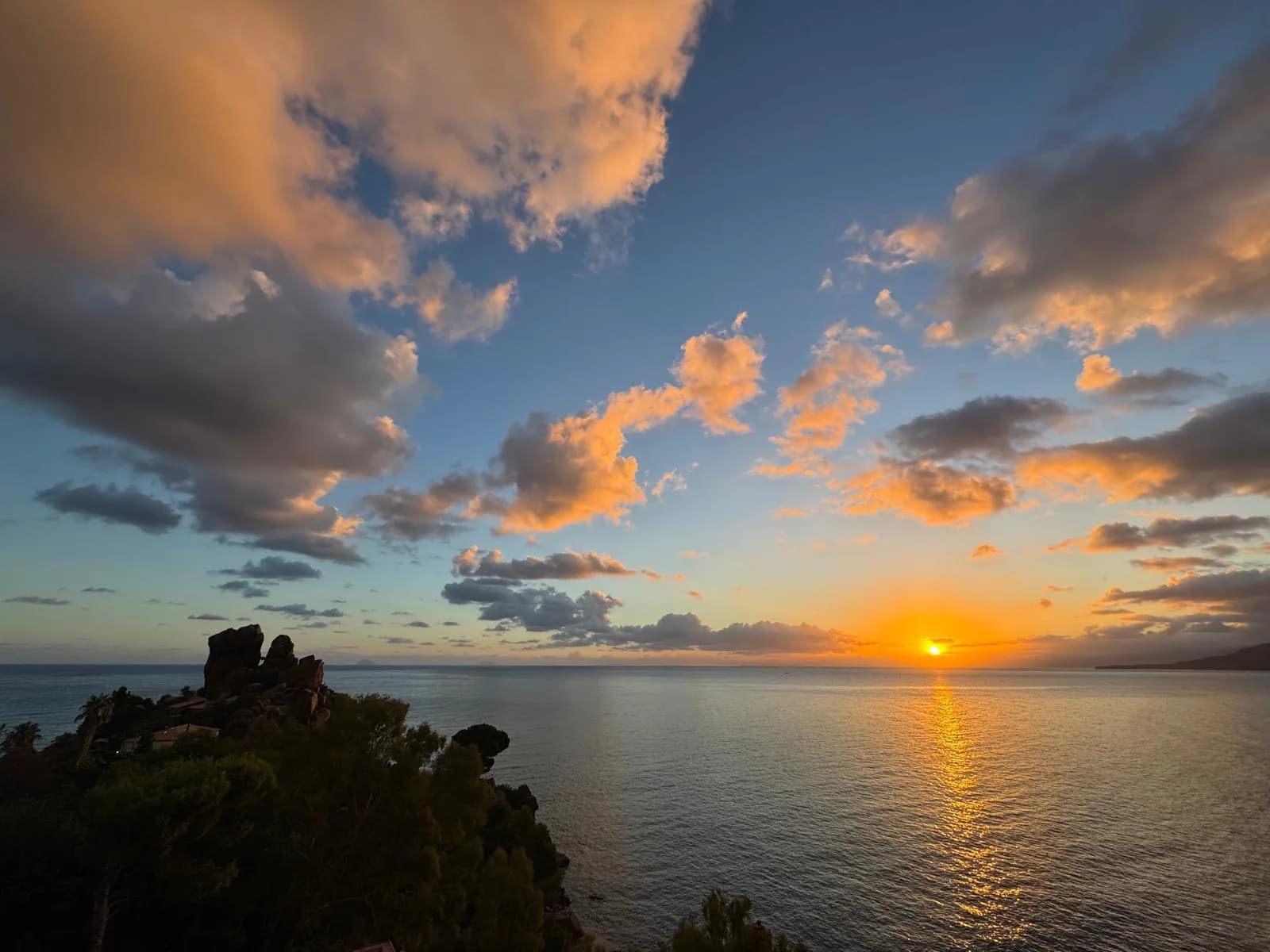
Stop for fifteen minutes. Walk to the viewpoint on the edge of the sanctuary grounds. From here on a clear evening you can see the full sweep of the northern Sicilian coast, the sea going orange, and Cefalù directly below you — the cathedral and the headland visible from 800 metres above. Then get back in the car and drive down. The descent takes twenty minutes and brings you directly into the old town.
The sanctuary museum holds ex-votos and religious artefacts — it is open limited hours and you may not catch it. The view from the grounds is the reason to stop, not the museum.
Back in Cefalù — shower and aperitivo
Lungomare or Piazza del Duomo, Cefalù
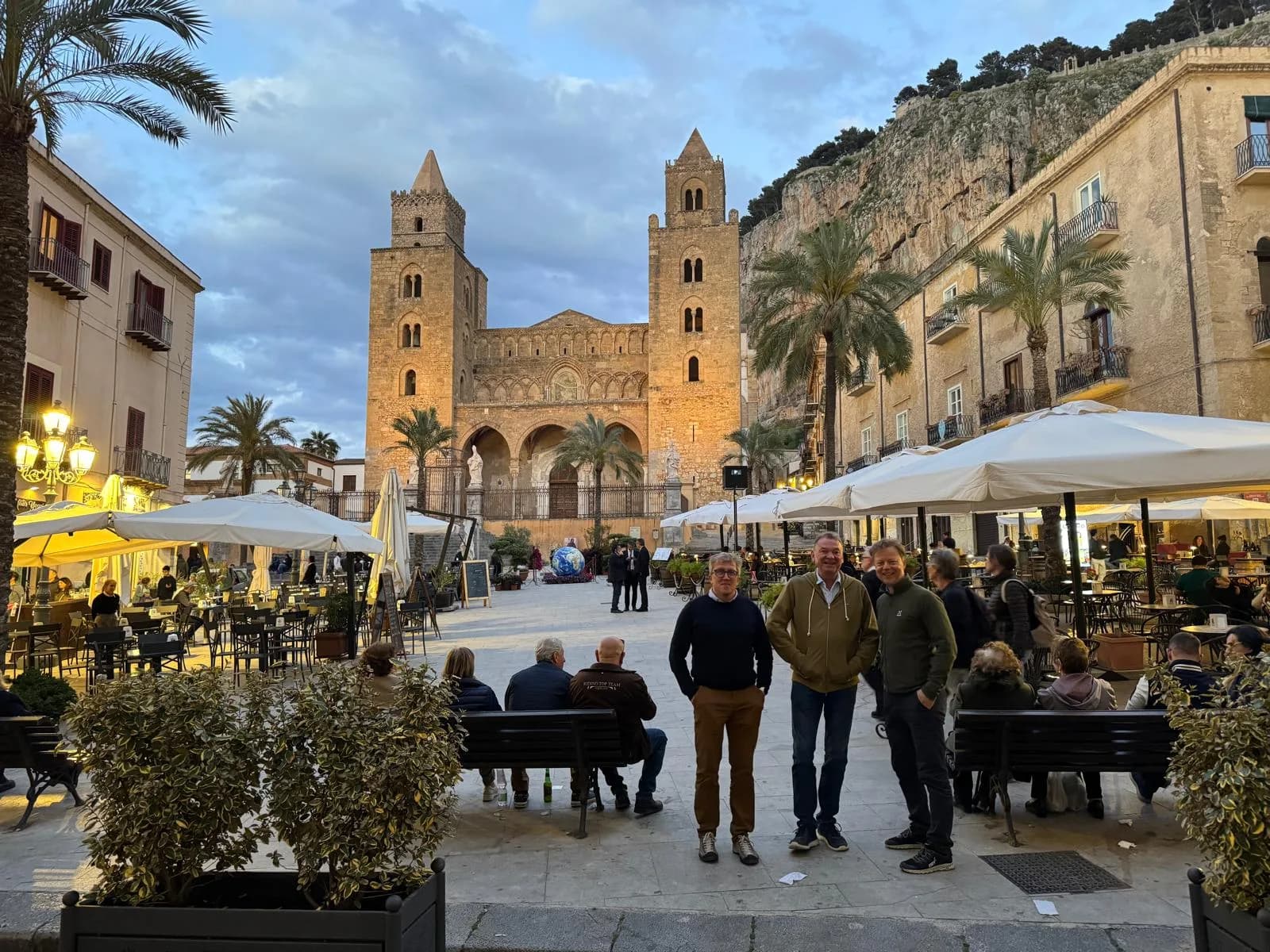
The descent from the Madonie into Cefalù at dusk is one of the best transitions this area offers. You have been at altitude since morning — cool air, beech forest, stone, silence — and then twenty minutes of switchbacks brings you out into the warm sea-level evening, the smell of jasmine and salt air, and the particular noise of the passeggiata starting up on the Lungomare.
Go back to the property, shower off the trail dust, and get out again. The hour between 19:00 and 20:00 is the aperitivo hour. A Spritz or an Aperol at a bar on the Lungomare, some snacks that appear without being ordered, and you will be ready for dinner by 20:30. The Piazza del Duomo in the early evening, when the last light hits the Norman facade, is exactly where you want to be after a day in the mountains.
Order the aperitivo and the snacks come. You do not need to ask. This is how it works in Sicily. If nothing arrives after ten minutes, it was not that kind of bar.
Dinner — something honest after a long day
La Brace, Via XXV Novembre 10, Cefalù
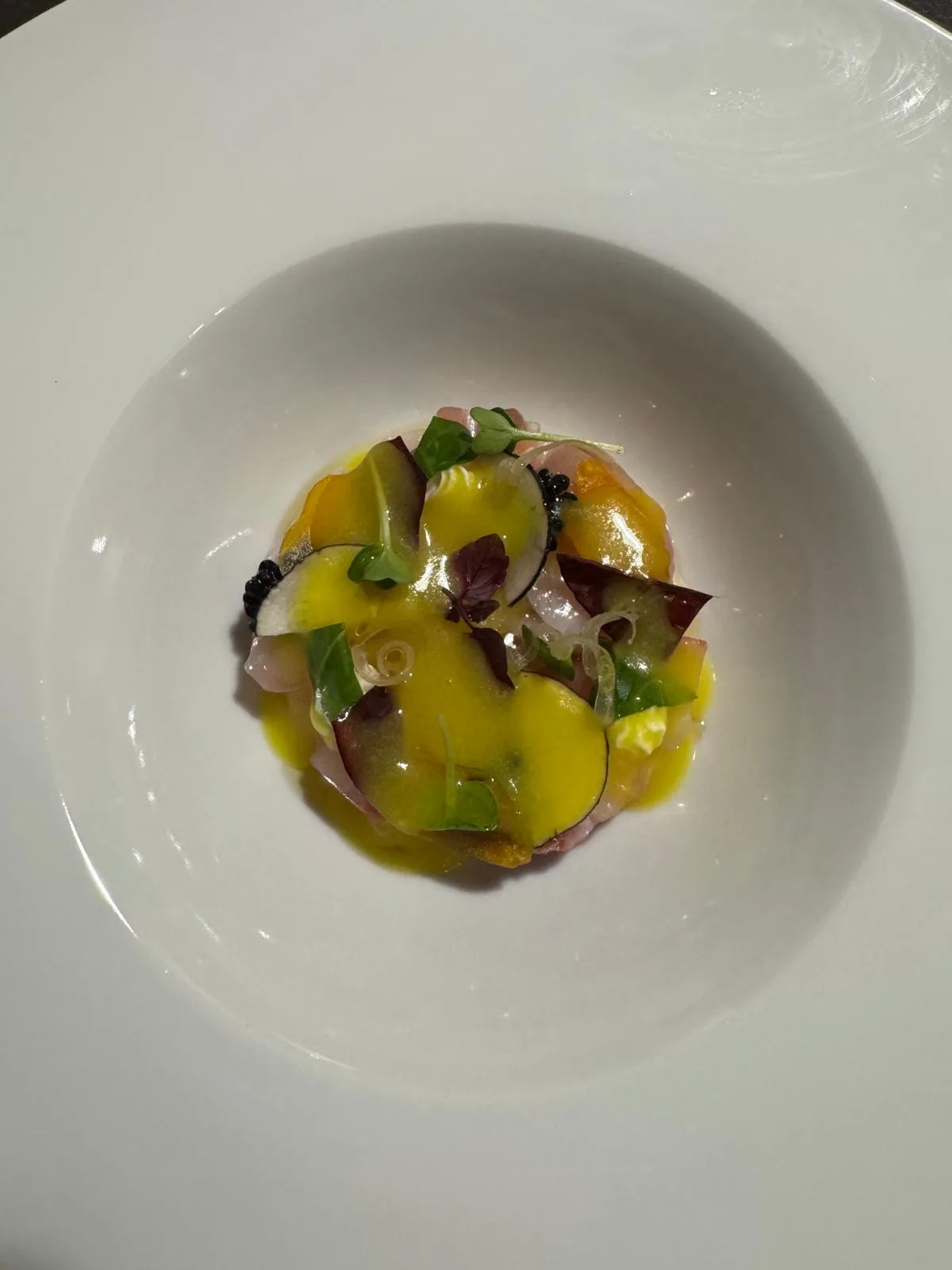
After a day like this, dinner should be unfussy. La Brace at Via XXV Novembre 10 is the right call — grilled fish, paper tablecloths, local wine, no theatre. The whole grilled fish with capers and lemon runs under €25 and is exactly what the body wants after eight hours in the mountains. Call the day before in summer; walk-ins are usually fine off-season.
If you want to sit outside with the Duomo visible, most of the restaurants on and around Piazza del Duomo will do that for you. The trade-off is usually a slightly higher price for the same food. For a mountain day, we tend to go to La Brace. The food is honest, the portions are not modest, and the Sicilian white wine list is exactly long enough. See our full guide to dinner in Cefalù for other options.
You will be hungry earlier than you expect. Arriving at 20:00 rather than 20:30 is fine on a day like this, and you will have the pick of the room before the main wave of diners arrives.
Two hikes, a medieval town, the best pastry counter in the Madonie, a hilltop sanctuary, and dinner back at sea level. The day has a shape to it — altitude in the morning, history and food in the afternoon, the coast in the evening — and that shape is part of what makes it work. Cefalù is not just the beach. The mountains are fifteen minutes away and most guests who go once ask us why they did not go sooner.
If you want to tailor the day — swap Pizzo Carbonara for an easier trail, add a fourth stop, or end in Castelbuono rather than driving back — the trip planner lets you rearrange the stops to suit. See our broader day trips guide for more on what the Madonie has to offer. If a day trip is not enough and you would rather wake up at altitude, our townhouses in Gratteri at 700 metres — The Manna House and The Canalotto House — put you in the mountains properly rather than just visiting them.