Culture in Cefalù is not a museum circuit. It is the specific pleasure of moving between things that are genuinely significant — a Norman cathedral with a Byzantine mosaic programme, a Renaissance portrait by the most technically advanced painter of his generation, a medieval wash house fed by an underground spring — and understanding what the proximity means. This is a small town that has absorbed several civilisations. The evidence of that is not in a glass case; it is built into the walls.
This day moves slowly and deliberately, spending enough time in each place to let it register. The afternoon in Castelbuono adds the Madonie dimension — fifteen minutes inland and the coast disappears completely, replaced by mountains, chestnut forests, and a pastry tradition unlike anything on the coast. It helps to be based within walking distance of everything on the morning route — The Lavender Townhouse sits eighty paces from the cathedral steps for exactly this reason.
Morning
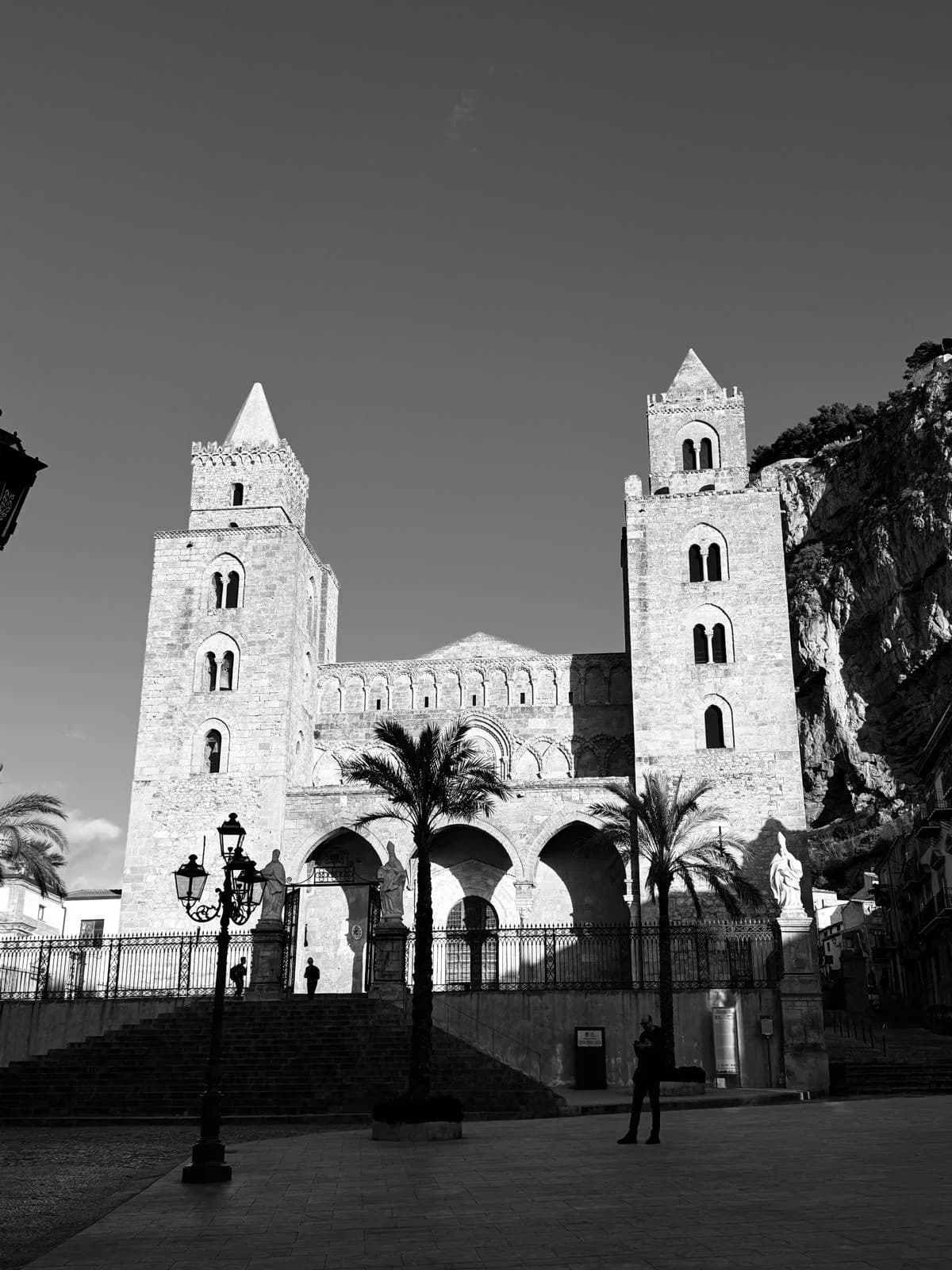
The Duomo — morning light and the Pantocrator
Piazza del Duomo, Cefalù
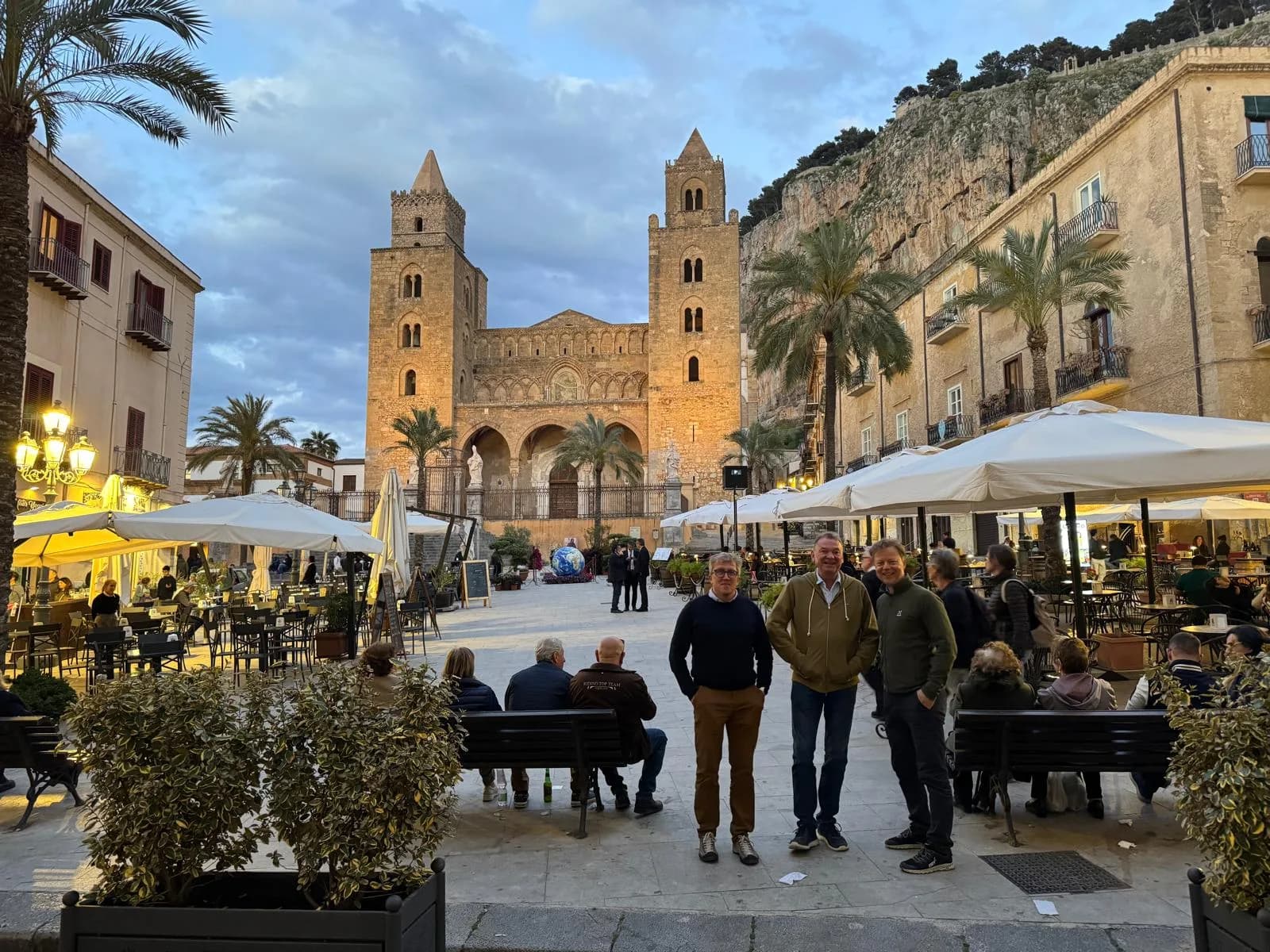
08:30 is the single best time to be in the nave of Cefalù Cathedral. The east windows send morning light directly onto the Christ Pantocrator mosaic — 20 metres of gold-backed tesserae, completed in 1148 — and the apse appears to glow from within. This is the light the architects intended. It works for roughly ninety minutes; after 10:00 the sun shifts and the effect flattens. After 10:30 the coach tours arrive from Palermo and the silence is gone.
Entry to the nave is free. If you want the towers, the Norman cloister, and the sacristy and treasury, buy a combined ticket at the entrance or book at duomocefalu.it. The cloister — a square of paired Norman columns with interlaced arches, carved in the Arab-Norman style — is worth the extra €10. Allow 20–30 minutes in the nave alone, then another 45 for the paid itinerary if you take it. Shoulders and knees must be covered.
Bring binoculars if you have them. The Pantocrator is at the far end of a long nave and the detail of the gold tesserae — visible from up close on the tower route — is extraordinary at distance with a lens.
Mandralisca Museum — Antonello da Messina
Via Mandralisca, Cefalù
A five-minute walk from the cathedral brings you to the Museo Mandralisca. The reason to come is Antonello da Messina's Ritratto d'uomo — Portrait of a Man, painted around 1465. It is a small work, not much larger than a sheet of paper, but Antonello was deploying the Flemish oil technique before most Italian painters knew it existed. The expression on the subject's face has been described as amused, sardonic, and unknowable. We think all three are right, simultaneously.
The museum also holds Greek and Roman archaeological pieces from the area, an important collection of ancient coins assembled by Baron Mandralisca in the 19th century, and a natural history collection in the upper rooms. Allow 45 minutes for the full collection. If you are pressed for time, the Antonello alone justifies the €6 and takes fifteen minutes to see properly — meaning to stand in front of it until it stops being a painting and starts being a person.
The museum is cool and quiet even on hot days. If your culture day is falling in July or August, plan the Mandralisca for mid-morning before the air conditioning in cafés becomes the main attraction.
Read our full guideOld town lanes — ceramics and the Lavatoio
Corso Ruggero and the vicoli, Cefalù
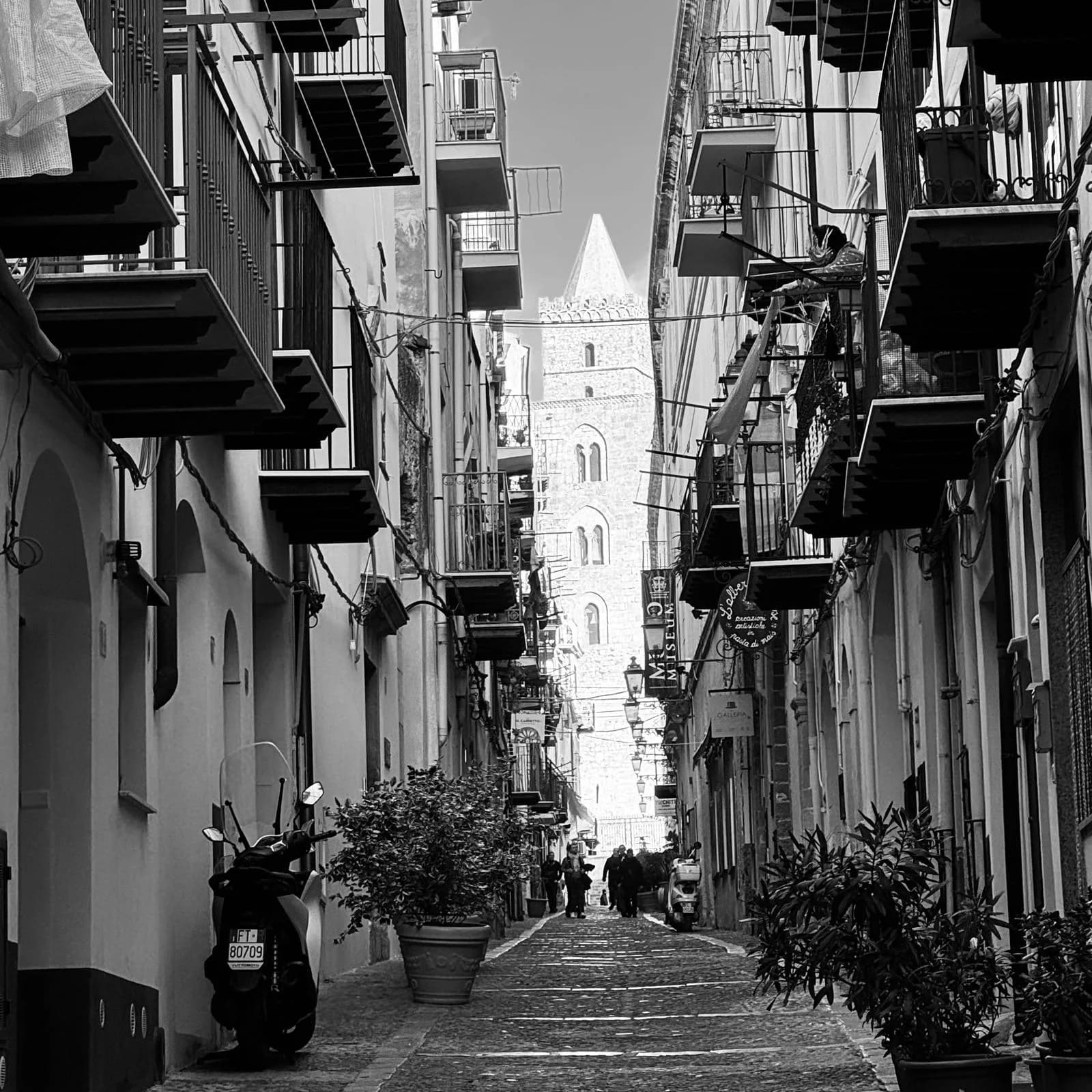
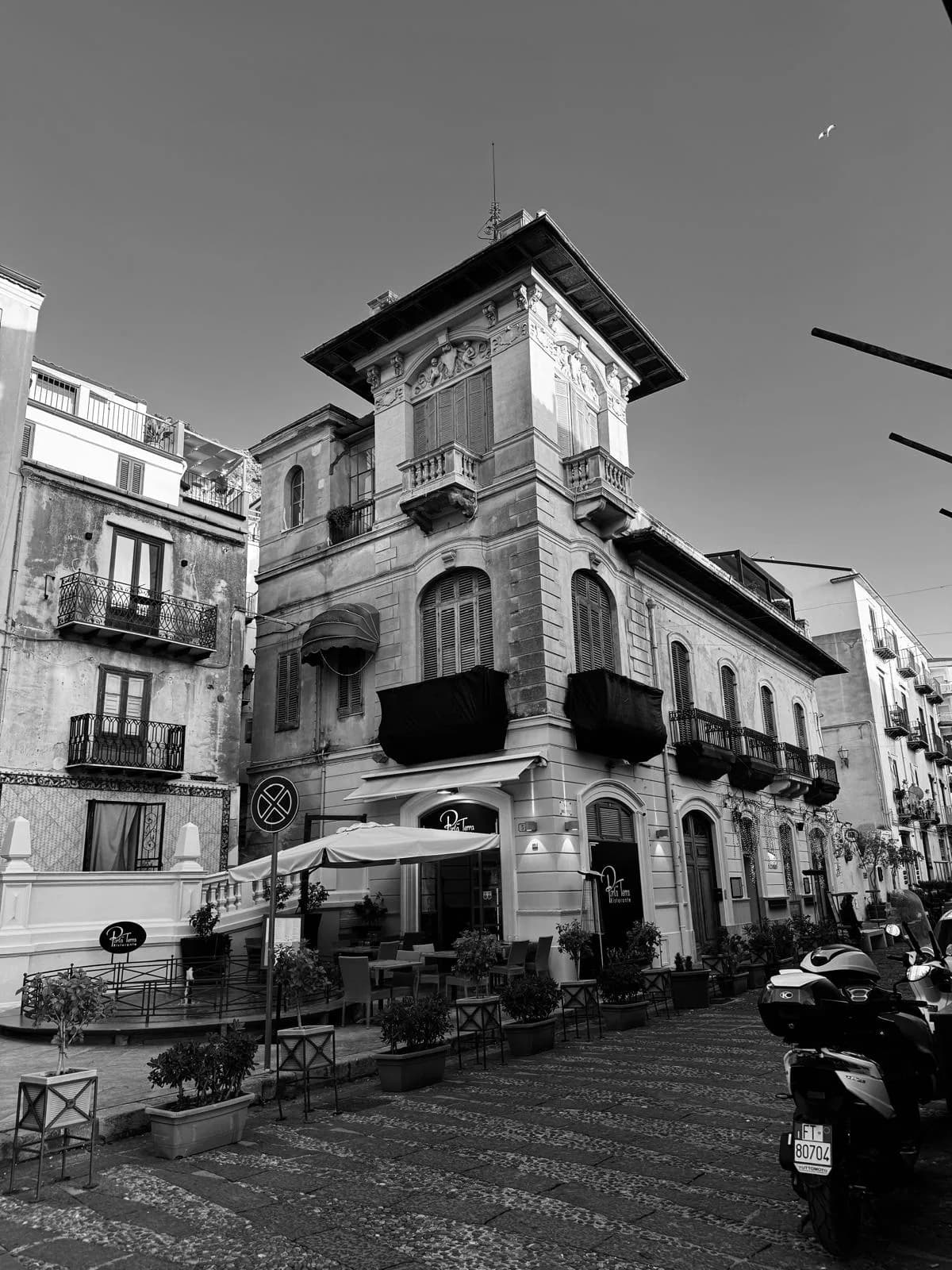
The lanes between the cathedral and the sea wall repay slow movement. Most visitors stay on Corso Ruggero; the more interesting discoveries are in the perpendicular lanes — Via Candeloro, Via Porpora, the unnamed vicoli between them. The ceramics shops here cover traditional Sicilian designs (lemons, Moors' heads, geometric blue-and-yellow patterns) and several newer studios doing less conventional work. Look for workshops where someone is actually painting, not just selling. The conversation that goes with it, even across a language gap, is part of what you are buying.
At the eastern end of Via Vittorio Emanuele, a lava-stone staircase descends to the Lavatoio Medievale — the medieval wash house. Twenty-two cast-iron spouts (fifteen carved as lion heads) feed stone washing tanks over an underground spring. Entry is free, takes fifteen minutes, and the chamber is cool even in August. The groove worn into the stone by centuries of use is visible if you look. This is not a museum exhibit; it operated continuously until the 1960s.
The Lavatoio steps are steep. The chamber at the bottom is cool year-round — around 12°C even in August — which is more of a shock than you expect after the streets above.
Afternoon
Lunch before the drive
Old town, Cefalù
A light lunch before the drive to Castelbuono. The bakeries along Corso Ruggero sell arancini, sfincione, and panelle from mid-morning — a street food lunch costs under €8 and you can eat it in fifteen minutes. If you want to sit down, Galleria at Via Mandralisca 23 does a good lunch and walk-ins are usually possible before 13:00. La Brace at Via XXV Novembre 10 is the reliable trattoria choice — honest Sicilian cooking, reasonable prices.
Do not eat a heavy lunch before Castelbuono. The Fiasconaro pastry shop in town demands appetite. This is not a warning — it is a strategy.
Restaurants stop serving lunch around 14:30. The drive to Castelbuono takes about 25 minutes, so leaving by 13:30 lands you there at the right time for the afternoon opening of shops and the castle.
Read our full guideCastelbuono — castle, manna, and Fiasconaro
Castelbuono, 23 km south of Cefalù (~25 min drive)
Castelbuono is a 14th-century Ventimiglia Castle at the centre of a working mountain town in the Madonie foothills. The castle houses a small chapel with a Flemish ceiling and a natural history museum — allow 45 minutes and a few euros entry. The main square and the lanes around it are pleasant in the afternoon when the heat is less intense than on the coast.
The specific Castelbuono experience is Fiasconaro, the most famous pastry shop in town, which has built a national reputation around manna — the sweet resin harvested from ash trees that grow only in this part of Sicily. It tastes faintly floral and less sweet than sugar, and Fiasconaro uses it in torrone, panettone, and pastries that you will not find anywhere else. The manna panettone travels well in a bag and is the right thing to bring home from this part of Sicily.
If the Thursday market is running, the square fills with local produce stalls — Madonie cheese, horn peppers from Polizzi Generosa, autumn mushrooms from the beech forests nearby. See our day trips guide for more on what to do in the Castelbuono area.
Fiasconaro gets a serious queue on summer afternoons. Go at 14:00 when it first reopens after riposo, before the later-afternoon crowd arrives. The manna tasting at the counter is free and worth doing before you buy.
Evening
Drive back and aperitivo
Piazza del Duomo, Cefalù
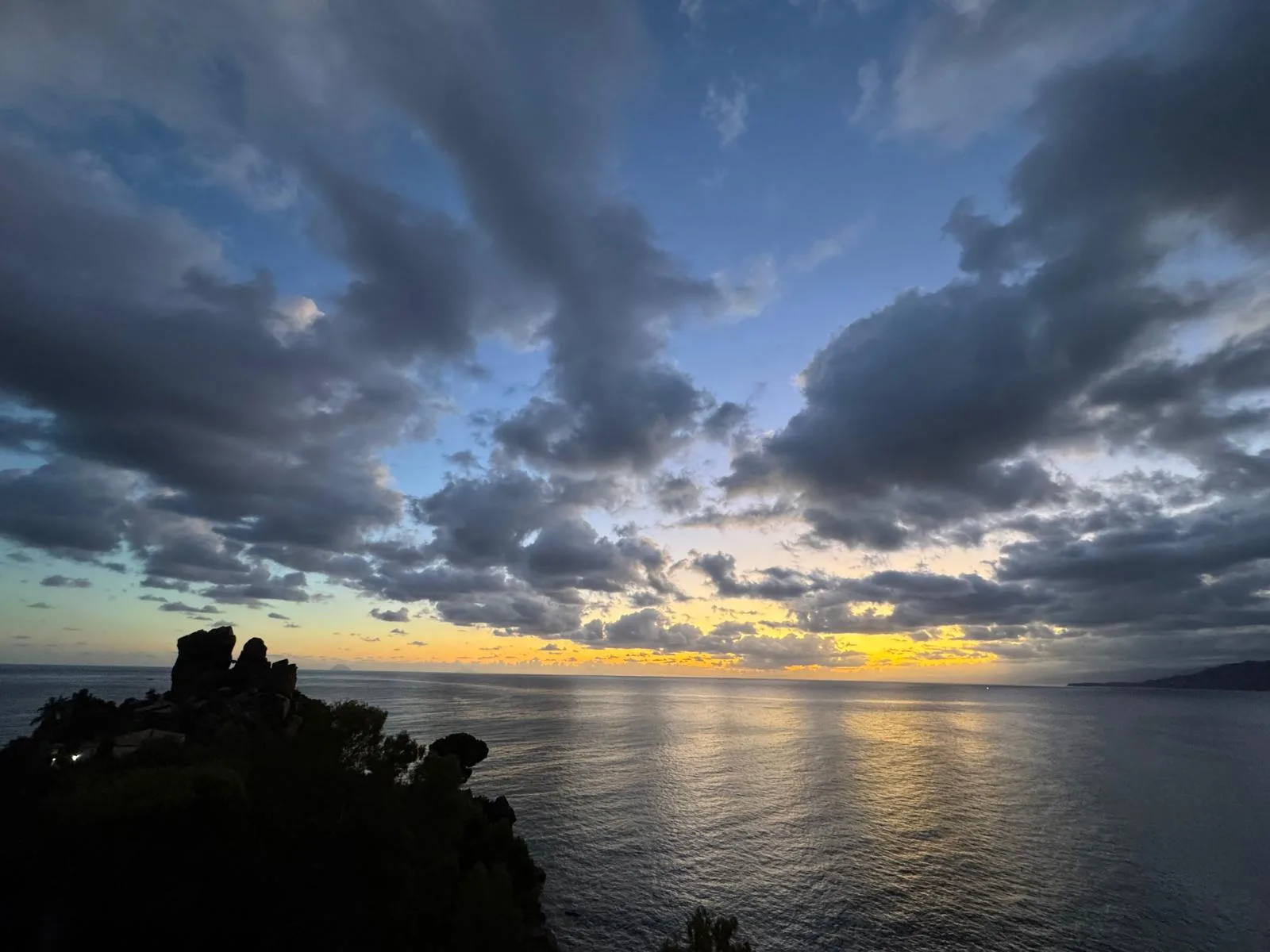
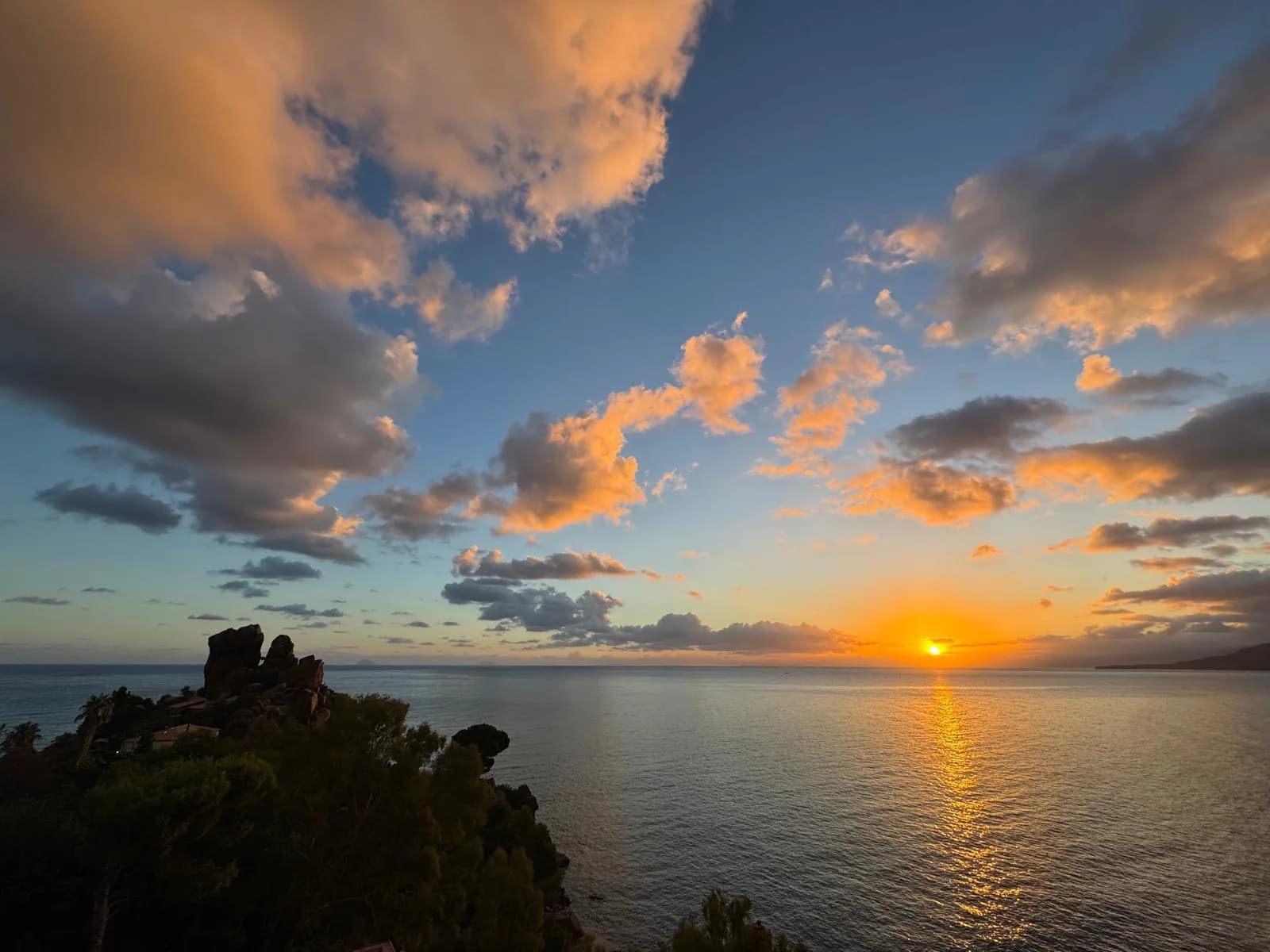
The 25-minute drive back from Castelbuono drops you into the old town in time for the golden-hour aperitivo. Bar Duomo on Piazza del Duomo is the right return point — the cathedral façade catches the last of the evening sun and the square fills with the passeggiata crowd. An Aperol Spritz here at 18:00, with the Pantocrator you saw this morning inside the building behind you, closes the cultural loop of the day in the most Sicilian way possible.
The free bar snacks — olives, bruschetta, crisps — arrive with the drinks. A Spritz costs €5–8 depending on where you sit. This is not a meal; it is the transition between afternoon and evening, which in Sicily is its own genre of time.
Park near the train station before entering the old town — the ZTL (restricted traffic zone) will fine you automatically if you drive into the centro storico. Parking near the Lungomare and walking in takes ten minutes.
Read our full guideDinner
Brama, Via Nicola Botta 13, or La Brace, Via XXV Novembre 10
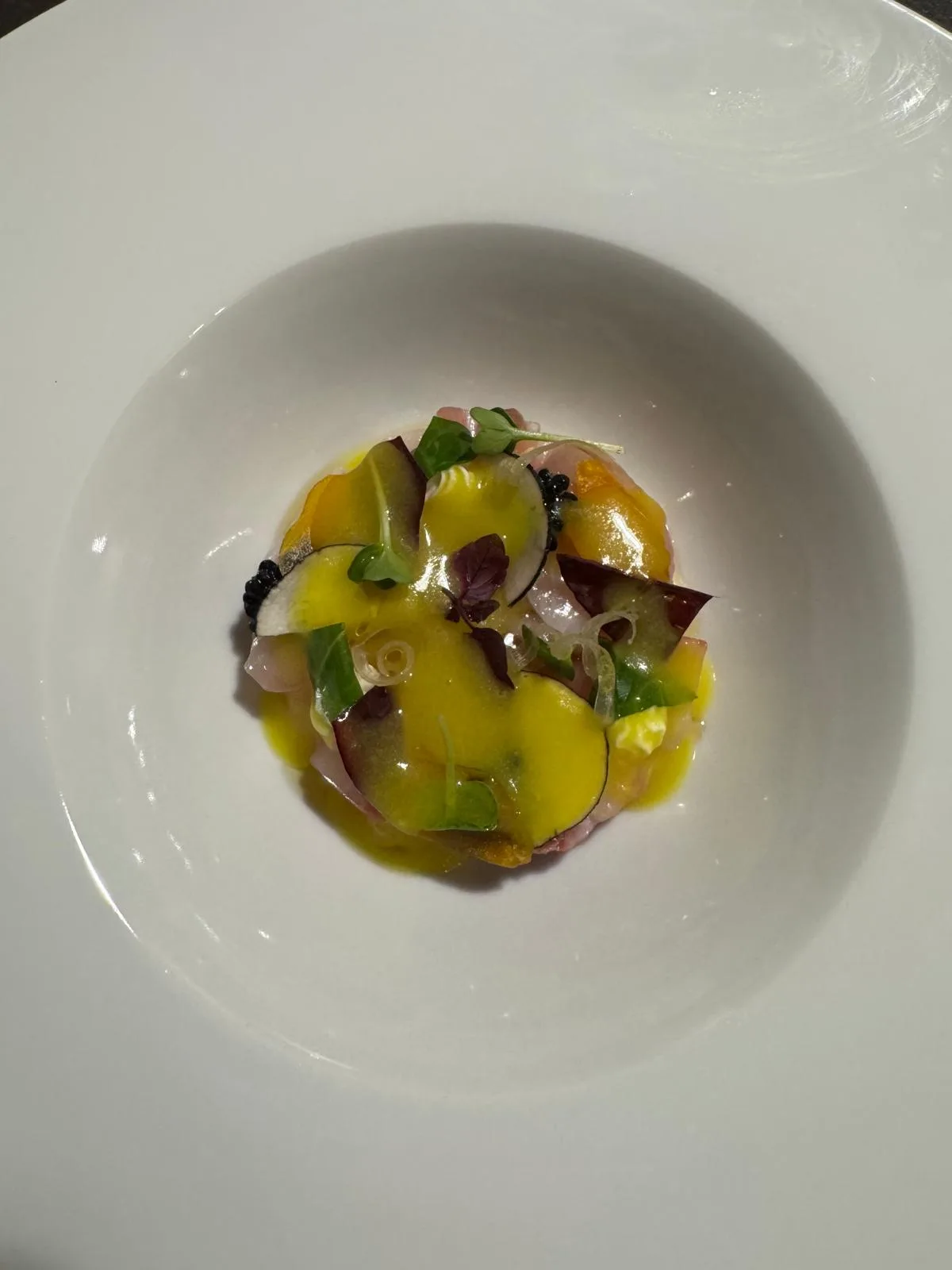
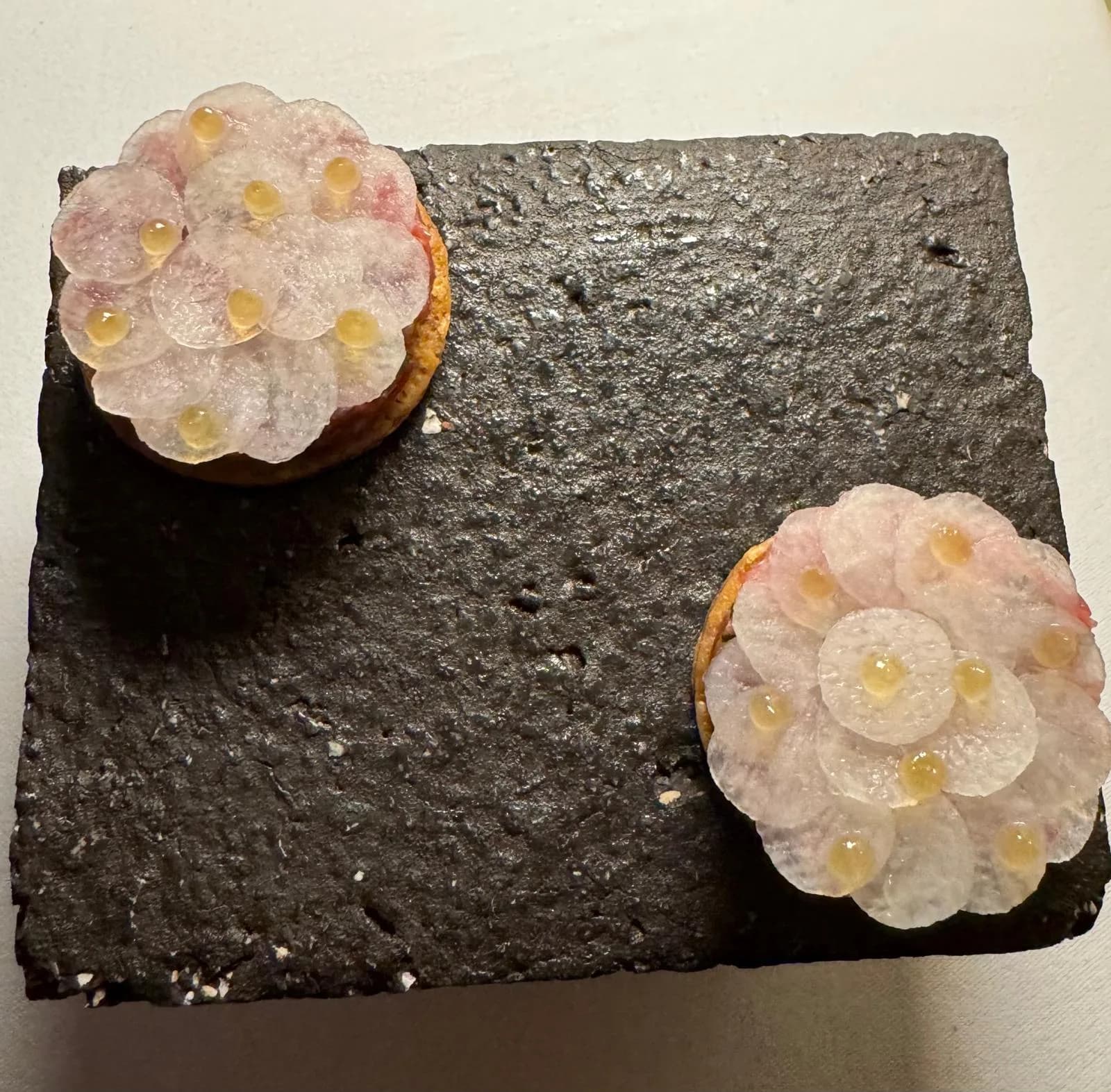
A culture day ends best at a table where the cooking has something to say. Brama at Via Nicola Botta 13 is the right choice — modern Sicilian plates in a leafy courtyard with fairy lights, a confident wine list, and a kitchen that uses the same Madonie produce you spent the afternoon around. The crudo plate to start; whatever the kitchen is doing with local fish as a main. Ask for the courtyard table when you book. Mains run €30–70. Book a week ahead in summer.
For something less formal, La Brace at Via XXV Novembre 10 is honest Sicilian cooking with paper tablecloths and local wine under €30 per person. Either works. The day has done the heavy cultural lifting; dinner is the rest.
If you bought manna pastries from Fiasconaro, leave them for breakfast tomorrow — the day starts better with something specific and good rather than another hotel buffet.
A cathedral, a portrait, a medieval wash house, a mountain town, and a pastry built from tree sap. That is not a manufactured itinerary — those are the things that exist fifteen minutes apart in this particular corner of Sicily. The culture day earns its name not because it is improving but because it connects things that have been here for centuries and are still here, still working, still worth the time.